Futures rebound, Mag 7 lags, Berkshire takeaways, Nike upgraded, Gibson upgraded
I’m late this morning. Let’s dive in.

Today’s newsletter is brought to you by BMO. We all want to make the most of our investments. That’s why BMO InvestorLine is here. Their easy-to-use platform, packed with tools, resources, and commission-free trading on over 100 popular ETFs, can help you trade with confidence and take control of your financial future. Learn more here.
In recovery: Futures are attempting to stage a rebound from the worst trading session of the year on Friday. Both the US markets and the Toronto Stock Exchange (TSX) put in their worst showing of 2025 after a read of inflation expectations rose the most in nearly four years (University of Michigan long-run inflation expectations). “Some of the nine Fed officials speaking this week could cite this figure as Exhibit A for why the Fed is in no rush to cut rates further,” wrote economist Sal Guateri at BMO. In addition, there were reports swirling that a new coronavirus has been discovered in bats. This came exactly five years from when the pandemic first started to cause panic in the markets. Big earnings this week include the Canadian banks with BMO and Scotia kicking things off tomorrow. In the US, Nvidia’s quarterly results will be the big show on Wednesday.
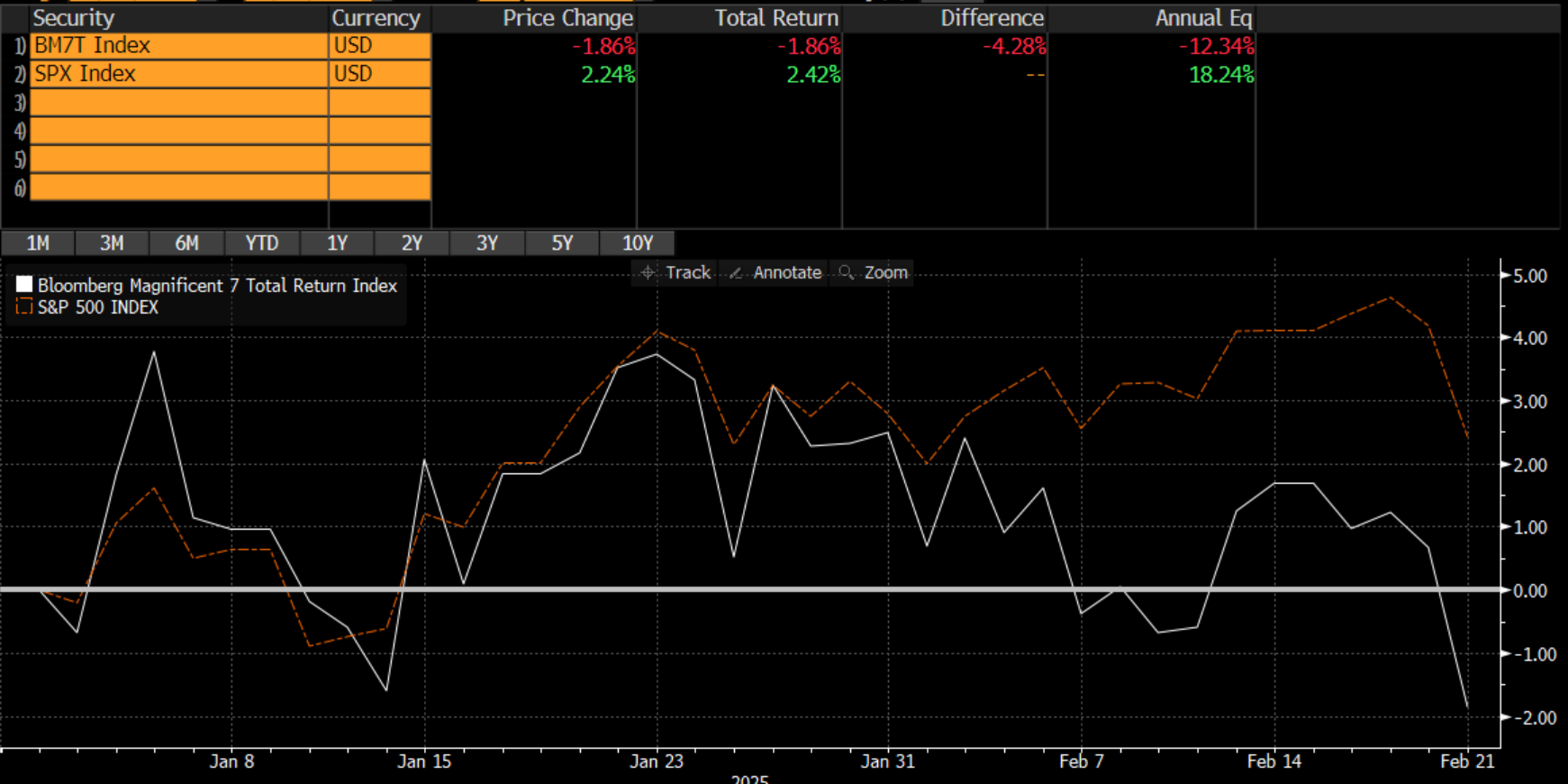
Lag 7: The Magnificent 7 is now officially in the red for 2025. The group of seven stocks that comprise of Alphabet, Amazon, Apple, Meta, Microsoft, Nvidia, and Tesla is now down nearly 2% for the year. Only Meta is up strongly this year with a gain of 17%. This morning, shares of Apple are down slightly after the smartphone maker unveiled a plan to spend $500 billion in the US over the next four years and create 20,000 jobs. No doubt this is a reaction to pressure by the Trump administration to build in the US or face tariffs on overseas production. It also happens to look nearly identical to an announcement Apple made in 2021 to spend $430 billion over 5 years. Microsoft says they still plan to spend $80 billion on AI infrastructure this year after a report from TD Cowen said their channel checks indicated that Microsoft was cancelling data centre leases. TD Cowen warned this could be because Microsoft is worried about being in an oversupply situation. This would be music to the ears of AI bears. The stock initially dipped but has now recovered after Microsoft reiterated its spending intentions and said they may shift priorities regionally but the overall spend is in tact.
A buffet of insights: Warren Buffett penned his annual report to shareholders over the weekend. At 94-years-old he confessed “it won’t be long” before he is replaced by his successor Greg Abel. However his letter reads like someone who isn’t missing a beat. Here are my 5 takeaways from his note:
He knows you are talking about his cash pile: Berkshire Hathaway is sitting on a record $345 billion in cash which is now 53% of the company’s total assets. Cash now makes up a greater portion assets than public stocks (worth $270 billion) and is twice the level it was a year ago. “Despite what some commentators currently view as an extraordinary cash position at Berkshire, the great majority of your money remains in equities,” he wrote. He said Berkshire will forever deploy a substantial majority of their money in stocks, mostly American stocks. However, this year he did the opposite. Most of Berkshire’s money is in cash via US treasuries, he sold American stocks and he bought Japanese stocks. What’s that saying? “Do as I say, not as I do.”
Increasing Japanese exposure: While Buffett touted American exceptionalism, he has been increasingly nibbling away at Japanese stocks. He calls this a “small but important exception” to their US-based focus. Buffett says he is thrilled with his five holdings (ITOCHU, Marubeni, Mitsubishi, Mitsui and Sumitomo) and that overtime you will likely see Berkshire’s ownership of all five increase “somewhat”. The value of these holdings is $23.5 billion. Most of these stocks trade at around 10x earnings. Compared to the S&P 500 which fetches 25x earnings.
Whole picture: Overall Berkshire Hathaway demonstrated a 71% increase in operating profit propelled by higher rates and strong recoveries in its insurance business. Investments in US treasuries helped to offset the fact that 53% of Berkshire’s 189 operating businesses reported a decline in earnings for 2024.
Tax man: Berkshire Hathaway paid a staggering $26.8 billion in taxes last year. That is 5% of what all of corporate America paid in taxes. Over the course of 60 years, Berkshire Hathaway has paid more than $101 billion in taxes.
Person over pedigree: Buffett said that when choosing a CEO to run one of his many company’s, where that person went to school is never a factor. “One further point in our CEO selections: I never look at where a candidate has gone to school. Never!” he emphasized.
Just buy it: Nike is higher in the pre-market after Jefferies upgraded the stock to buy saying there is 50% upside from here. Randal Konik believes the new CEO has the right formula to turn the athletic retailer around. Konik is calling for a surge in profitability and increased market share in footwear over the next few years. “With shares near a valuation trough, we believe now is the right time to aggressively buy shares,” he wrote in a note to clients. Let’s hope. I am a shareholder and I am down. Bad.
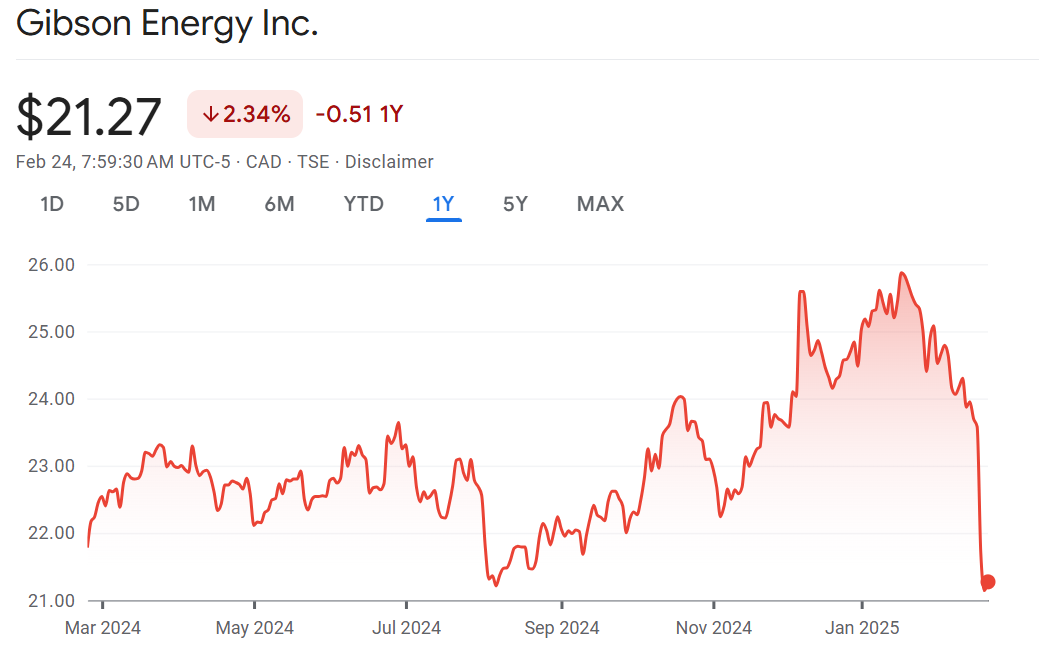
Big yield play: Watch shares of Gibson Energy after TD Cowen upgraded the stock to buy. The oil storage and transportation company is getting a hearty endorsement from Aaron MacNeil who says you get paid to wait on this one. “Gibson now features the highest yield in Canadian midstream and the fifth-highest yield on the S&P/TSX Composite Index,” wrote MacNeil in the upgrade. He says finding an 8% dividend that is sustainable is rare. The stock cratered this year as the part of its business that buys and sells crude has taken a near-term hit. MacNeil believes this will normalize over time. The recent weakness could also make it an attractive M&A target. “We note that Gibson’s prevailing valuation has diverged from both Canadian and U.S. midstream peers. Midstream M&A activity has increased in recent years, and Gibson’s assets would fit well within several larger platforms.”