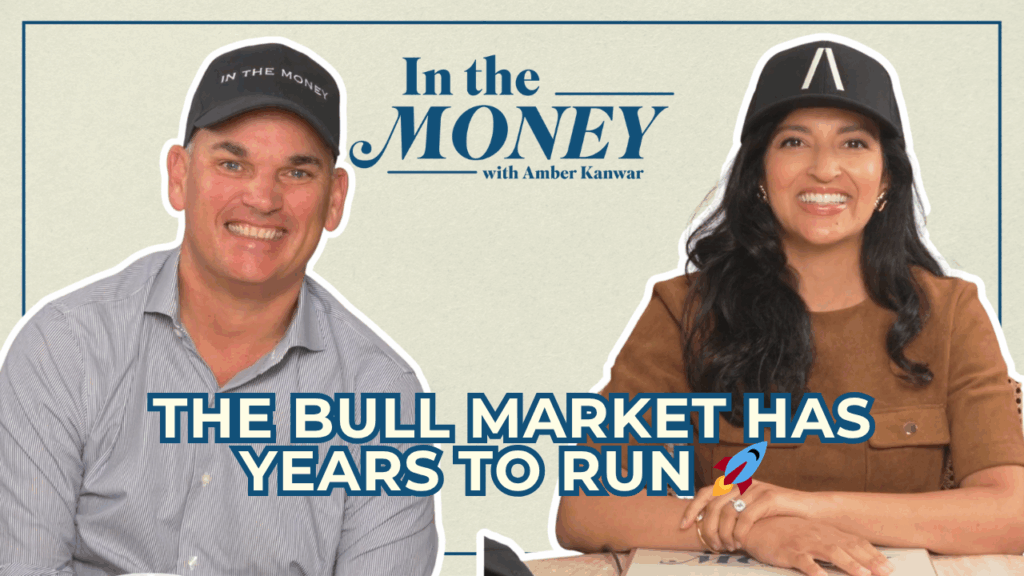
The best of the bull market is still ahead of us.” That’s how Nick Griffin, Founding Partner and CIO of Munro Partners, sees it. The Australia-based global growth investor joins In the Money with Amber Kanwar to explain why the AI boom isn’t a bubble — it’s the start of a once-in-a-generation expansion. Griffin says we’re only in year three of a bull market that could last a decade, with trillions of dollars still to be spent building the infrastructure for artificial intelligence. From data centres and chipmakers to clean energy and sports entertainment, he breaks down where the biggest opportunities lie — and why staying optimistic could be the smartest move in markets right now.
Me and my busted ankle hosted a panel discussion meant to inspire young up and comers in the real estate industry yesterday. I was there merely as an interviewer of successful industry tycoons but also to serve as a cautionary tale of what can happen when walking at (almost) 40.
Here are 5 things to know this morning:
Flare: Futures are coming off their lows after a regional bank scare took down markets yesterday. Western Alliance Bancorp and Zions said they were victims of fraud on loans made to funds that invest in distressed commercial mortgages. That’s a lot of bad words. The news sparked concerns about credit quality across the US banking sector and caused the regional bank index to fall 6% while the entire bank index dropped 3%. This morning, however, both Western Alliance and Zions are up in the pre-market as earnings from peers restore calm. Regions Financials, Huntington Bancshares, Fifth Third Bank, and Truist all reported results this morning and each of them are trading up in the pre-market after beating profit expectations. Bearish bets against the sector have been ratcheting up according to data from S&P Global. Short interest on the regional bank index has risen to 30% from 18.4% (shout out to Tom Young at Jones Trading for unearthing the data). Comments from US President Donald Trump in a Fox News interview are also helping to calm markets this morning. “I think we are going to be fine with China,” Trump said in the interview after threatening an additional 100% tariff on Chinese goods and cancel planned meetings with President Xi Jinping earlier in the week. And just FYI, the US government is still shutdown. Not that it seems to matter much to markets right now.
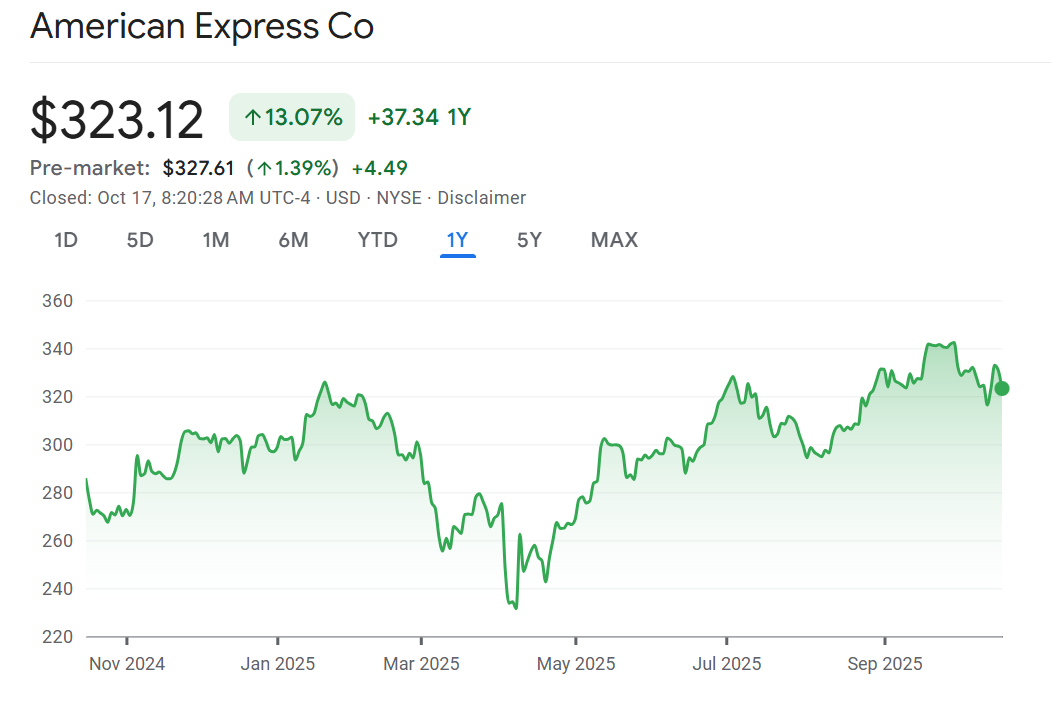
Charge it: American Express is up in the pre-market after profit came in better than expected while total transaction volume exceeded estimates. Amex recently refreshed its Platinum credit card offering and that appears to be driving transaction volume of $421 billion (vs expected $415 billion). The company raised the price of the Platinum card to just under $900 from $700 while also increasing the perks to cardholders. The CEO says the number of new accounts is the strongest start they’ve ever had after a refresh. He also touched on the current market anxieties around credit quality noting while there are concerns out there, American Express’s credit quality remains “pristine.” Part of what helped the company beat expectations was lower provisions for credit losses as overall losses also came in lower. “Overall, we see the company as continuing to demonstrate strong execution and consistent revenue trends against very stable credit metrics,” wrote RBC’s Jon Arfstrom of the results.
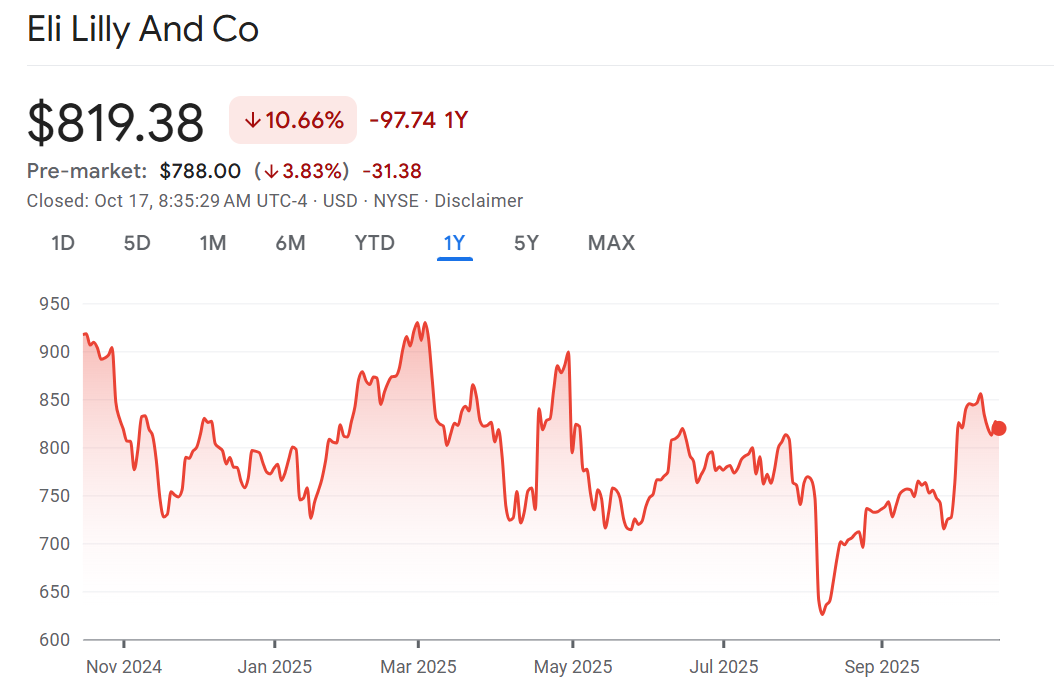
Trumpzempic: Shares of Eli Lilly (-4%) and Novo Nordisk (-4%) are getting hit this morning after Trump said prices could be a lot lower for “the fat loss drug.” Trump told reporters that the price could come down to $150/month vs the current $1,000/month price tag. At this time, no deal has been struck. However, Trump has been locked in negotiations with various pharmaceutical companies keen to avoid tariffs. Pfizer surged when it struck a deal with the government to increase domestic production in order to avoid tariffs. However, that gain has been basically wiped out with the stock falling 9 days in a row – it’s longest losing streak since 2020 (yes, I still own this stupid stock.)
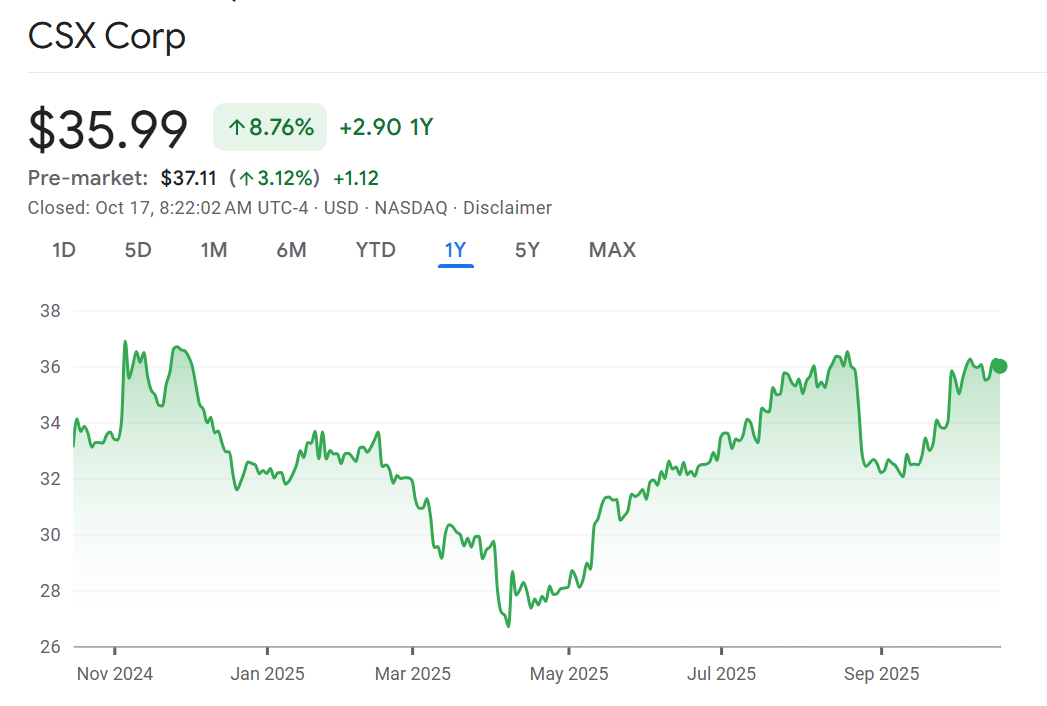
New guy: CSX is up 3% after profit didn’t fall as much as feared and revenue came in higher than expected. The railway got a jolt at the end of September with a sudden CEO change. This was the first time investors got to hear from newly minted CEO Steve Angel amidst takeover speculation in the industry. “With his first earnings call under his belt, newly appointed CEO Steve Angel outlined where CSX is headed following former CEO Hinrichs’ service-driven turnaround,” wrote Patrick Brown of Raymond James, “While not shifting away from service (described as the foundation of performance), Angel elevated the focus on items such as network density, high execution, and (return on invested capital).”
Notable calls: Desjardins is upgrading Tamarack Valley and Nuvista to buy and downgrading Vermilion Energy to hold after updating their oil price assumptions. Desjardins thinks oil is going to hang around $55/bl next year but this will set the stage for recovery in 2027 when prices will recover to $70/bl. “We believe the coming surplus will ultimately lay the foundation for the next oil bull market,” wrote Desjardin’s Chris MacCulloch. “Despite our more constructive 2027 outlook, we retain our near-term bias for large-cap producers given our expectation for further oil price turbulence over the next 6–9 months.” Cascades is getting upgraded at TD Cowen with analyst Sean Steuert optimistic that supply demand dynamics will break their way. “The magnitude of North American containerboard capacity closures in 2025 is expected to substantially outpace near-term demand weakness, leading to higher industry operating rates,” wrote Steuart in the upgrade. Lastly, RBC is positive on an early debt refinancing at newly public GO REIT. The company refinanced one of its properties in New York and says it should bump up earnings and increase liquidity. The Manhattan-based real estate company went public in July on the TSX at $15/share and trades below that price now. I scooped some up after an episode with Jeff Olin of Vision Capital who said the stock was being unfairly punished by the local politics in NYC that he believed would not hurt the company.
Don’t miss our next episode! Get your questions in now! Email questions@inthemoneypod.com