
Rising interest rates have punished real estate stocks and left investors wondering: Is real estate dead money? Jeff Olin, President & CEO and Portfolio Manager at Vision Capital Corporation, says absolutely not. While higher rates matter, he argues that supply and demand ultimately matter more—and that today’s disconnect between public and private real estate markets is creating opportunities. With billions of dollars of private capital still looking for deals, Olin expects the wave of M&A in real estate to continue.

Looking to invest in high-quality companies without high fees? The HAMILTON CHAMPIONS™ suite of ETFs offers exposure to diversified portfolios of equity champions across tech, financials, utilities, and dividend strategies, all with a low 0.19% management fee, designed to help you stay invested with confidence for the long term. For more information on the HAMILTON CHAMPIONS™ suite, visit: www.hamiltonetfs.com/hamilton-
FROM AMBER’S DESK
Thanks to YOU our podcast has been selected as a finalist for two Signal Awards. We are in the running alongside Prof G and Mrs. Dow Jones. Now, I would like to say it is an honour just to be nominated – but that would be a lie. I’m too competitive to deny the truth: I’d like very much to win. It would mean the world if you could support this toxic trait and vote for us HERE and HERE!
Here are five things to know today
1.
Stocks drifting as yields rise
Higher bond yields are a persistent itch in the markets today and investors are trying to figure out if and when this will hurt equities. “A narrative is building in markets that goes roughly like this: Western governments have borrowed too much, bond markets everywhere are rebelling, and yields are surging because investors are finally demanding compensation for sovereign credit risk. It is only a matter of time before the reckoning in fixed income spills over into equities,” wrote Ajay Rajadhyaksha of Barclays this morning. The problem, he says, is that the narrative is wrong. He notes if investors were truly rebelling against the US, the dollar would be weaker and inflows into US equities would halt. Neither has happened. “What is actually going on is straightforward. The US economy has proven more resilient than expected…The market is concluding — correctly, in our view — that the neutral rate of interest in the United States is structurally higher than the models assumed, driven by AI-related capital expenditure, a resilient consumer, and a labour market that is either in balance or tightening (slowly).”
So there you have it. The bond market isn’t screaming in agony, it is simply finding a new normal. Ed Yardeni agrees with this assessment in his note to clients this morning. “At roughly 5.25%, the 10-year yield remains below nominal GDP growth and broadly in line with their historical relationship (see chart below),” writes Yardeni, “In fact, a simple linear regression model shows that the 6.3% nominal GDP growth rate through Q2 is consistent with a nominal 10-year bond yield of above 5.50%. For us to conclude that the Bond Vigilantes are out for blood, long-term yields would need to keep rising even as nominal GDP growth stopped accelerating or began to slow.”
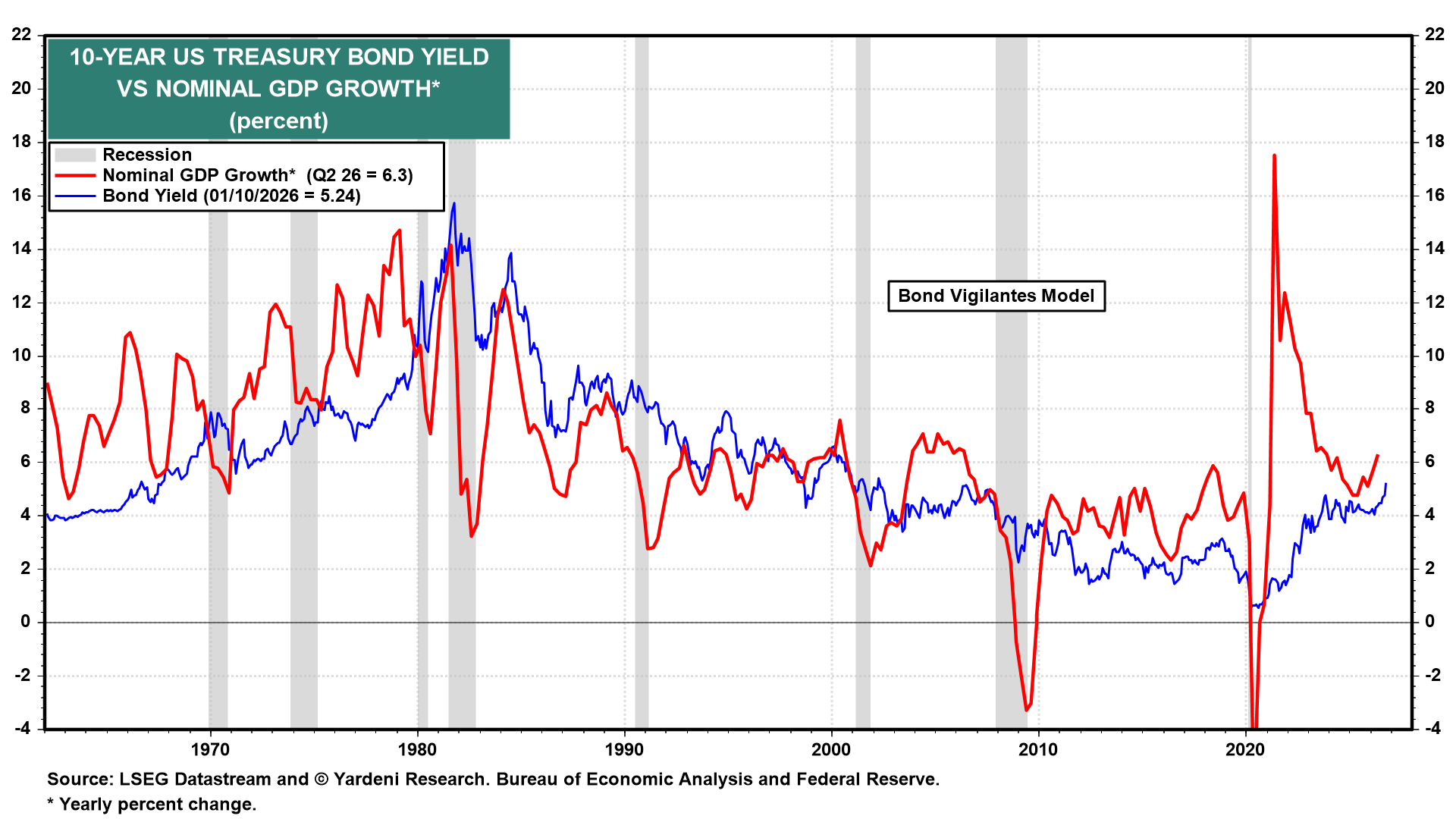
US 10-year yield still below nominal GDP growth

2.
Cenovus buys Athabasca Oil for $12/share
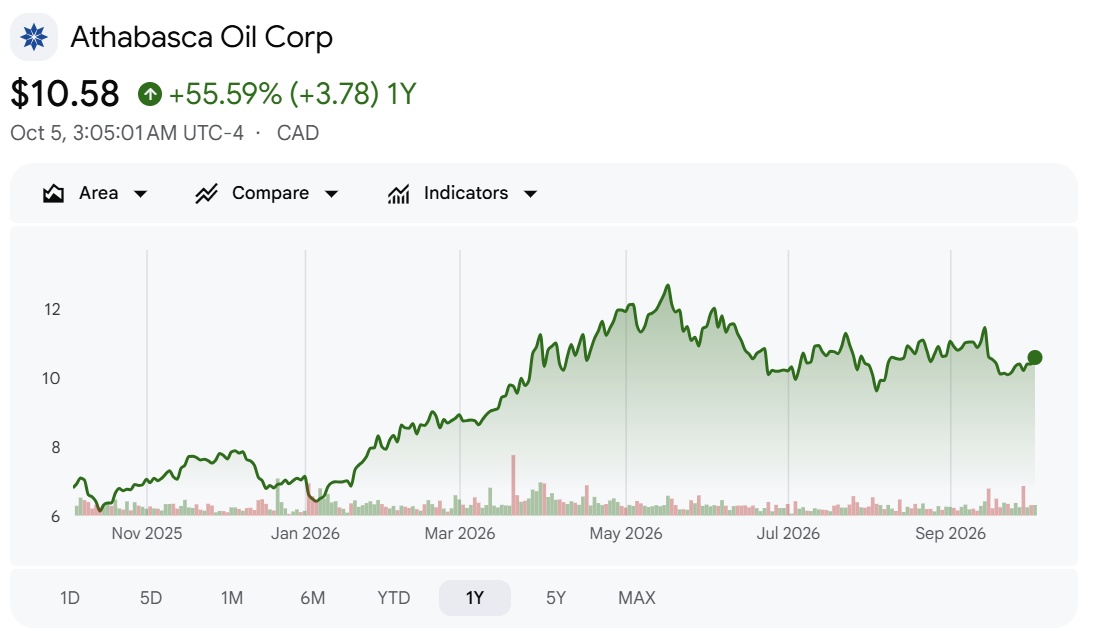
The $5.7 billion deal represents a 13% premium to Athabasca’s Friday close and comes just a year after Cenovus bought MEG Energy in an $8 billion deal. It’s a mix of cash and stock so shares of Cenovus are down 3% in the pre-market. David Szybunka at Canoe Financial named Athabasca as a Pro Pick just last week. “I’ve never felt like there’s a higher probability for something to happen today,” said Szybunka on the show. He’s one of the largest shareholders. He said “Athabasca is just staring at you” if you are a buyer. The stock has drifted lower over the past few months, down 17% since its peak in May. Earlier in the month, Rick Rule also named Athabasca as a favourite saying it was a “prime target” for M&A. Say it with me: You’re either In the Money or in the dark!!
Another top shareholder, Eric Nuttall of Ninepoint calls the deal “bittersweet.” He’s one of the biggest shareholders, having bought the stock at pennies, not dollars. “The timing makes sense,” said Nuttall in a text this morning, “We will tender for 100% Cenovus shares and keep them as we see 40% upside in Cenovus at $70WTI,” Nuttall told me.
|
“This will go down as the greatest buy of my career” — eric nuttall, ninepoint (top athabasca oil shareholder) |
“Not a fan of this Cenovus purchase,” said Cole Smead of Smead Capital Management in a note to me this morning. He’s been very vocal on our show about the need for consolidation, but said that this is a dilutive transaction. “The (enterprise value) per flowing barrel on ATH is so much more expensive than the price Cenovus gets on their own stock in buybacks currently,” he said, “This reads like a transaction you do when you can’t use the cash they are generating quick enough…CVE is over-earning on their refinery assets due to crack spreads being abnormally high. If you are handed a gift, it doesn’t mean you have a license to go out and overpay.” While he doesn’t love it, he said it “doesn’t ruin Cenovus” as the deal is just 7% of the company’s current value. Smead, who is launching a suite of mutual funds in Canada, will join me on the podcast next week!
Another lingering question is what this means for Adam Waterous who heads up both Strathcona and Greenfire – the latter of which sits next to Athabasca assets and was thought to be a natural suitor. Although the chatter is that a rival bid would be unlikely because the deal is viewed as fully valued even at just a 13% premium.
3.
Suncor sells a suite of assets for $1.1 billion
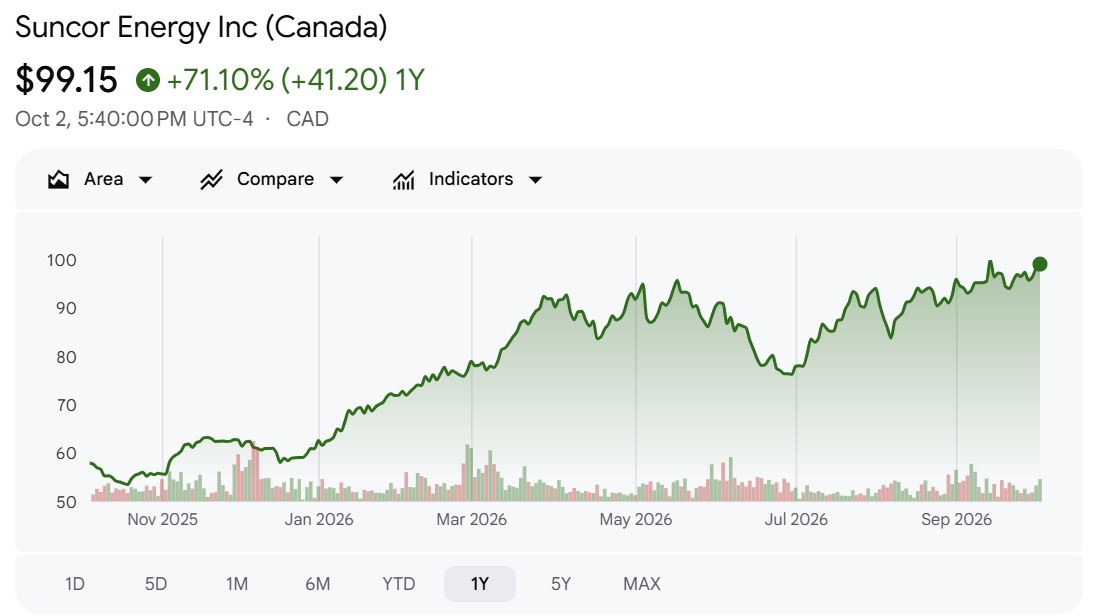
Suncor is selling non-core offshore assets to Ithaca Energy and using part of the proceeds to increase its share buyback to $750 million from $500 million. “We always viewed this sale as inevitable, but we figured SU might wait until West White Rose was up and running. First prod’n has yet to be announced, but Ithaca’s willingness to do the deal now suggests it is comfortable assuming the remaining drilling and start-up risk,” wrote Menno Hulshof of TD. The higher step up in buybacks is also viewed positively. “We believe the higher cadence can be comfortably sustained through existing FCF without relying on the asset-sale proceeds. On our math, this could lift our 2027 strip cash return yield estimate from ~8% to ~11–12%.”
4.
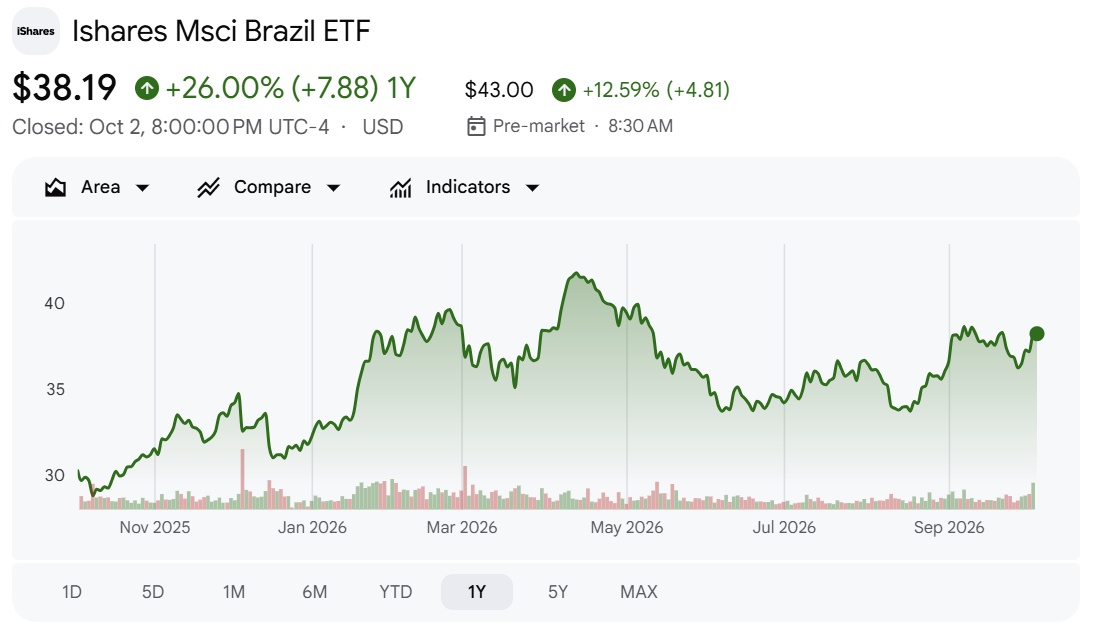
Brazilian equities surge after market friendly election outcome
Senator Flavio Bolsonaro came out ahead in the first round of elections defying the polls and upending current President Luiz Inacio Lula da Silva. The main Brazil ETF, EWZ, is surging in pre-market up nearly 13% while Brazilian-linked equities like Vale (+5%), Petrobras (+9%), and MercadoLibre (+6%) are also rallying. Flavio was hand-picked by his father, former President Jair Bolsonaro. While both presidents have grappled with their own respective scandals, investors are focusing on a fiscal agenda that could bring down interest rates and unleash growth.
Kudos to Steven Harvey of Sagard Wealth and Bob Thompson of Raymond James who both picked Brazil as their top idea on their last appearances.
5.
Vistra rises 3% on report of $4.2 billion US government loan
The power producer has reportedly secured the loan to help expand its nuclear power output which has been a key priority of the US government. The money will increase output at at least three of Vistra’s four nuclear stations, and it’s a welcome lift for a stock that was down about 30% over the past year. While Canada is talking up nation building projects, fast-tracking approvals, and signing MOUs the US is a reminder that nothing moves faster than cutting a cheque to make things happen. An official announcement is expected later today.
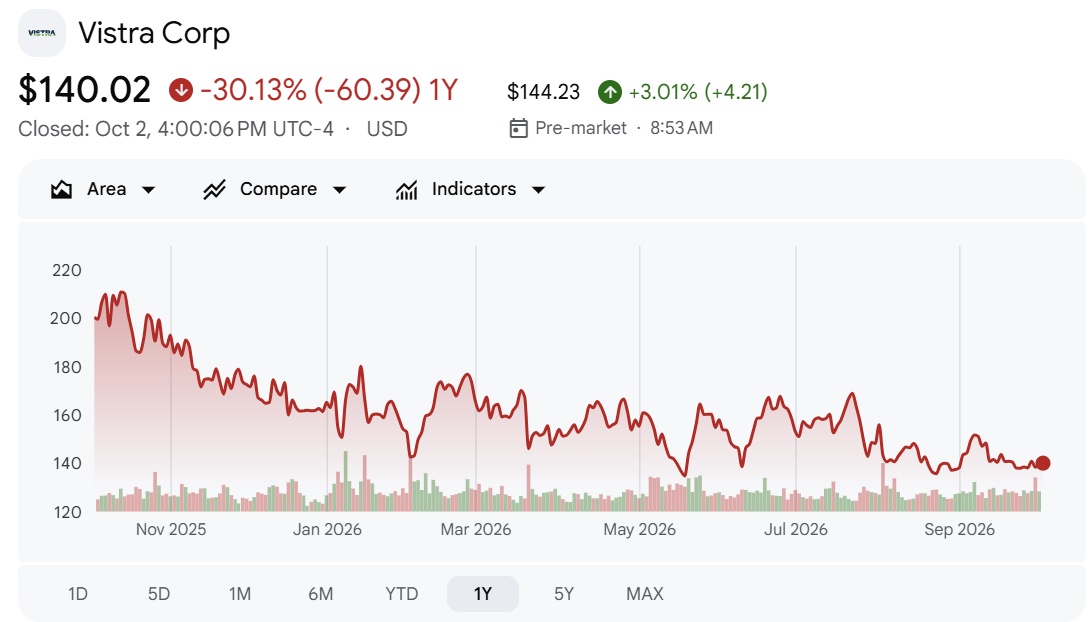
Chart caption — click and edit.
Don’t miss the next episode! Time to get your questions in! Click here to submit a question!