The price of admission is $25 million — and how you invest changes completely once you get there. On this episode of In the Money with Amber Kanwar, Stephen Harvey, CIO of Sagard Wealth, breaks down how ultra-high-net-worth investors are positioning portfolios today — and why it looks nothing like a traditional 60/40. He explains how families are increasingly thinking like institutions, with heavy allocations to private markets, real assets, and global opportunities.

Pro Picks is brought to you by ATB Financial. With over $100 billion in assets, ATB Financial is powering possibilities for more than 843,000 financial services clients. ATB Cormark Capital Markets is a leading North American investment firm providing holistic corporate and capital markets advice and full-service financial solutions. Visit www.ATB.com/inthemoney for more information.
3 Investing Ideas from Ultra-High Net Worth Money Manager
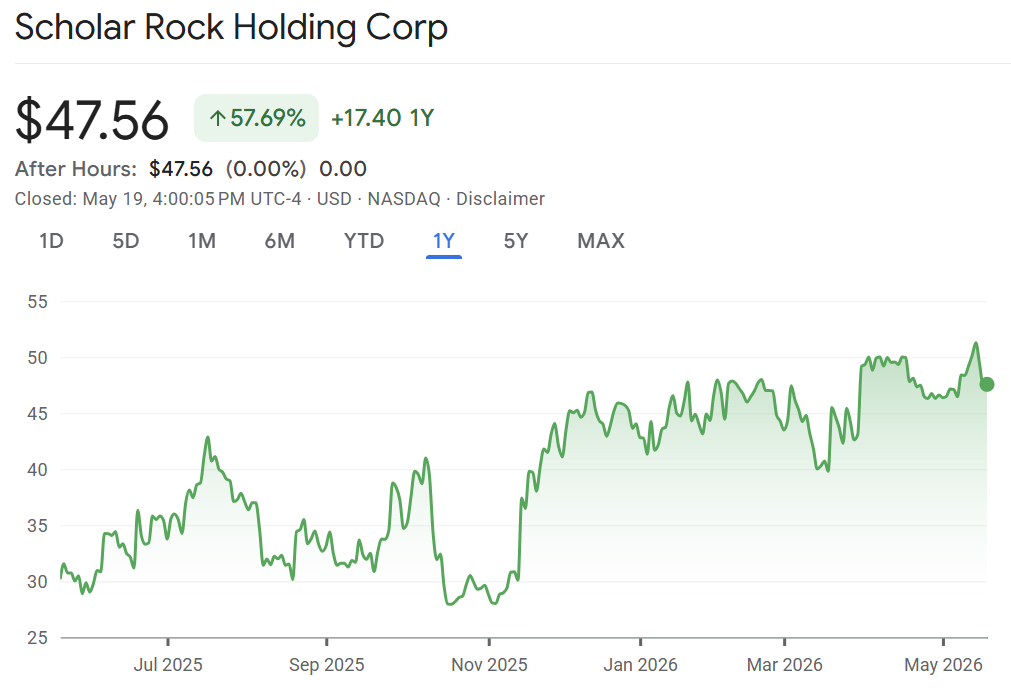
Scholar Rock (SRRK) & Abivax (ABVX)
Late-Stage Biotech — The Unloved Hunting Ground for Big Pharma’s Next Acquisitions
- Biotech has been cheap for years for two compounding reasons: the FDA was entirely consumed by COVID vaccine approvals from 2020–2022, starving non-vaccine R&D companies of catalysts, and then RFK’s appointment as health secretary created a second wave of sentiment headwinds — both overhangs are now fading
- Scholar Rock fits Harvey’s acquisition target framework precisely: large enough to put a few billion dollars to work (a must for Big Pharma dealmaking), late-stage enough that the binary pipeline risk is substantially reduced, and developing specific drugs that are genuinely differentiated enough to attract a large acquirer
- Bonus Pick — Abivax (ABVX): A French biotech name Harvey pairs with Scholar Rock on the same M&A acquisition thesis — late-stage pipeline, specific drug development, and a profile that makes it an attractive bolt-on for a large pharmaceutical company looking to replace patent cliff revenue. Adds geographic diversification to the biotech basket.
- Generalists almost universally avoid biotech and financials — Harvey sees that as a feature, not a bug: less competition from the tourist money means more alpha available for specialists willing to do the work
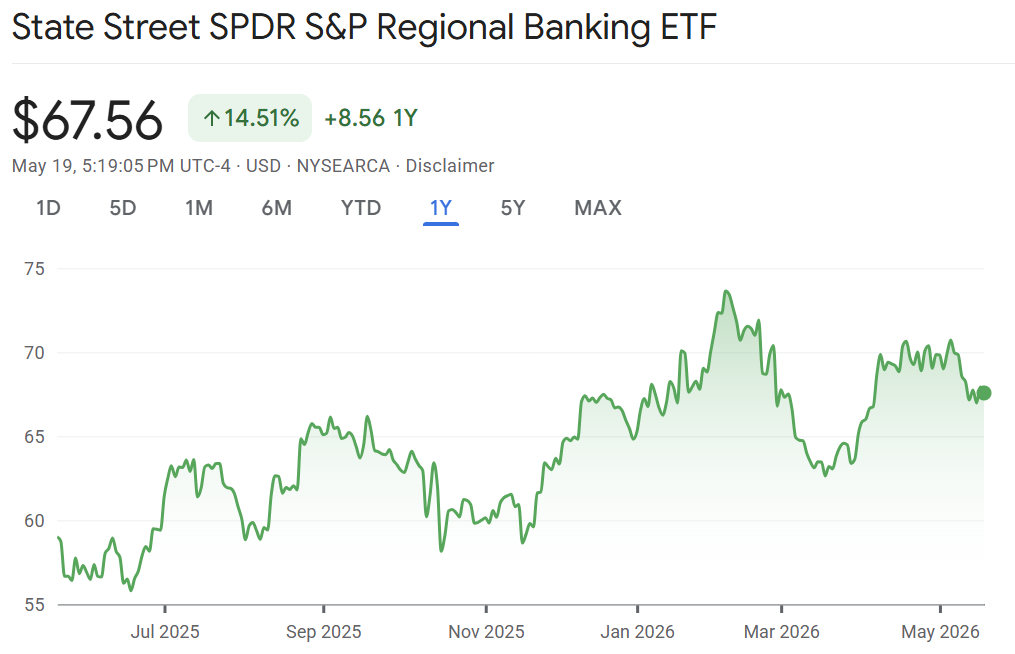
SPDR S&P Regional Banking ETF (KRE)
US Regional Bank Deregulation — A Consolidation Wave in a Sector Nobody Wants to Own
- The US banking system has hundreds of publicly listed regional banks, many trading at depressed valuations after years of post-SVB anxiety and heavy regulatory burden dating back to 2009 — that regulatory tide is now turning
- Legislation passed just two months ago specifically eased capital requirements more on smaller banks than larger ones, freeing up balance sheets for credit growth at exactly the moment Trump-era policy is encouraging businesses to borrow and spend aggressively on equipment and infrastructure
- A steeper yield curve is the structural tailwind: regional banks borrow short and lend long, so every basis point of curve steepening drops directly to net interest margin — Harvey expects curves to remain steep
- KRE offers broad exposure to the consolidation thesis: hundreds of similarly named, subscale regional banks are natural merger targets, and M&A activity in the sector has historically re-rated the entire group
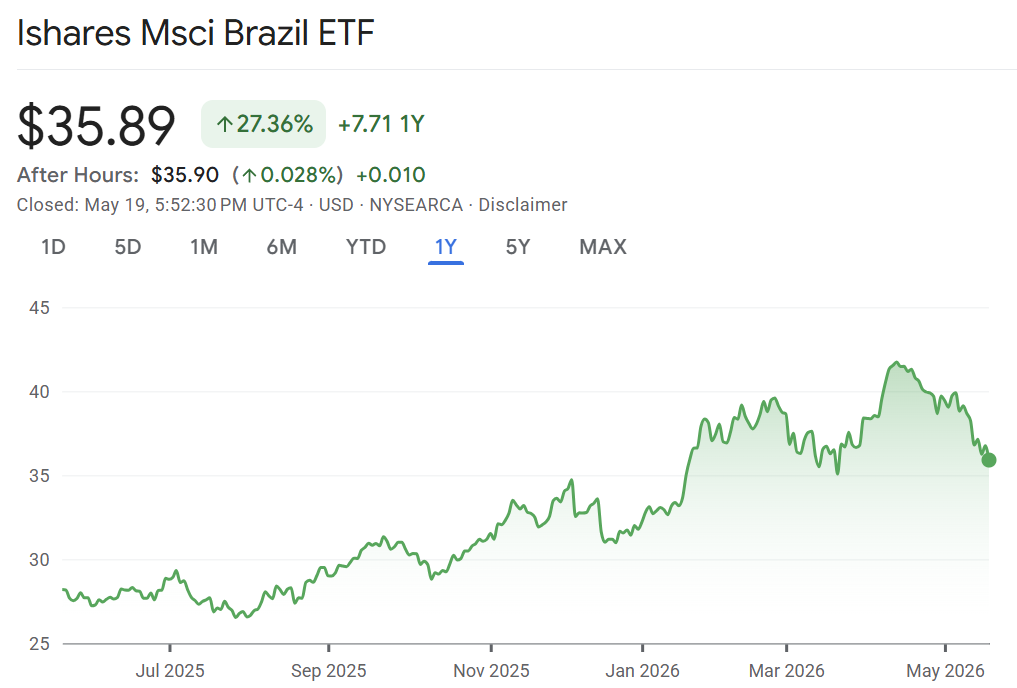
iShares MSCI Brazil ETF (EWZ)
Brazil — Energy Exporter, Food Powerhouse, and a Pro-Business Election Catalyst This October
- Harvey rotated out of European equities after the Iran conflict sent natural gas prices spiking across the continent — Brazil is structurally the opposite: a massive energy exporter with no energy import dependency, making it a direct beneficiary of the same commodity volatility that hurts Europe
- Brazil is also one of the world’s largest exporters of soybeans, corn, and cattle — US tariffs on beef were recently dropped, a direct near-term catalyst for Brazilian exporters, with further trade deal momentum likely as Trump pivots his focus south of the US border
- The valuation setup is compelling and unusual: Brazilian bond yields are running at ~14% against ~5% inflation, meaning locals have had zero incentive to own equities — as the Brazilian central bank continues cutting rates (one cut already in 2026, more expected), that calculus shifts and domestic capital begins rotating into stocks
- An October election is the key near-term catalyst: early intelligence from contacts on the ground suggests Bolsonaro’s son is likely to win — a pro-business outcome that Harvey compares to the Modi effect in India, where a perceived shift toward business-friendly governance was “rocket fuel” for equities; EWZ is the clean, liquid way to own the thesis while the active manager search continues.
Don’t miss our next episode!!
DISCLAIMER: The content provided in this newsletter is for informational purposes only and was drafted with AI assistance. It does not constitute financial, investment, or professional advice. The views expressed are those of the guest and do not necessarily reflect the opinions of In the Money with Amber Kanwar or AK Media Inc. The host and guests may maintain positions in any securities discussed. Always consult with a qualified financial advisor before making any investment decisions.