
Futures higher, Canada job growth weak, Air Canada and Expedia hurt by less US travel, Telus bumps dividend
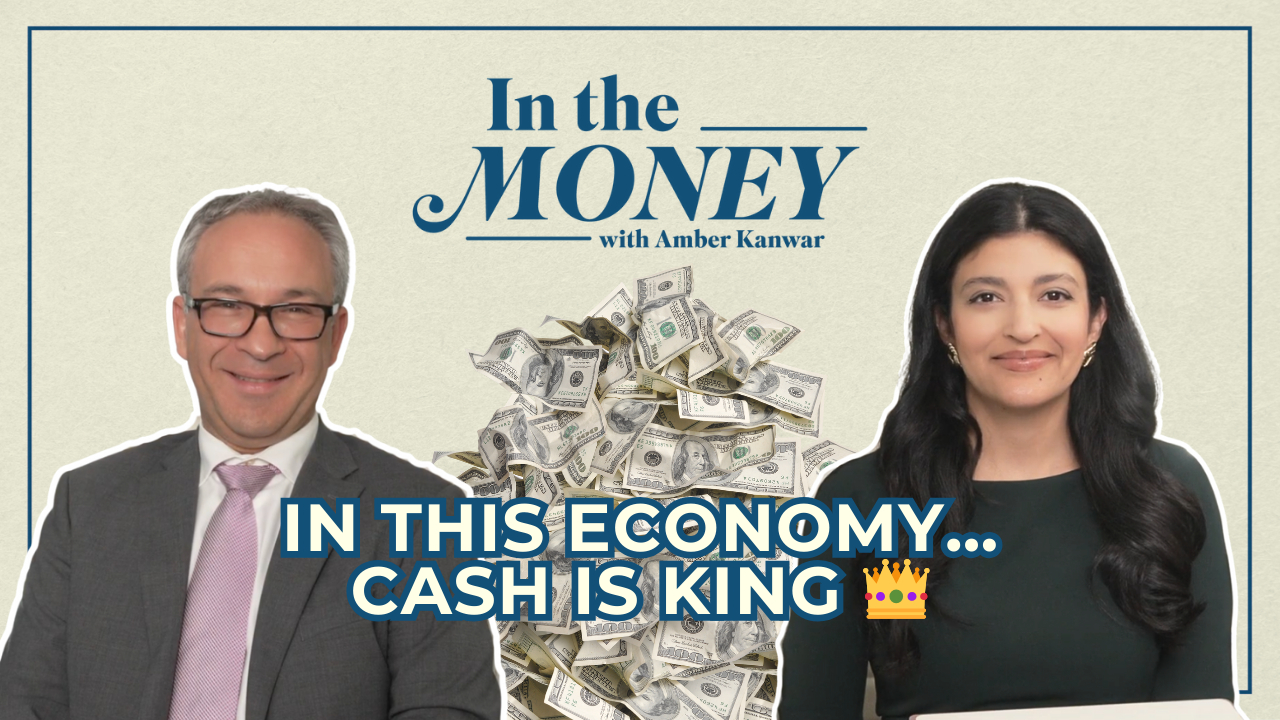
Are you chasing returns while smart money waits on the sidelines? In this episode of In the Money with Amber Kanwar, portfolio manager Mike Vinokur explains why he’s holding 37% cash in his equity portfolio and why that might be the most rational move in today’s volatile market.
Everything is awesome: US futures are higher on hopes that negotiations between the US and China will be fruitful. The talks are set to begin tomorrow and while futures are higher this morning they took a brief hit after US President Donald Trump said 80% tariffs on Chinese goods “seems right”. “We hope that the negotiations go well, but hope is not a strategy,” wrote Andrew Brenner of Natalliance, “Markets have just made awesome moves in the last two weeks, which make them vulnerable.” There are no notable earnings in the US but on the TSX we’ve got 7 companies reporting (including Telus and Enbridge this morning – both beat). Next week the focus will be on trade developments, retail earnings in the US (Walmart and Costco), inflation and retail sales data out of the US.
Help needed: Canada added more jobs than expected (+7,400 vs +5,000 expectation) in the month of April but the details under the hood were not great. The unemployment rate went up to 6.9%, the highest since November 2024. Public sector jobs drove growth (+22,900), while the private sector slashed jobs (-26,800). Tariffs and trade tensions showed up in the print as well. Job losses in manufacturing were the highest since 2009, excluding Covid. Unemployment in Windsor, a hub of auto sector, jumped to 10.7%. “It doesn’t take an archeological dig to realize this is a weak report,” wrote BMO economist Doug Porter, “Labour market slack is building, and wages gains have slowed to a three-year low. This is the first major data reading for April, and it shows that tariffs are already taking a material bite out of the economy. This clearly increases the odds of a 25 bp rate cut in June.”
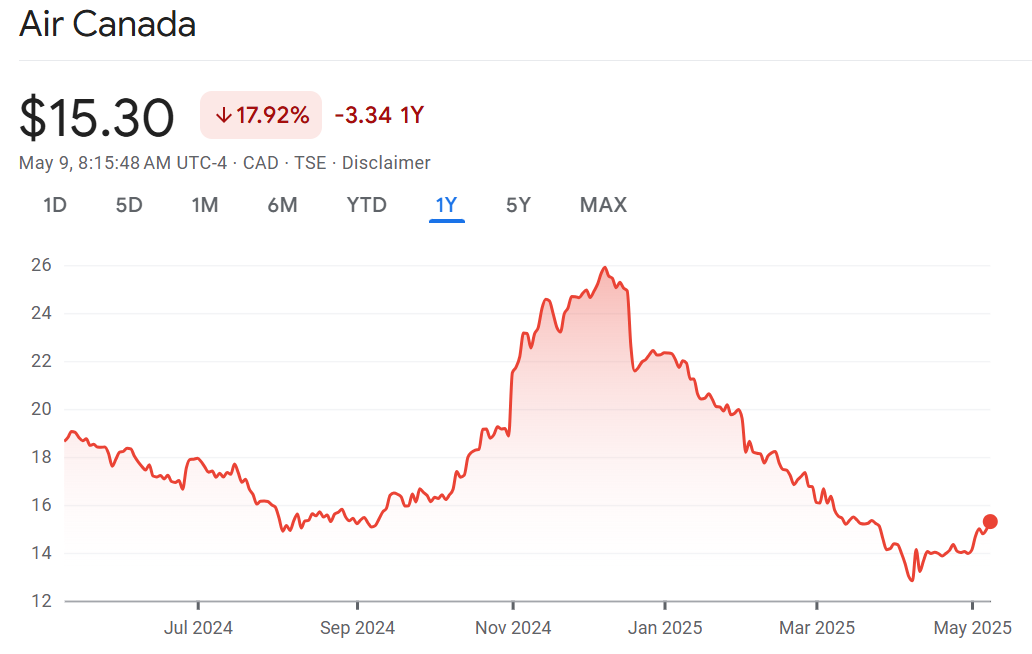
Travel strike: We got yet another indication that Canadians are not travelling to the United States amidst tariffs and trade tensions. Traffic on Canada to US routes dropped at Air Canada while Expedia saw a 30% drop in Canadian bookings to the US. Air Canada beat profit expectations and announced a $500 million buyback but also lowered their profit forecast going forward as fewer Canadians are travelling to the US. However, the lowered forecast is already where consensus numbers were. Citi’s Stephen Trent says the stock is a buy here. “As investors seemed rightfully focused on the risks to the carrier’s cross-border flow, Air Canada continues to have among the strongest weightings of lucrative, international long-haul exposure in the Americas,” he wrote in a note to clients. Meanwhile, shares of Expedia are plunging 10% in the pre-market as the drop in travel demand is forcing the company to cut its forecasts. Expedia is more vulnerable to the American travel boycott because 2/3 of their business comes from the US. We talked about this phenomenon on the podcast with Mike Vinokur who said he was staying away from Uber due to fewer taxi rides from the airport.
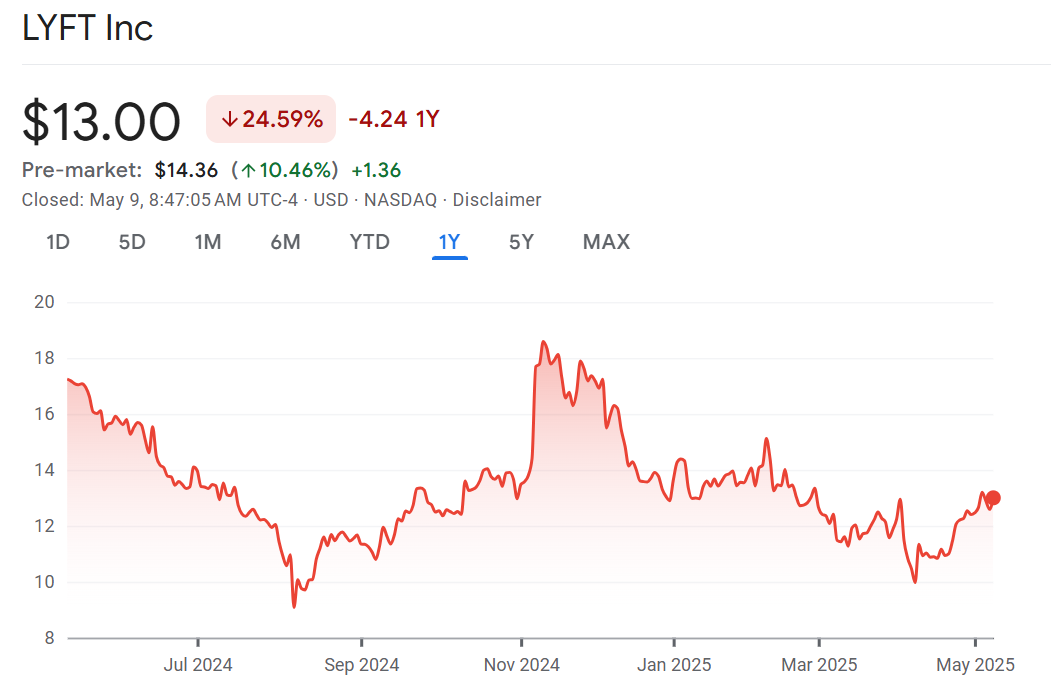
Surge pricing: Shares of Lyft are higher after delivering a record first quarter for earnings, total bookings and active riders. Sales were a little lighter than expected, but investors are taking comfort in the improved profitability. This stands in contrast to Uber which showed disappointing numbers relative to expectations. Lyft has lagged Uber over the past year, so this is a bit of a catch up trade. Evercore’s Mark Mahaney says the results are strong, but he still needs to see more before recommending the stock. “While we see LYFT’s valuation as very reasonable, we would like to see positive fundamental trends sustained over time to become constructive on the shares,” he wrote.
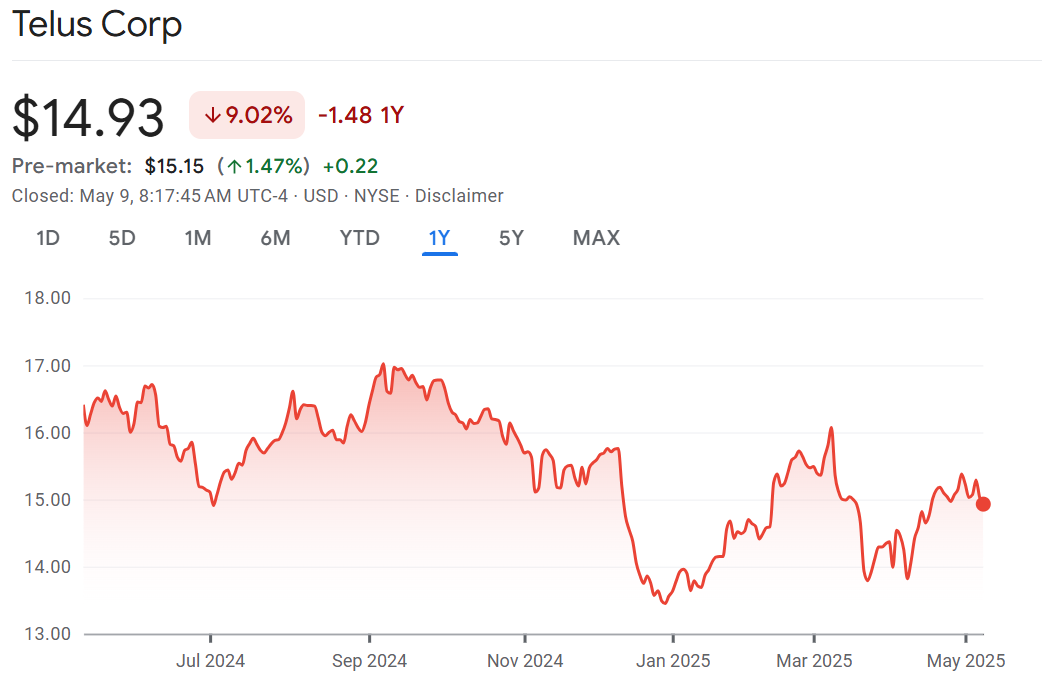
Dividends on Line 1: Telus could trade higher this morning after reporting better than expected profit and boosting its dividend 7%. This stands in contrast to BCE’s 56% dividend cut. Telus now yields about 8%. The results under the hood were solid with growing subscribers (albeit decelerating growth). However, there are signs of competitive pressures with prices of phone plans coming down. “Customer metrics in wireless echoed what we saw from BCE and Rogers, showing continued pricing pressure from adoption of international roaming plans and lower overall plan prices due to intense competitive pressures,” wrote Scotia’s Maher Yaghi.
Send us your questions! Email questions@inthemoneypod.com