
EQB was the worst-performing bank stock last year. A housing slowdown, a spike in provisions for credit losses, and the sudden passing of longtime CEO Andrew Moor left investors with a lot to digest. But in the banking sector, there’s an old market adage — “worst will be first” — the idea that last year’s laggard often leads the group in the following year. On this episode of In the Money with Amber Kanwar, Amber sits down with Chadwick Westlake, the new President & CEO of EQB. Westlake opens up about stepping into leadership during a moment of crisis, stabilizing the business, and resetting focus at a disruptive Canadian financial institution.
Here are five things to know:
The King’s speech: US futures and the bond market are settling down after yesterday’s rout in in the markets. A rally in gold and natural gas was unable to keep even the TSX in the green. The index fell 1%. The S&P 500 fell 2%, the biggest decline since October. Prime Minister Mark Carney’s speech wasn’t market moving but it was eye-opening and lauded around the world for saying the quiet part out loud about the world order coming undone. This morning at 8:30am we will hear from US President Donald Trump who has been busy leaking texts from European leaders sucking up to him. It will be curious to see if Trump has any response to Carney’s speech and if it ended the affinity he has for him. Anyway, you know I don’t get political so let’s focus on the markets and how they are behaving. When the market sells off I like to look at what didn’t. Where is the relative strength? Small caps showed resiliency with the Russell 2000 “only” down 1% (I just bought the ETF IWM this morning). Consumer staples in the US were higher while tech and financials unraveled. But within tech, memory stocks still finished higher (Sandisk, Micron (I own), even Intel (I own). In Canada, tech was a pain point and a washout – nothing finished higher on the day. Financials fell. Incidentally EQB finished up nearly 5% as BMO upgraded to buy (and maybe the podcast?). I’ve learned from David Burrows of Barometer – pay attention to relative strength. I’m paying attention to volatility as well. It has awoken from its dreary slumber craning its neck above 20 – the worry line. Amazing the disconnect between policy volatility and market volatility. That is something I’ll be addressing with David Picton (Canada’s biggest hedge fund manager) on the podcast out tomorrow.
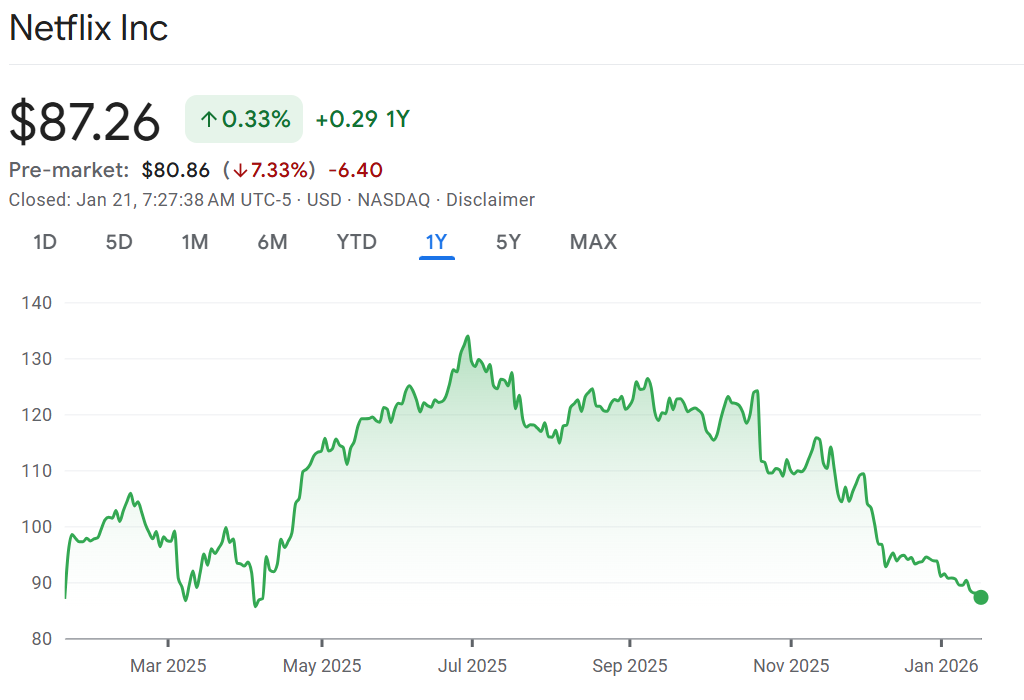
Purge watching: Netflix is falling 7% in the pre-market after it warned profit in the next quarter would be less than expected and margins for the year would also disappoint. Higher content spending and its pursuit of Warner Brothers is weighing on the outlook. This is overshadowing a stronger than expected reported quarter in which sales jumped 18%, free cash flow increased 37% and profit inceased 34%. Each was higher than expected. Netflix will be increasing spending to make content by 10% and because it needs to conserve cash ahead of its purchase of Warner Brothers it will be pausing its buyback. All this combined with the tech trade falling out of favour has put Netflix in the penalty box. This may end up being my Pfizer of the year, sadly I own this one too.
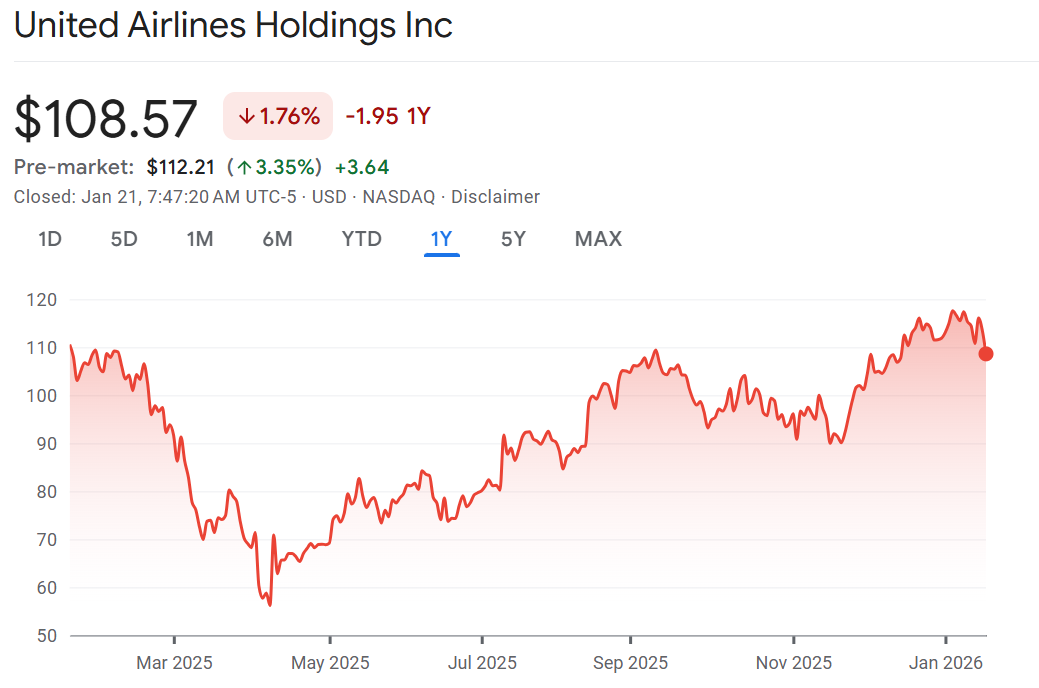
Taking flight: United Airlines is up 3% and is poised to open near a record high after earnings and sales beat expectations and its forecast was upbeat. Like Delta, the results are being driven (or flown) by demand for premium seating and international travel. “Our bullish view on (United Airlines) is based on our belief that it will exceed its pre-COVID peak EPS by the largest amount among the supermajors this cycle,” wrote Citi’s John Godyn in a note to clients, “in other words (United Airlines) will make the highest EPS highs this cycle vs peers.”
Energy files: Watch Cenovus at the open after Reuters reported it is considering the sale of conventional oil and gas assets in the Deep Basin of Alberta for a potential $3 billion price tag. A deal, which is reportedly in the early stages, would help cut its debt after its MEG Energy takeover. Halliburton is up 2% after beating profit expectations. The oil field services company surged after the raid on Venezuela as it used to operate in that country and its CEO said they could be active “within months” in the region. The earnings call is at 9am and I’m sure there will be lots of questions about this. Meanwhile, the International Energy Agency raised its oil demand outlook for 2026 citing economic stabilization (okay…) and trimmed its surplus outlook. Yet they don’t see much movement in prices as they there is plenty of inventory to offset any potential supply disruptions from Iran, Russia, Kazakhstan or Venezuela.
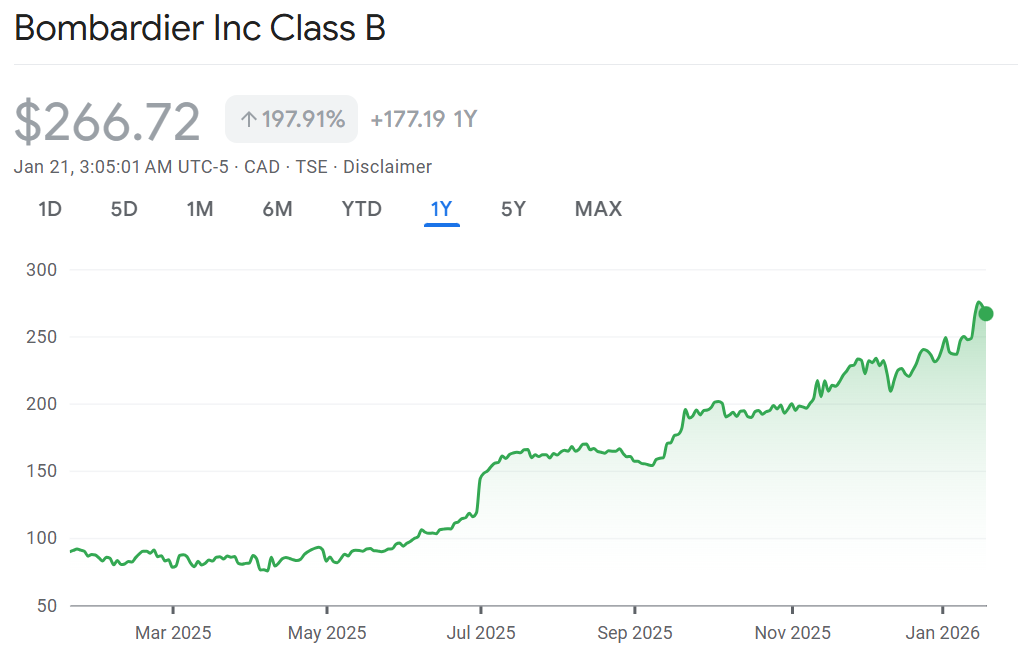
Ring the register: Bombardier is getting hit with a third downgrade in less than a week. This morning Scotiabank downgraded to stock saying the decision is “solely on valuation.” Bombardier has tripled over the past year and is up 10 fold in the last five years. Not your father’s Bombardier. Scotia’s Konark Gupta argues that the multiple has doubled over the past year and has now largely closed the gap with its closest peer General Dynamics. To be honest though, most of the downgrade is pretty glowing about the company, its turnaround and its future prospects.
Don’t miss our next episode!