
War and credit anxieties are weighing on markets – we tackle both today. In this episode of In the Money with Amber Kanwar, Amber sits down with Amritha Kasturirangan, Co-Lead Portfolio Manager of the Franklin U.S. Rising Dividends Fund at Franklin Templeton, to break down how she’s navigating markets in a time of war. Running a $30 billion strategy built on dividend growth, she explains why she’s not chasing yield — but instead using consistent dividend growth as a signal of resilient, high-quality businesses that can hold up through uncertainty.
Forgive my tardiness this morning. I had a sleepover with Child 1. I always look forward to a dreamy snuggle with a girl who is growing up way too quickly. But in reality it’s more like sleeping with a giant rotisserie chicken who has taken 10 shots of espresso.
Here are five things to know today:
War & peace: Stocks are under renewed pressure this morning and oil is pumping higher flirting with $95/bl on doubts of a ceasefire between Iran and US/Israel. Iran sent counter considerations for peace after the US sent a 15-point plan earlier this week. Iran’s proposal includes control over the Strait of Hormuz and the ability to toll traffic. Speaking of traffic, it does appear some non-enemy ships are being allowed to pass through. US President Donald Trump delayed so-called “Obliteration Day” from this Monday to next Monday. That is only a few days away. Will the US follow through on promises to bomb Iran’s power plants if the Strait is not re-opened? That question is hanging over investors right now. Copper has been weak in this environment down 8% since the war began while copper miners as a group are down nearly 21%. Inflation concerns are showing up in the bond market, growth concerns are showing up in copper prices. On the podcast Kasturirangan said the impossible call to make is on the duration of the war, but she is relying on incentives to end the war. “The timing of midterm elections and the rising price of gas at the pump” act as incentives, she said, stating that if gas prices approach “a five handle” and create “massive consumer anxiety, those should act as natural breaks on this administration to prolong the war.”
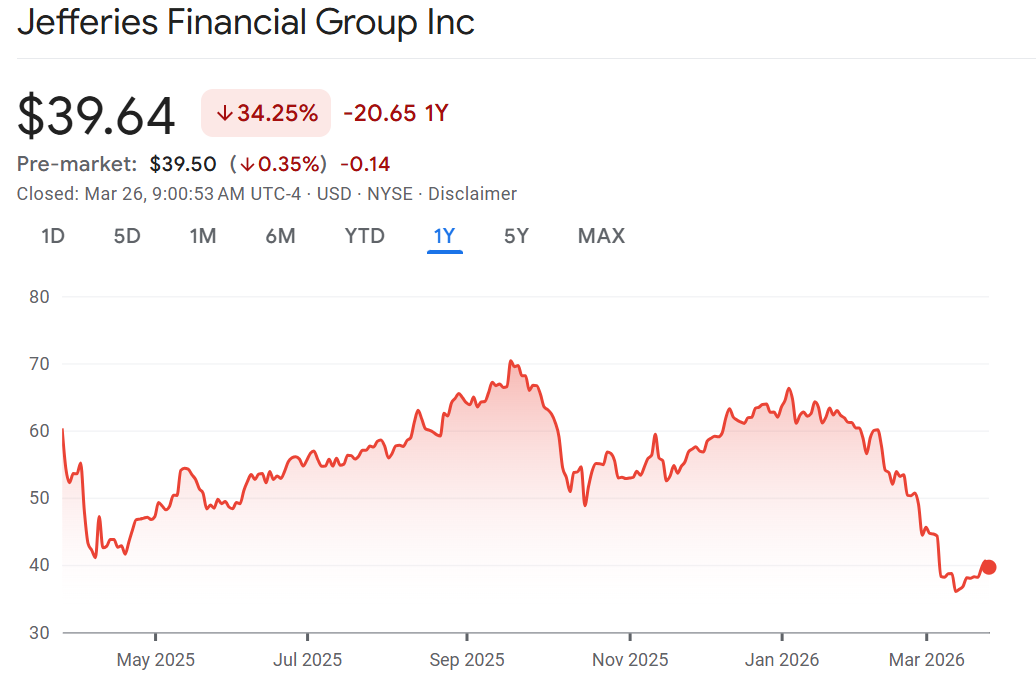
Dominos: Jefferies is in focus once again after the investment bank posted record revenue but worse profit than expected on losses related to two company blowups. Jefferies’ fixed income division notched losses on exposure to First Brands and Market Financial Solutions – both companies have collapse. Under the hood, there was plenty of strength with investment banking revenue soaring 45% and equity trading posting record results for the first quarter. Despite the company’s ability to perform amidst a credit crunch, the stock is flat in the pre-market and is down 36% so far this year. Ares Management is falling 3% after its private credit fund posted its steepest monthly loss on record. That sounds like a big headline, but the loss was 0.68% and it wasn’t a realized loss it. Ares simply marked down the value of certain assets given the broader sell off in public debt markets. This is a stock, along with KKR, that Kasturirangan owns and would buy on weakness. “I think given the diversification of KKR and Ares these are names that we own across different asset classes. Given the strength of their balance sheets and their risk-taking capabilities in aggregate we don’t believe that this will be a risk that they can’t manage,” she said on the podcast.
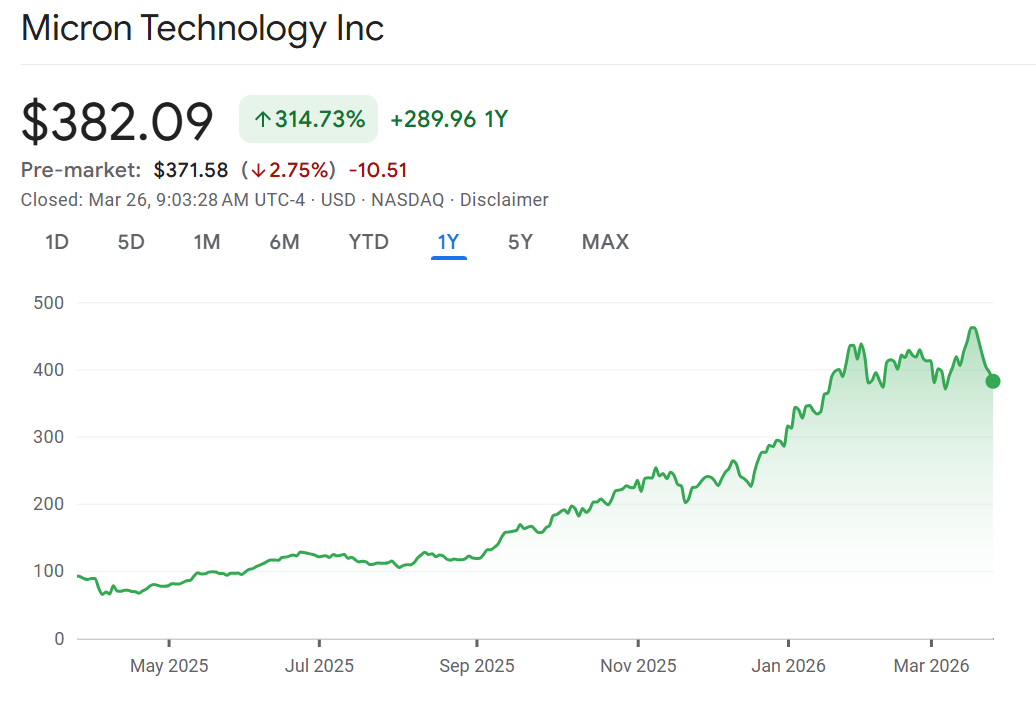
Blanking: Shares of memory chip makers Micron (-3%) and Sandisk (-4%) are under pressure after Google touted a new compression technique that could reduce the need for as many chips. That may just be an excuse to sell as these high flying stocks have been under pressure with Micron down 10% in the last week. “It is being widely reported that Google has reduced memory usage by 6x, which leaves out that they are just talking about KV Cache memory, not memory overall. Memory stocks sold off again, at least partly due to this hyperbole,” wrote Joseph Moore at Morgan Stanley. KV is a type of memory used in AI models that act as “working memory” and is different from the bread-and-butter high bandwidth memory chips which has been key to Micron’s rally. “Our take, after talking to industry folks on this today, is that this is an evolutionary development, with basically no surprises for memory.” I own Micron.
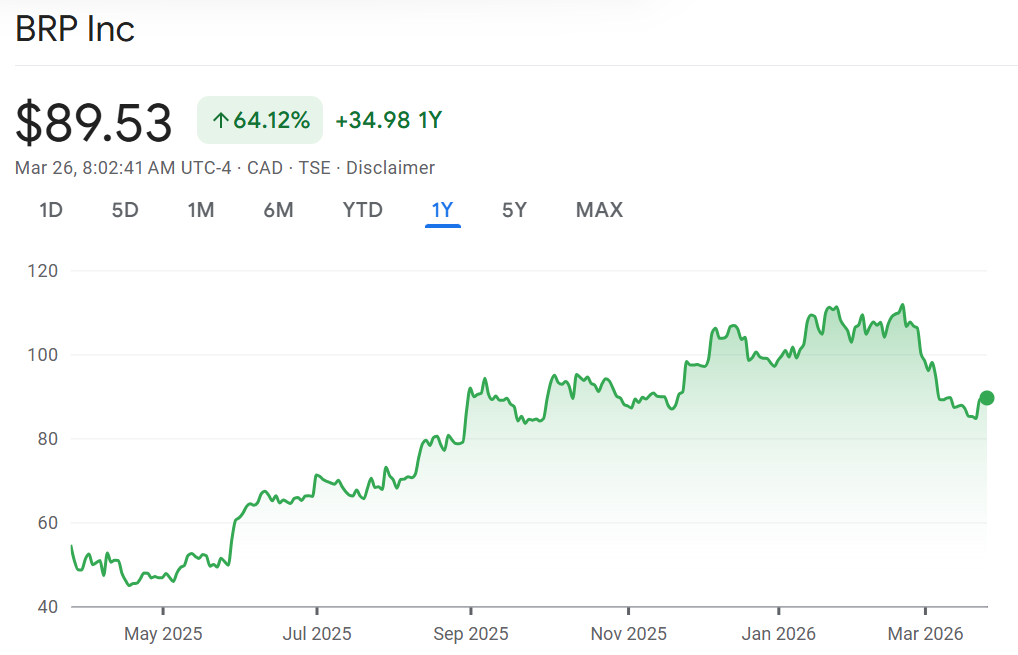
Do the doo: Watch shares of BRP Inc after it posted stronger than expected sales and profit. The recreational vehicle maker returned to profitability in the fourth quarter and gave a rosy forecast suggesting growth can continue. The stock has been in recovery mode since the lows last spring increasing 146% until the beginning of March. It has dropped 20% since then because of the war in Iran. The stronger forecast will come as a relief to investors worried about things like the renegotiation of NAFTA 2.0 and how higher energy prices will crimp consumer spending. To underline that confidence, BRP increased its dividend 16%. “On balance we remain positive on BRP shares supported by healthier industry powersports dealer inventories, BRP‘s share gains, and a relative valuation that is attractive,” wrote National Bank’s Cameron Doerksen.
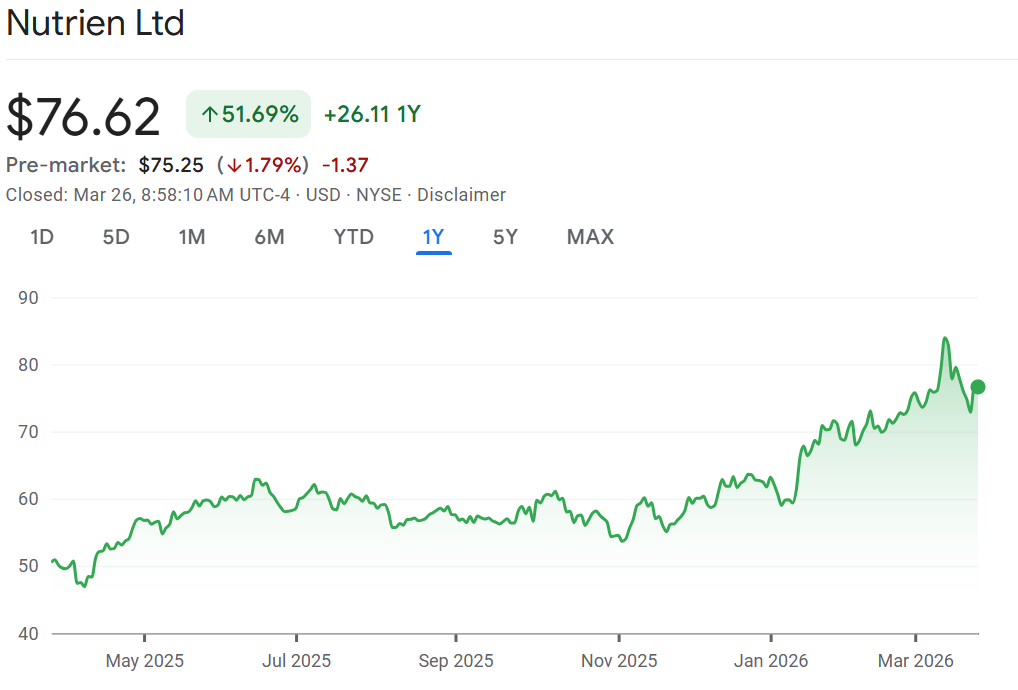
Notable call: Nutrien is being downgrade at UBS to sell following the post-war rally in the stock. Shares of fertilizer stocks have been pumping on supply disruptions from the Middle East. UBS argues that potash fundamentals are set to weaken and will be flat this year vs expectations of an increase in 2026.
Don’t miss our next episode!