
Dividend growth is supposed to be the safe corner of the market — but what happens when geopolitics, inflation shocks, and an evolving AI trade collide all at once? In this episode of In the Money with Amber Kanwar, Amber sits down with Amritha Kasturirangan, Co-Lead Portfolio Manager of the Franklin U.S. Rising Dividends Fund at Franklin Templeton, to break down how she’s navigating markets in a time of war. Running a $30 billion strategy built on dividend growth, she explains why she’s not chasing yield — but instead using consistent dividend growth as a signal of resilient, high-quality businesses that can hold up through uncertainty.
News of the sleepover with Child 1 leaked to Child 2 and 3. Cut to me sandwiched between the two all night sleeping in the crack between two pillows. Husband is very supportive of these sleepovers. I’m sure it has nothing to do with having a king size bed all to himself for the last two nights.
Here are five things to know today:
Talk is cheap: Stocks are selling off once again and crude is advancing despite US President Donald Trump pushing out the deadline for Iran to open the Strait of Hormuz by 10 days. Despite the push for peace, missiles continue to be traded between Israel and Iran. Unlike Liberation Day, when tariffs were simply walked back, this entanglement is difficult to simply reset to baseline. Critical energy infrastructure has been damaged and traffic through the Strait is unlikely to return to normal any time soon even with some vessels passing now. Adding to the anxieties this morning is news out China which announced a probe into US trade practices. If the losses hold, the S&P 500 will be down 5 weeks in a row, the longest losing streak since 2022. The TSX, meanwhile, might be spared a weekly loss after three weeks in a row of declines thanks to strength in materials and energy stocks this week. The TSX is down 7.6% from the all-time high, short of an official correction (-10% from the top). However, under the hood 64% of TSX stocks are in correction territory. Meanwhile, the S&P 500 is down 7% from its all time high. Under the hood the damage is much worse with 75% of stocks in the index in correction territory. The NASDAQ is already there, down 10.6% from the October all-time high. Small caps haven’t been spared either, down 8% from the January peak.
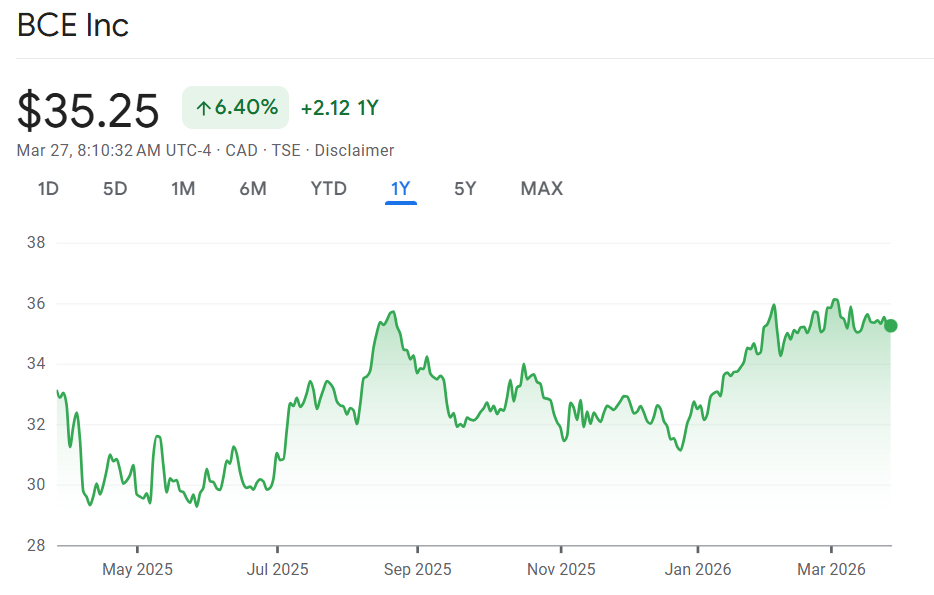
Over and out: Watch BCE after the telco announced it would be selling its land mobile radio networks to Motorola for $675 million. The radio network is used by police, emergency crews, construction crews etc. The deal is expected to close in the fourth quarter of this year. It’s a nice cash injection for a business with elevated debt levels even with the dividend cut last year. Shares have recovered since the dividend cut, up about 21%. “We believe the sale is consistent with management’s previously-stated target for non-core asset sales in support of balance sheet de-levering and other strategic priorities to drive FCF and enhanced returns,” wrote RBC’s Drew McReynolds, “While not overly material, the sale at 10.0x EBITDA translates to a -0.04x reduction in proforma net debt/EBITDA (to ~3.7x as at Q1/26) and is modestly NAV accretive by ~$0.20/share.”
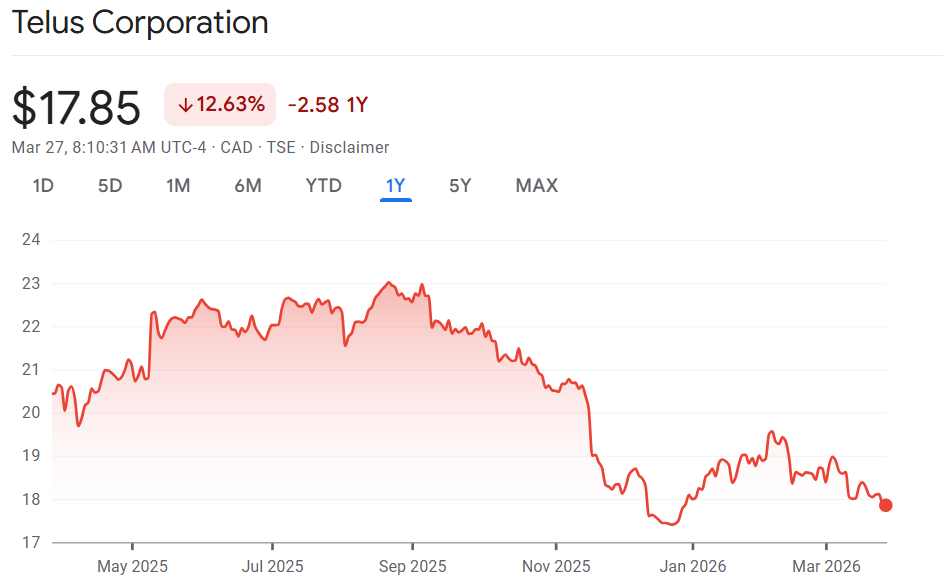
The first cut is the deepest: After BCE’s dividend cut, focus turned to Telus and its dividend payout with the yield sitting at 9.5%. Telus doesn’t need to cut the dividend, but it should argues Jerome Dubreuil of Desjardins in a note to clients this morning. “TELUS’s recent CEO transition offers an excellent opportunity to reset its capital allocation strategy,” wrote Dubreuil referencing former CIBC CEO Victor Dodig who will be replacing Darren Entwistle this summer. “We believe a 35% dividend cut would better align the payout with true cash generation and the company’s lower leverage objective,” opined Dubreuil, ” In our view, managing a business with a tight balance sheet can lead to suboptimal decisions, and preserving a dividend track record is not worth the energy required to defend it.”
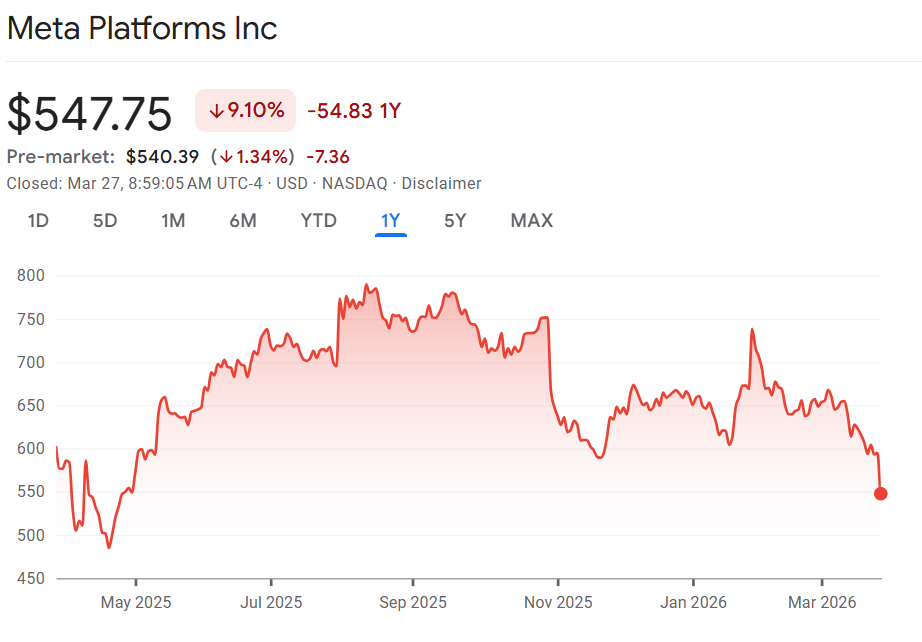
Big Tobacco Moment: This has been an ugly week for Meta investors with the stock dropping 8% yesterday to trade at an 11-month low. This comes after a landmark verdict this week in which social media companies Meta and Google were found liable for mental health issues by designing addictive social media platforms. There are thousands more lawsuits similar to this one. While Meta and Google both plan to appeal the decision, it is stoking fears that Meta will have to change the platform so it is less addictive and thus less attractive to advertisers because it leads to less engagement. The lawsuit is roiling investors because Meta and Google enjoyed protections from scrutiny due to the fact they weren’t liable for any content posted on their platforms. However, this lawsuit took the approach of saying the very design of these platforms were addictive and caused the problem. “The persistent question we have gotten from investors over the last 24 hours is — Is this META’s Big Tobacco moment? In other words, is META un-investible today?,” wrote Evercore’s Mark Mahaney, “It’s possible, but we think unlikely…First, our best estimate is that 8-13 year old users likely account for a MSD% of META’s global 3.6B Daily Average Users. Second, it’s key to note that Facebook and Instagram policies do not allow users under 13. Third, questions about META’s impact on children are not new to investors. This has been a topic for several years now. Fourth, arguably unlike Big Tobacco, Social Media provides a variety of positive social benefits as a communication, entertainment, information, and connectivity tool. And fifth, with today’s correction, META is trading at a 16X P/E multiple, within 10% of its three year trough multiple.”
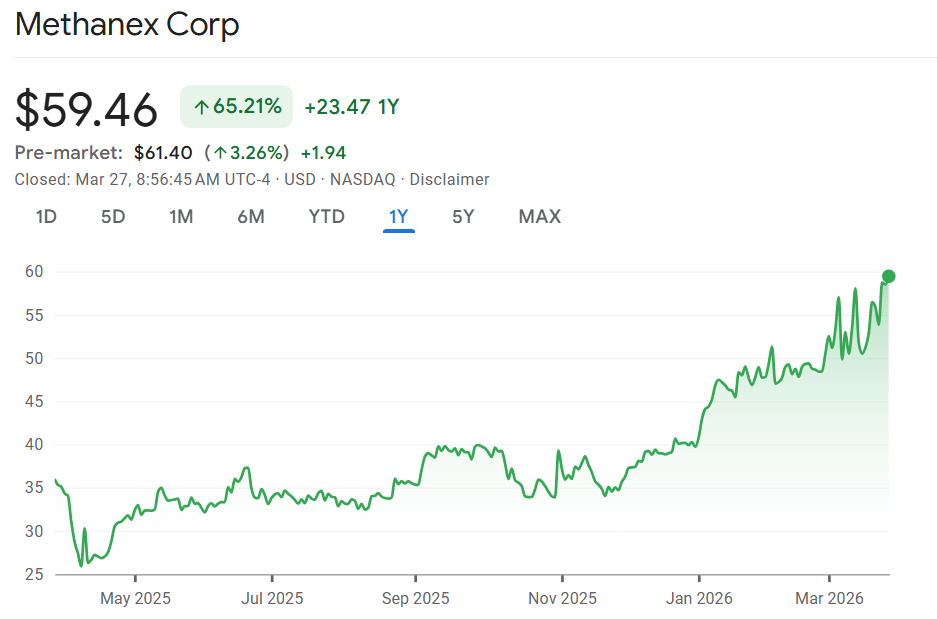
The price of war: Methanex could get a boost after the reference price for methanol shot up for April due to supply disruptions in Iran. Prices in North America will increase 33% and double in Asia Pacific. “Although the duration of the Iranian war and elevated methanol prices are uncertain, we believe the April posted prices could lead to incremental free cash flow of ~$93 million ($1.20/share) per month,” wrote RBC’s Nelson Ng.
Don’t miss our next episode!