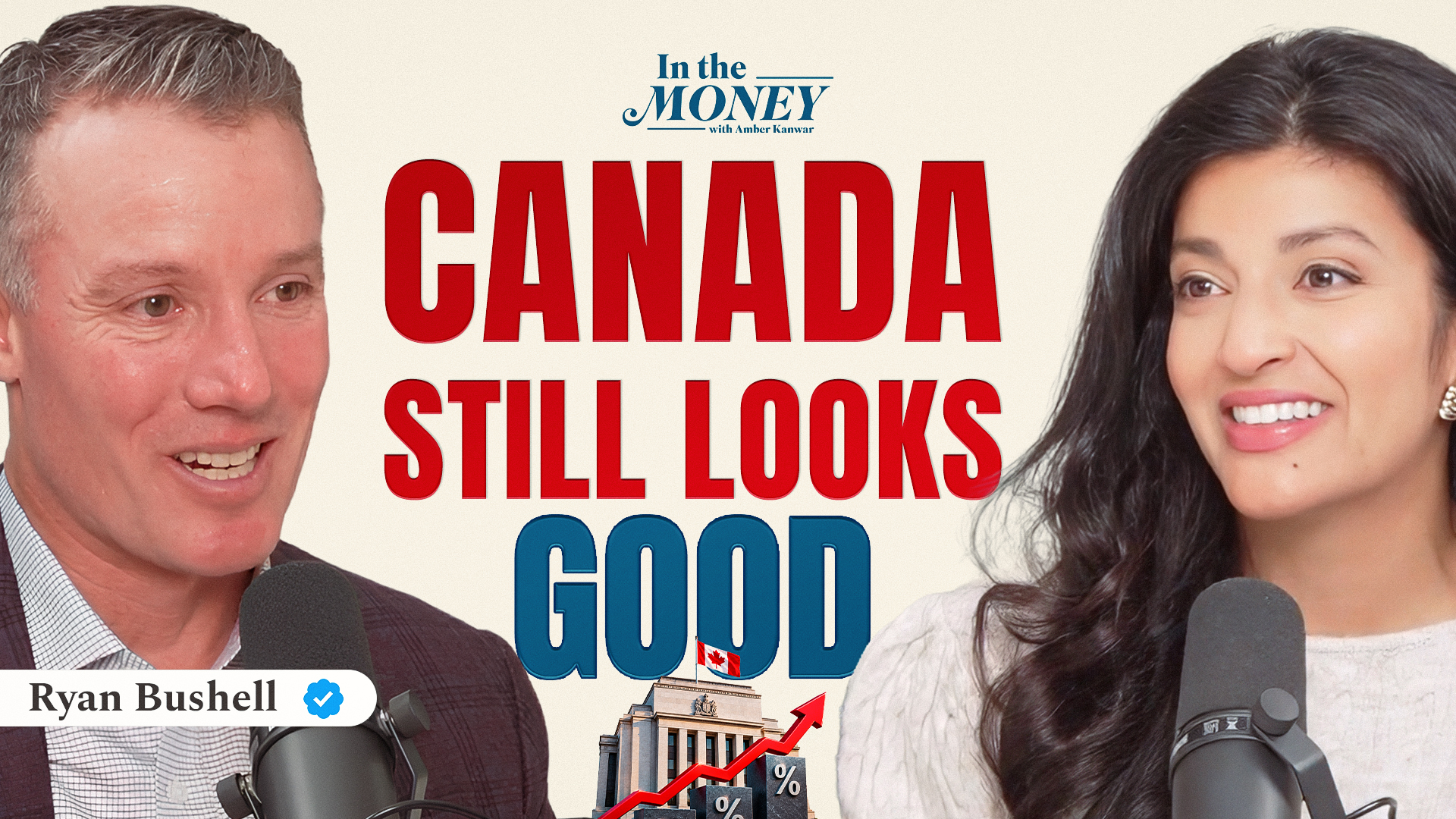

BRAND NEW EPISODE: FIRST INTERVIEW WITH NEW BAYTEX CEO
Global investors spent years writing off Canadian energy. Now, one of the sector’s most embattled companies is trying to prove them wrong. On this episode of In the Money with Amber Kanwar, Amber sits down with Chad Lundberg, President & CEO of Baytex Energy, for his first interview since taking the helm.

Looking to invest in high-quality companies without high fees? The HAMILTON CHAMPIONS™ suite of ETFs offers exposure to diversified portfolios of equity champions across tech, financials, utilities, and dividend strategies, all with a low 0.19% management fee, designed to help you stay invested with confidence for the long term. For more information on the HAMILTON CHAMPIONS™ suite, visit: www.hamiltonetfs.com/hamilton-
Holy news flow, batman: Futures are flat not betraying at deluge of catalysts under the surface right now: IBM shares are plunging more than 20%, most of the major US banks reported results with mixed reception, oil prices are surging once again, US inflation which cooled much more than anticipated, and later this morning we will hear testimony from US Fed Chair Kevin Warsh. I’ll deal with stocks below. Oil rallying 2% following a 9% surge yesterday to just under $80/barrel. The truce between the US and Iran continues to implode with the US striking Iran and threatening to resurrect the blockade of the Strait of Hormuz. The US also said they would charge a 20% cargo fee for safe passage. “That’s bad news, as such a fee would push transit costs far beyond the roughly $2 million per ship that Iran had proposed charging,” wrote Ipek Ozkardeskaya of Swissquote, “Bloomberg reports that such a measure would likely be illegal under international law. I would simply say that some people at the helm of the US appear to be losing their minds.” His words, not mine. This is not just about energy. Rising oil prices are making bond investors nervous with yields rising accross the curve in the US. Higher borrowing rates come at a time when tech companies are spending like mad on the AI race. If the funding window closes….look out below. Had it not been for Hormuz, we might be having a different conversation about the rate trajectory after headline CPI in the US fell more than expected month over month and came in at 2.6% compared to last year (less than the 2.8% expected). Right now the market still sees a 54% chance of a rate hike in September – which is lower than what it was before the inflation print.
Banks vs Bankers: Shares of JPMorgan, Bank of America, Citi and Wells Fargo are all trading down while capital markets pure-plays Goldman Sachs and Morgan Stanley are popping higher. Money centre banks appear to be giving way to the stock jocks:
- JPMorgan (-3%) delivered record quarterly profit aided by record equity trading. Almost every business line was higher than expected. So why is the stock down? The expense outlook came in higher than expected.
- Bank of America’s (-2%) profit was also better than expected on a similar explosion of their equity trading business. Investment banking was also significantly better. There is no clear catalyst for the sell off other than a preference for pure capital markets exposure today and the fact that BAC has outperformed peers over the past month.
- Citi (-2%) posted higher profit than even the most bullish analyst expectations as the CEOs turnaround plans take hold. Like the other banks, equity trading revenue was also a record. Why is the stock down? Equity trading growth lagged peers, consumer card business was shy of expectations, expenses rose because of layoffs, and a measure of how efficiently it uses capital fell.
- Wells Fargo (-2%) also benefitted from a boom in wealth management and investment banking but net interest income was only in-line with expectations hitting the stock this morning.
- Goldman Sachs (+4%) is the lone outperformer – if capital markets is the star of the financials – might as well own the best? Goldman proved that is what they are this quarter beating their own Wall Street equity trading record. This is the third quarter in a row Goldman has set a Wall Street record – and broken it. Investment banking got a serious lift from leading the SpaceX IPO and Alphabet’s equity raise. Unlike at other banks, expenses rose less than revenue.
- Morgan Stanley (+2%) in sympathy with Goldman Sachs, it reports tomorrow at 7:30am.
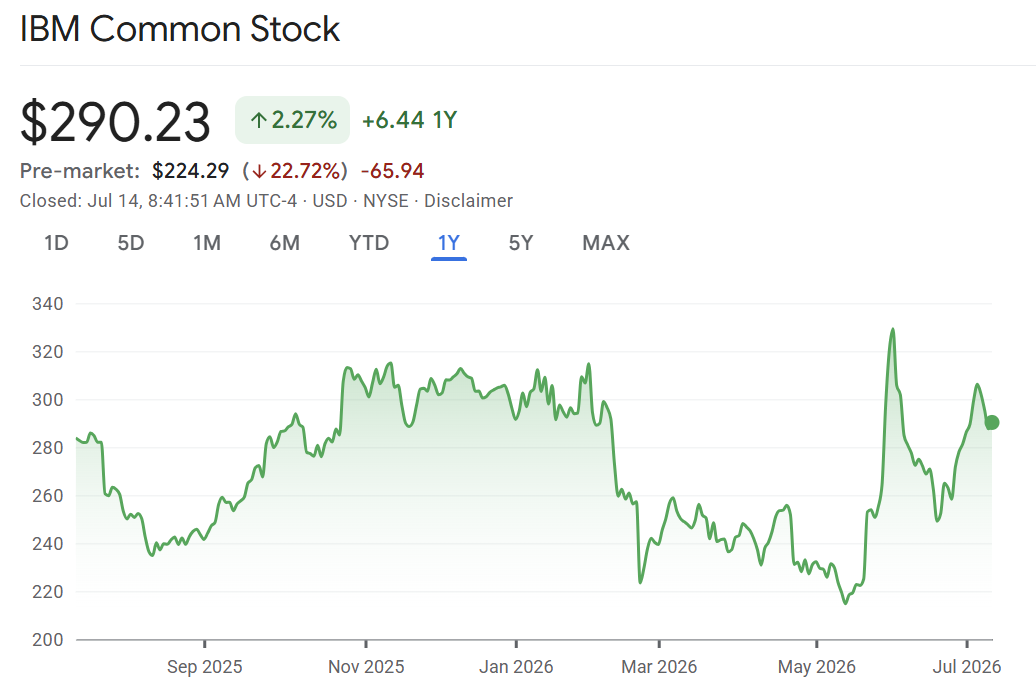
Big blues: IBM is plunging 23% after the CEO warned sales will fall short of expectations as business fell off “worse than expected” compared to their outlook from April. The blow came from “capex reprioritization” as companies raced to purchase things like servers and memory chips ahead of potential price increases, wrote the CEO in a letter to investors. “These conditions require our teams to execute perfectly, and this quarter we faltered,” he wrote candidly, “These are not excuses, but they are realities.” The reality now means that overall revenue will only grow 1% compared to the street at 5%, software sales will only be up 5% vs consensus at +10%, and infrastructure revenue will be down 7% worse than the 2% projected by analysts. The bottom line is that AI spending appears to be crowding out other spending for now. “The key debate we can see emerging now is if the mainframe is facing more headwinds from AI and hence, the impact to numbers, or if this is just timing as there are currently other priorities due to high component price increases for distributed systems…we are in the latter camp,” wrote Raimo Lenschow of Barclays. He maintains his overweight rating on the stock saying the news “is not a thesis changer” because it relates to a shift in short-term investments.
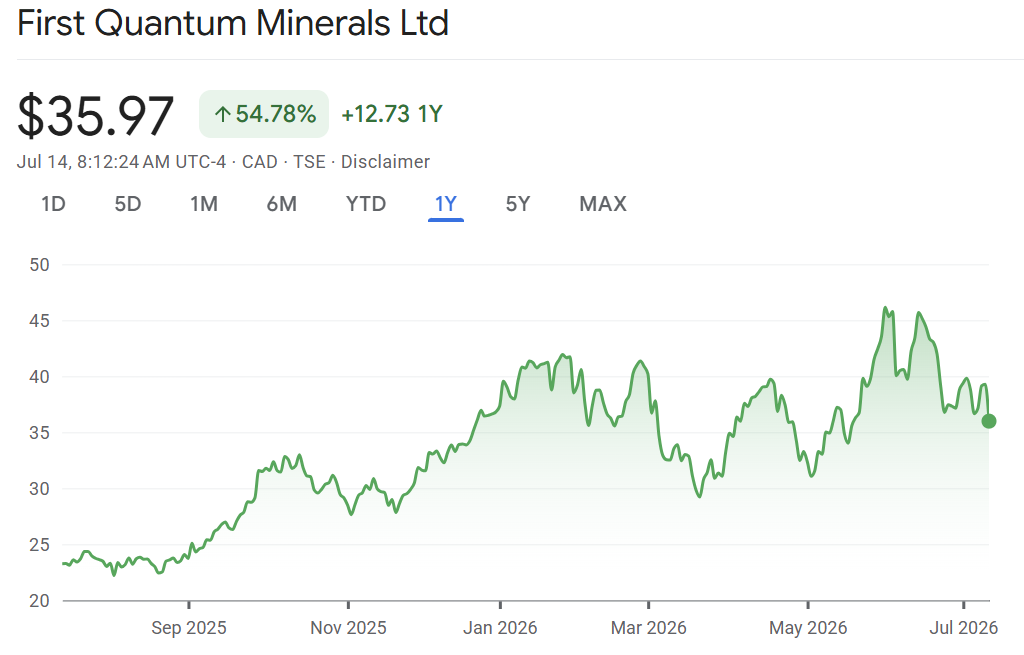
Buy the dips: TD is upgrading First Quantum to buy on the belief that Cobre Panama will be back up and running by later this year or early 2027 and that will allow the company and investors to focus on a promising development project in Argentina. Recall, in 2023 the Supreme Court in Panama ruled that First Quantum’s mine was unconstitutional forcing the company to shut it down. In the ensuing years, the company has been working with the government to get it back up and running. “Importantly, our constructive view is not solely based on Cobre Panama itself. Rather, it reflects what a restart enables. At full production, we estimate Cobre could generate roughly US$1.5Bln of annual FCF in 2028 (100% basis), providing substantial flexibility to reduce debt while simultaneously funding the next generation of growth projects,” wrote TD’s Craig Hutchison. Separately, TD is also upgrading Newmont on the recent pullback saying the valuation is attractive. “NEM has consistently exceeded quarterly expectations over the last 18-months through improved execution and a predictable asset base, while generating industry-leading FCF,” wrote TD’s Steven Green, “With the current pullback, the shares now trade at 0.87x consensus P/NAV, below their 3-year average of 1.10x, which we view as an attractive entry point.”
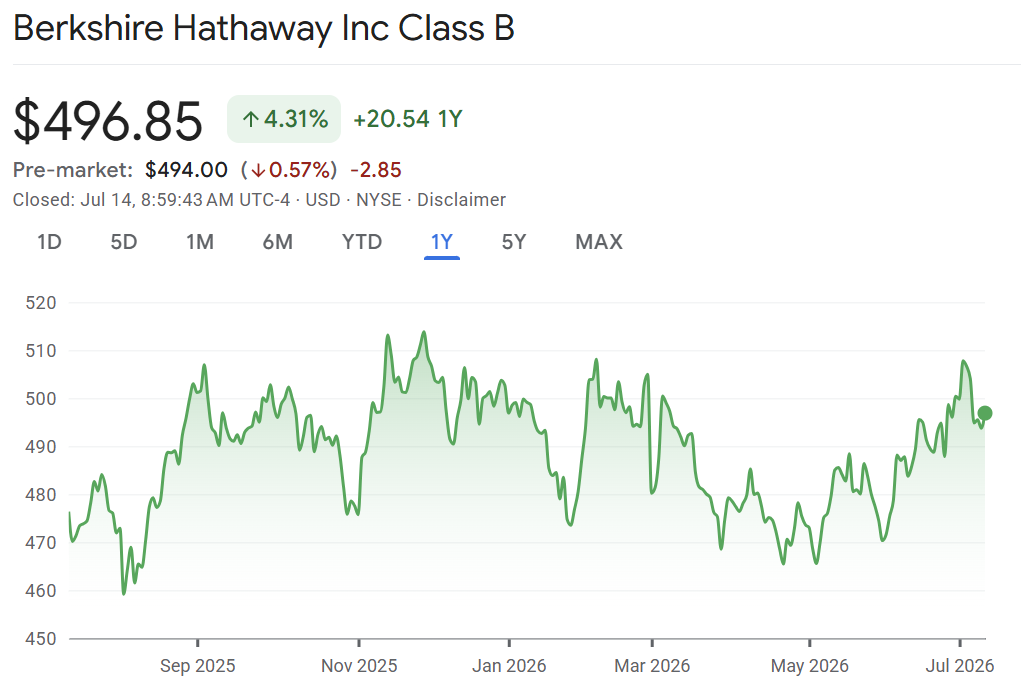
Estate planning: Warren Buffett announced he targets disposing of his Berkshire Hathaway shares over the next eight years. The shares will move to foundations controlled by his children. It is part of the giving pledge in which Buffett has said he will give away most of his wealth by the time he passes. Notably, Buffett skipped his regular donation to the Gates Foundation as scrutiny of Bill Gates and his ties to Jeffery Epstein remains.
Don’t miss our next episode! Email questions@inthemoneypod.com