

Richard Abboud dropped out of university to pursue entrepreneurship. Today, he’s the Founder & CEO of Forum Asset Management, a $4 billion asset management business—and one of the country’s most vocal advocates for a more ambitious Canada.

Looking to invest in high-quality companies without high fees? The HAMILTON CHAMPIONS™ suite of ETFs offers exposure to diversified portfolios of equity champions across tech, financials, utilities, and dividend strategies, all with a low 0.19% management fee, designed to help you stay invested with confidence for the long term. For more information on the HAMILTON CHAMPIONS™ suite, visit: www.hamiltonetfs.com/hamilton-
FROM AMBER’S DESK
Apologies for the many emails yesterday. I am trying out a new format and there were some kinks. Hopefully this one sent on time and only once!
Here are five things to know today
1.
Stocks flat as Yen climbs, jobs data tomorrow
Futures are struggling for direction this morning as the Japanese Yen climbs, oil prices advance for a fourth session in a row to hit a three-month high, and investors await jobs data tomorrow. The Yen is advancing on the expectation that the Bank of Japan will step in and hike rates to combat inflation. There is a lot at stake here because the Yen was a in freefall earlier this month prompting coordinated intervention by both the US and Japanese. Any unruly appreciation in the Yen risks unwinding the carry trade – where people borrow in Yen because it is cheap and deploy in higher return markets like the US (particularly tech stocks). In simple terms, it could create some forced selling of those US assets. Oil prices are another bugaboo for markets as US and Iran trade attacks with peace talks remaining elusive. This has two major consequences: inflation and a setback for Republicans come the mid-terms. The Bank of Canada kept rates unchanged for the seventh meeting in a row but signaled inflation is too high and the market is pricing in a 53% chance of a rate hike come December – before the meeting it was just a 31% chance. Investors are awaiting jobs data out of the US after the surprise 23,000 job losses in July. Economists expect a rebound in growth but if it is very weak it may call into question the chance of a rate hike at the September meeting. Canada will also release jobs data tomorrow. Interestingly in the last three months Canada has added more net new jobs than the US (181,100 jobs vs just 60,000 for the US. Not bad, eh?

━━━━━━━━━━━━ ◆ ◆ ◆ ━━━━━━━━━━━━
2.
US President Donald Trump takes aim at Canada
In a press conference yesterday Trump laid into Canada for being harder to deal with than China. “Canada has been ripping off the United States for many years…we lost anywhere from $60 to $100 billion with Canada.” He took specific aim at Canadian banks noting that many of them operate in the United States – which has become a large source of income for them – while US banks can’t enter Canada in the same way. Now, he did accidentally mention the Bank of Canada as one of the banks taking advantage of this unfair situation – but not being fully informed has rarely stopped action. He then went on to detail how he dealt with a similar situation when it came to Canada’s delayed approval of the gulfstream apparently to preserve Bombardier’s competitive position. He recalled how he threaten to decertify Bombardier jets and increase tariffs and how that lead to the sudden certification of the gulfstreams. With the banks just coming through earning season solidly, downplaying the impact of tariffs, and still trading at record multiples it behooves investors to at the very least pay attention to this comment as a potential risk. I reached out to an analyst who told me on background right now it is not a key concern and points out that one of the reasons that the US banks aren’t here is because many pulled back to shore up capital after the Great Financial Crisis.
━━━━━━━━━━━━ ◆ ◆ ◆ ━━━━━━━━━━━━
3.
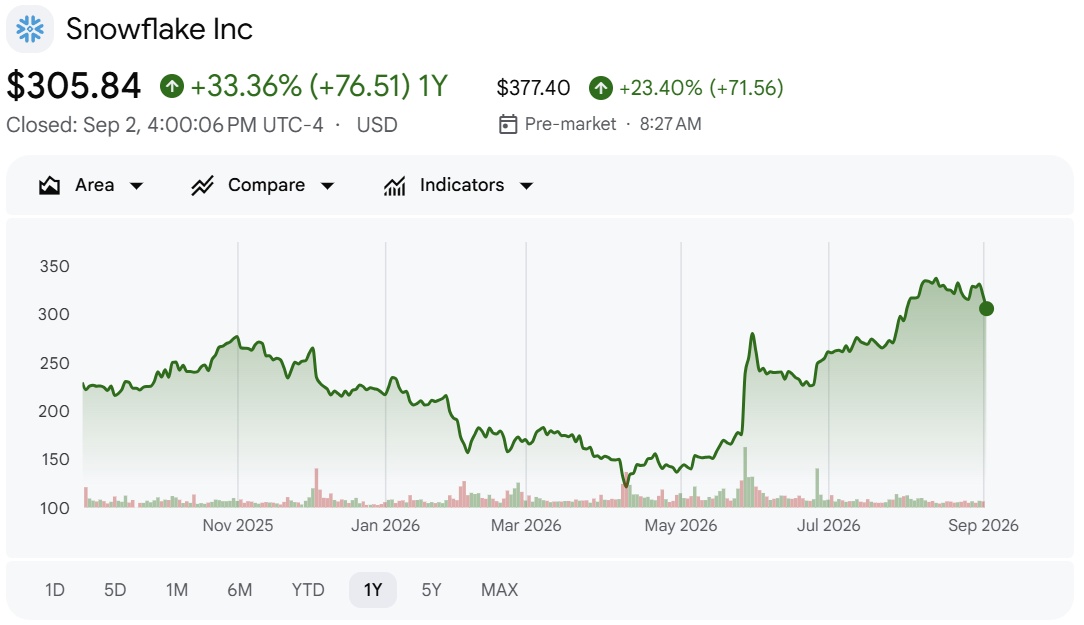
Snowflake surges 23% in pre-market
The software company beat expectations and boosted its sales forecast for the year helping it to win the debate about whether AI is a disruptor or an enabler to their business. Product revenue accelerated for a third quarter in a row thanks to the rapid adoption of their AI assisted coding tools. The raw numbers are impressive: growth accelerated 37% and the forecast suggests it will get even better in the second half of the year.
|
“Third straight qtr of acceleration against a tough compare + high expectations underscore just how well AI is monetizing and — sanjit singh, morgan stanley (overweight) |
━━━━━━━━━━━━ ◆ ◆ ◆ ━━━━━━━━━━━━
4.
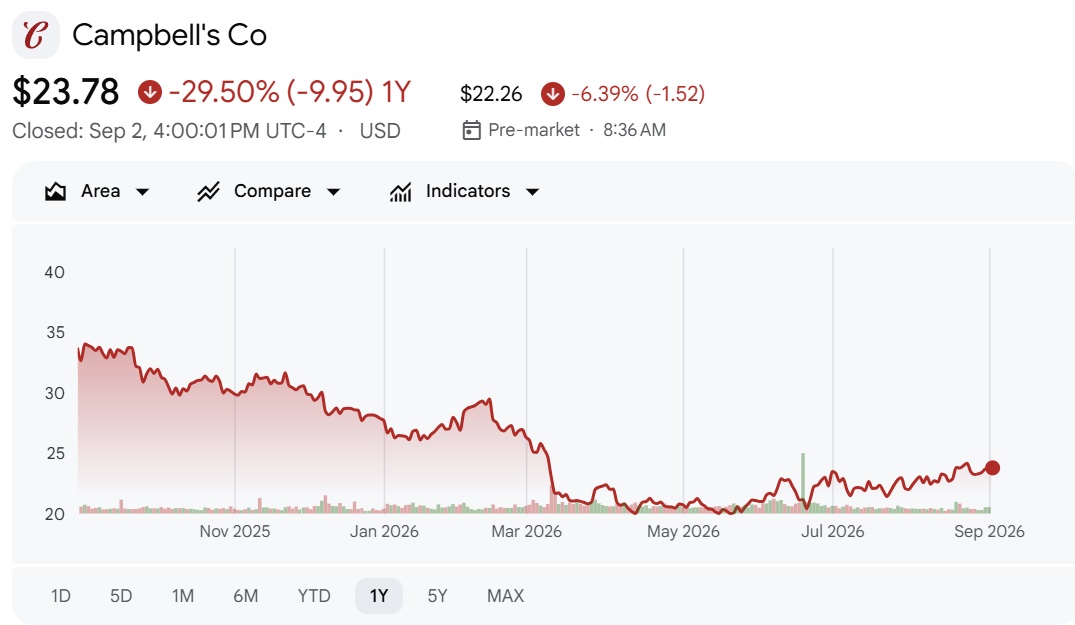
Campbell’s plunges 6% after dividend cut and weaker sales
The embattled soup and snack maker cut the dividend 36%, saw an 8% drop in total sales, and warned sales will continue to fall as costs increase. Changing customer habits are partially to blame, people just aren’t reaching for Goldfish (unless you are one of my kids) or Kettle Chips like they used to. Meanwhile, protein rich snacks have increased and Campbell’s finds itself on the wrong side of the trend. GLP1s are no doubt part of that story – something that the CEO of Alimentation Couche Tard brought up in their quarterly results yesterday. But Campbell’s also has very high debt levels and the payout was viewed as unsustainable. With the stock down 33% over the past 5 years (compared to 81% for the S&P 500).
|
“…Much like the several center-store food companies that have preceded it (GIS, CAG, KHC), CPB is clearly taking a much more aggressive self-help stance with respect to brand reinvestment, along with ramped-up cost savings programs and some pricing in order to help fund some of the increased investment, as well as a dividend cut to aid deleveraging.” — andrew lazar, barclays (underweight) |
━━━━━━━━━━━━ ◆ ◆ ◆ ━━━━━━━━━━━━
5.
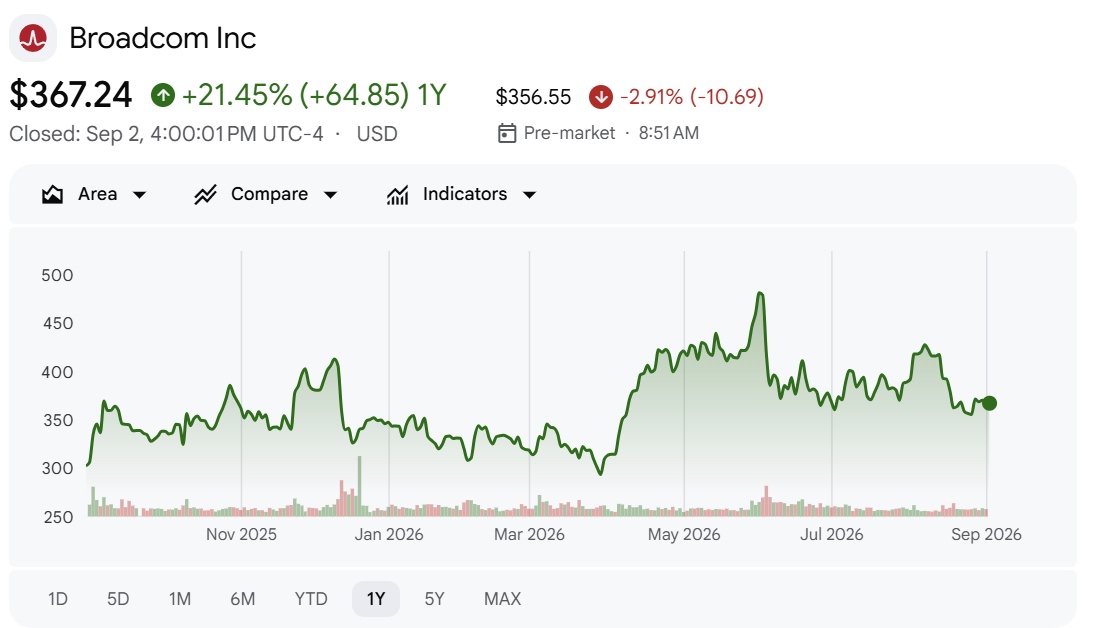
Broadcom drops 3% pre-market as results fail to impress
Growing sales 85% and a tripling in profit wasn’t enough to satisfy Broadcom investors this quarter. The rub is the outlook for the upcoming quarter which fell short of expectations. To be clear, they said AI revenues will double in 2027 and then again in 2028. “We chalk it up to latter-cycle signals…,” wrote Mark Lipacis of Evercore, “We still believe we are in the latter innings of the cycle and expect continued P/E compression broadly, but expect upwards revisions to EPS will ultimately trump the P/E compression.” Lipacis says Broadcom is still worth taking a look at this point in the cylce. “The playbook says to buy low P/E, high cash flow and capital return stocks with secular drivers at this part of the cycle. (Broadcom) fits this profile…” The stock trades at 31x forward earnings. Macquarie upgraded the stock to buy, noting that Anthropic has now become their biggest customer (usurping Google) which means it is the “cleanest listed proxy” for Anthropic’s spend on compute power.
|
“Upside Surprise, Meet P/E Compression…Welcome to the Latter Innings of the Semi Cycle” — Mark lipacis, evercore (outperform) |
Don’t miss the next episode! Email questions@inthemoneypod.com