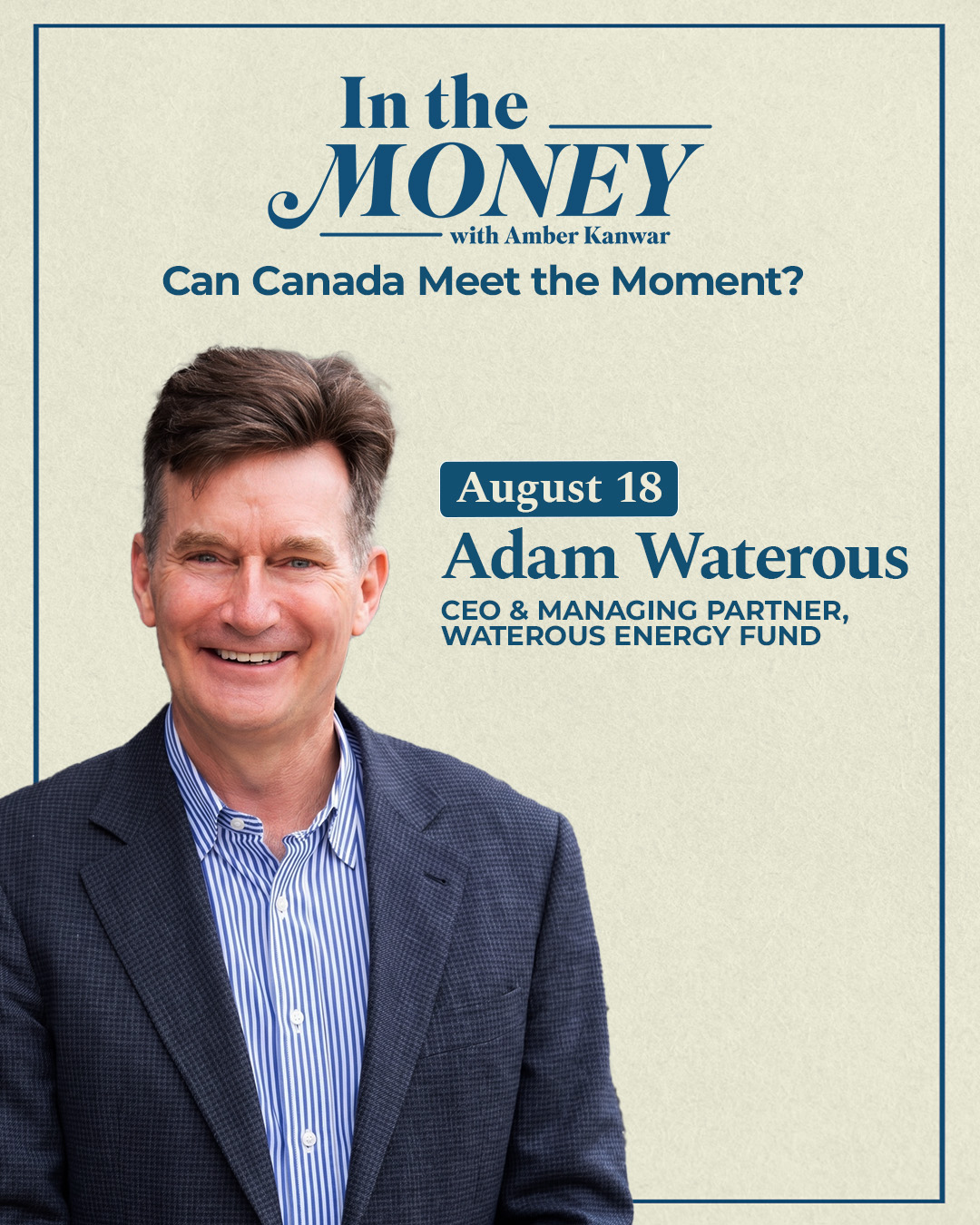
Canada gave the world insulin, the smartphone, and foundational AI. So why does the economic value keep flowing south? In episode 2 of our summer series, Paige Ellis sits down with two of Canada’s most successful founders — Michele Romanow (Dragons’ Den, Clearco) and Laura McGee (Diversio, Artera) — who agree on the problem but disagree on how bad it really is.
Here’s a taste of what they get into. 🎧 [Listen to the full episode]

With over $100 billion in assets, ATB Financial is powering possibilities for more than 843,000 financial services clients. ATB Cormark Capital Markets is a leading North American investment firm providing holistic corporate and capital markets advice and full-service financial solutions. Visit www.ATB.com/inthemoney for more information.
Michele Romanow: “Our competitive policies create anti-innovation”
The exodus is accelerating
- In 2015, half of Canadian founders domiciled their companies here. Today it’s under 30%.
- Founders are “voting with their feet” — the U.S. bets on you, and building communities there are “infectious.”
- We had these same problems 10 years ago and have gone backwards: higher taxes, unfixed trade barriers, more villainization of founders.
We protect incumbents, not challengers
- Canada is comfortable rewarding oligopolies in grocery, banking, telecom, and airlines — but not founders who lose money trying to disrupt them.
- Protecting incumbents kills innovation; fintech made U.S. banks better, not weaker.
- We celebrate small business but don’t celebrate global winners like Shopify and Lululemon the way we should.
Policy is the one thing we control
- Tax the risk-takers less, not more — “you cannot tell people to risk everything and then tax them more for that.”
- Copy what works: angel/small-business incentives, Canadian procurement that prioritizes Canadian innovation, normalizing founder secondaries.
- Where she’s investing next: defense/deep tech, health & wellness, and AI-native companies transforming “sleepy” long-tail industries.
Laura McGee: A more nuanced view from both sides of the border
Bootstrapping beat fundraising
- Canadian VCs laughed Diversio out of the room — “not venture backable.” So they sold product instead.
- With ~$2M in revenue, entirely bootstrapped, the second raise was easy — strong intrinsics do the talking.
- She ultimately raised from top U.S. firms (First Round Capital), where every partner pitched her on what they’d personally do.
Why the value goes south
- America is a “magnetic force” for risk-takers — failure isn’t just tolerated, it’s celebrated.
- Canadians remember the fall, not the build; founders here are too worried about protecting their reputation.
- The killer stat: last year ~7% of Canadian companies had adopted AI at scale vs. ~60% of American ones. Slow adoption puts Canadian AI startups at a disadvantage at home.
But the Canadian network is a real edge
- When SVB collapsed, five Canadian banks were in emergency-loan diligence within four hours — “you couldn’t have done that in the U.S.”
- Hosting events at Canadian consulates abroad opened doors with senior people she’d never otherwise reach.
- Her wish for 2031: a Canada that “rallies around the flag,” takes bets on unconventional founders, and rewards failure — the way Israel does.
Don’t miss our next episode!