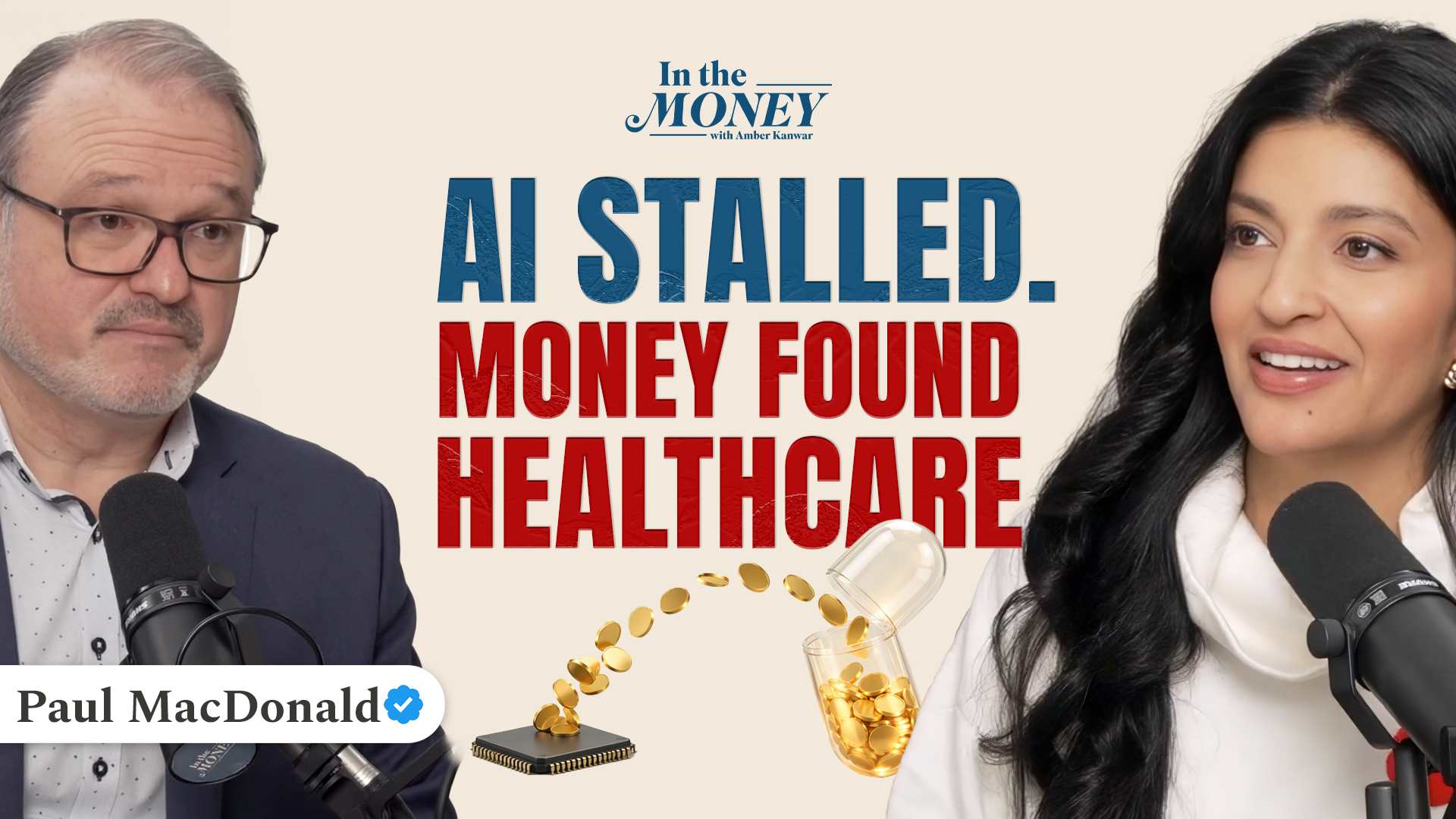
The U.S. midterm elections are over, but what do the results mean for your portfolio? With Washington’s political landscape shifting, investors are weighing the implications for stocks and the broader market. Could the election results set the stage for the next leg of the rally, and is healthcare emerging as one of the biggest opportunities? On this episode of In the Money with Amber Kanwar, Paul MacDonald, President & Co-Chief Investment Officer at Harvest ETFs and head of Canada’s largest healthcare ETF, explains why the midterms could be a turning point for healthcare stocks.
Pro Picks is brought to you by ATB Financial. With over $100 billion in assets, ATB Financial is powering possibilities for more than 843,000 financial services clients. ATB Cormark Capital Markets is a leading North American investment firm providing holistic corporate and capital markets advice and full-service financial solutions. Visit www.ATB.com/inthemoney for more information.
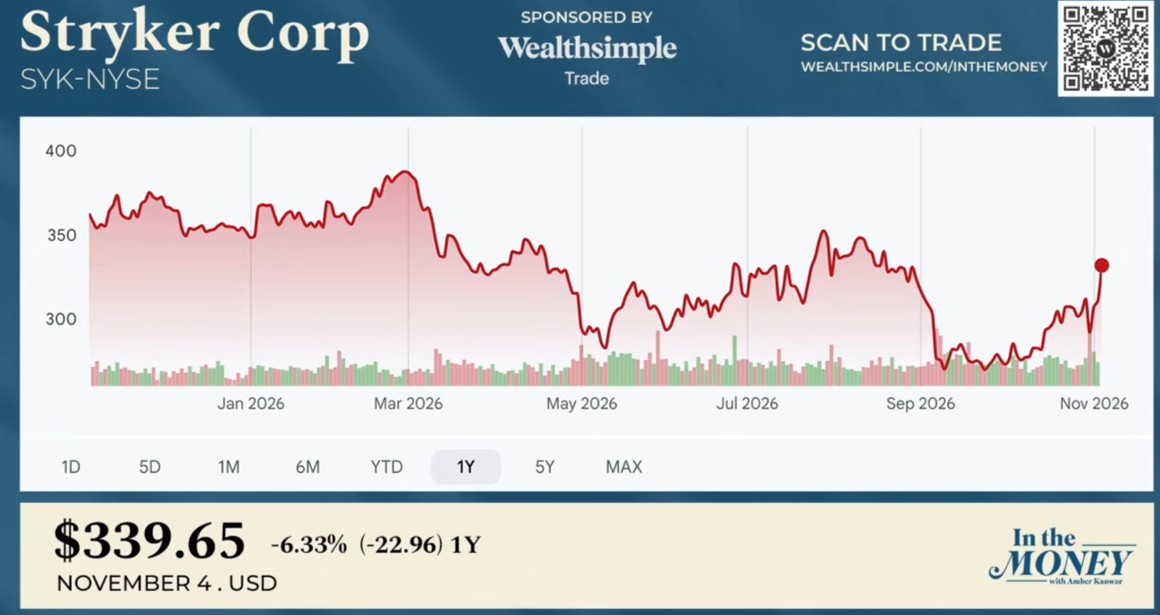
SYK — Stryker
A medtech leader trading at its cheapest multiple since the pandemic
- It’s in every room of the hospital. Stryker’s reach runs from the operating room to the stretcher in the back of the ambulance. Orthopedics, especially hips and knees, is the core business, alongside a sprawling catalogue of surgical tools and equipment.
- The robot is the growth engine. Paul is most excited about the Mako robotic-assisted surgery platform and its push into soft tissue procedures.
- The headwinds look transient. Stryker cut guidance after a cyberattack, a softer orthopedics market and trade-war pressure on its global manufacturing footprint. The risk is that hospitals shift orders to rivals like Johnson & Johnson. Paul says it may take one or two more quarters to work through, but the balance sheet is solid.
- The price already reflects the bad news. The valuation multiple was the lowest since the pandemic heading into earnings, near 12–15-year lows for a well-diversified franchise.
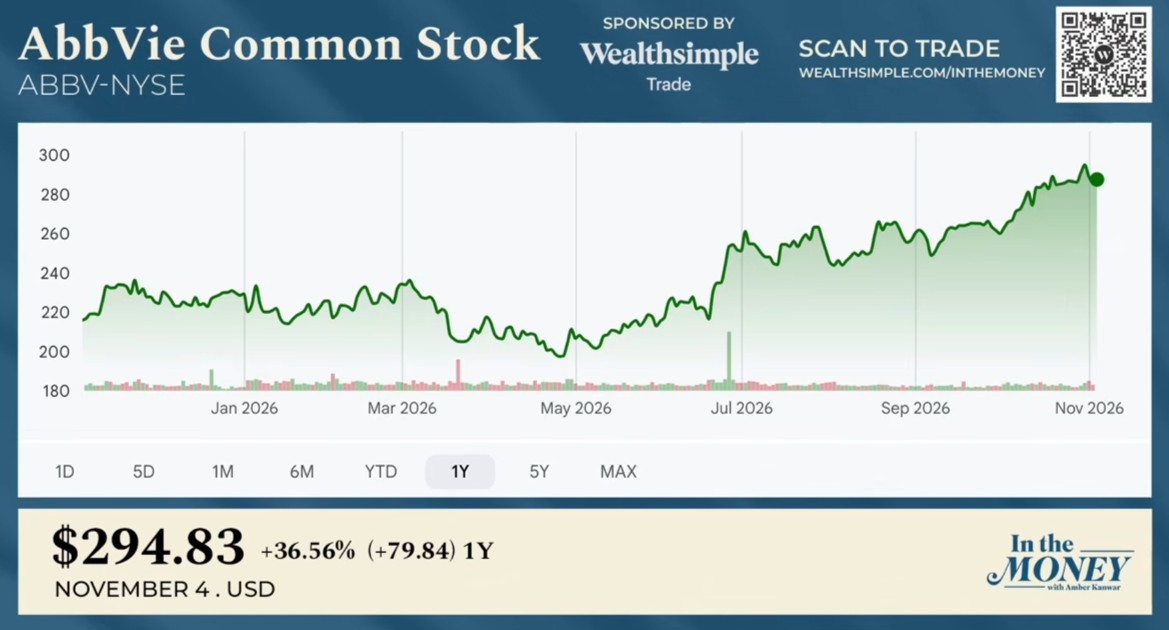
ABBV — AbbVie
Innovation is beating the patent cliff, and the market is paying up for it
- It survived the loss of the world’s biggest drug. Humira brought in more than $20 billion a year before losing patent protection. AbbVie planned for that cliff years ahead, through R&D and acquisitions like Allergan, maker of Botox and a broad aesthetics business.
- Two new blockbusters carry the load. Skyrizi and Rinvoq treat many of Humira’s immunology indications, including IBD and psoriasis, with better efficacy. They have offset much of the decline.
- The stock is near record highs, and Paul isn’t selling. He calls it the ideal setup: a low-multiple stock that executes a growth strategy gets both faster earnings growth and a higher multiple. AbbVie has already seen some multiple expansion, but Paul still calls it inexpensive.
UNH — UnitedHealth Group
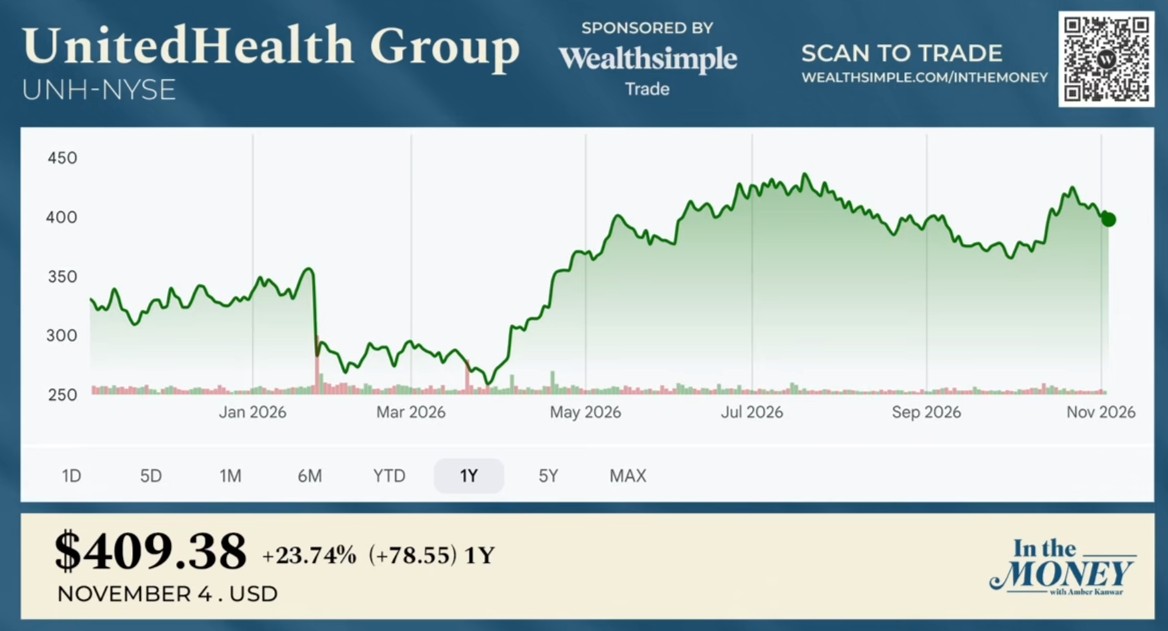
A broken healthcare story that has started fixing itself
- The selloff was industry-wide and fixable. Regulatory changes limited what insurers could screen for, and more patients than expected arrived with those conditions. Medical loss ratios spiked across managed care. Because Medicare pools are repriced every year, insurers can adjust premiums to the new reality.
- The fraud headlines looked overdone. News reports of a federal investigation hit the stock hard. Paul viewed the risk as extraordinarily low: as the largest integrated insurer in the U.S., covering about 50 million lives, UnitedHealth draws political lightning by default.
- The turnaround is showing up in results. After the CEO change, UnitedHealth posted a strong quarter and raised its forecast, yet the market gave it little credit.
- Policy risk could turn into an advantage. Paul doesn’t expect Medicare-for-all-style pressure to hurt. He thinks more insured Americans and more available treatments will outweigh any added costs on premiums.
Don’t miss our next episode! Get your questions in: questions@inthemoneypod.com
DISCLAIMERS: This text AI generated and should be checked against actual delivery. The content provided in this podcast is for informational purposes only and does not constitute financial, investment, or professional advice. The views expressed by the host and guests are their own and do not necessarily reflect the opinions of any organization or company. The host and guests may maintain positions in any securities discussed on the podcast. Always consult with a qualified financial advisor or professional before making any investment decisions.