“Patience is a virtue—sometimes the best trade is the one you don’t rush.” On this episode of In the Money with Amber Kanwar, Jimmy Lebenthal, Chief Equity Strategist & Partner at Cerity Partners, makes the case for looking where others aren’t. He explains why patience still wins, how to navigate “parabolic” markets, and why he’s still putting fresh money to work in names like Cisco (CSCO)—a stock he’s owned for over a decade that’s now finding new life in the AI buildout. He also shares lessons from his new book, How to Ride the Subway: Getting Around on Wall Street and in Life, including why sometimes the best strategy is simply staying on the train.
Pro Picks is brought to you by ATB Financial. With over $100 billion in assets, ATB Financial is powering possibilities for more than 843,000 financial services clients. ATB Cormark Capital Markets is a leading North American investment firm providing holistic corporate and capital markets advice and full-service financial solutions. Visit www.ATB.com/inthemoney for more information.
3 Get Rich Slowly Stocks for the Patient Investor
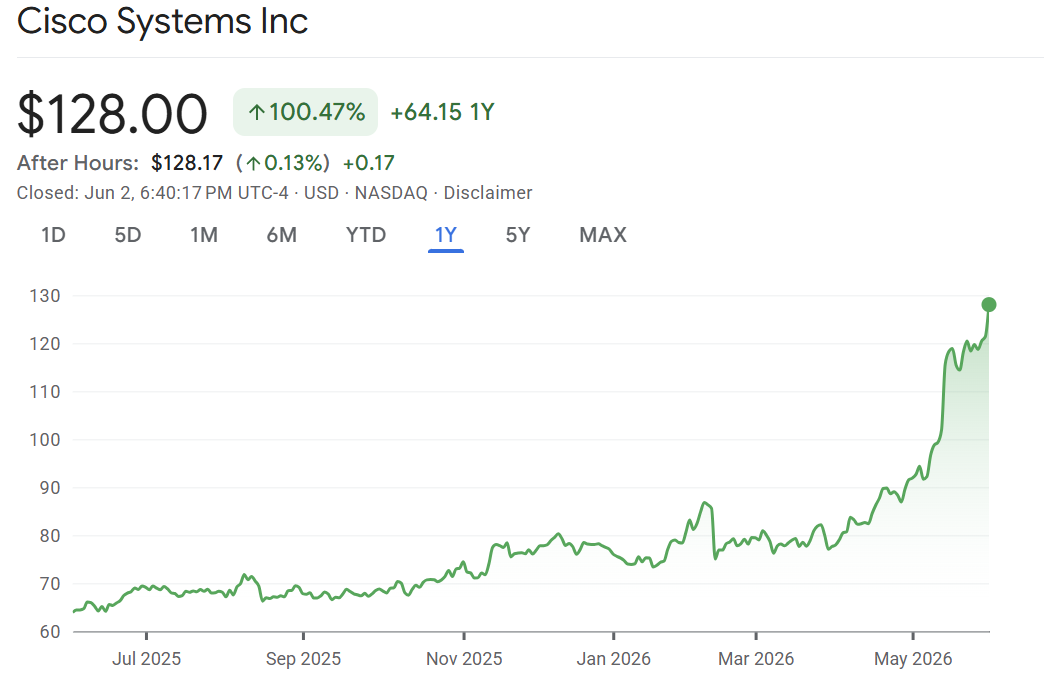
CSCO — Cisco Systems Technology — Enterprise hardware, software & security | AI infrastructure play
A stock Lebenthal first bought at 15 times earnings in 2015 when the market had left it for dead. It now trades at roughly 26 times forward earnings — and he’s still buying.
- Cisco has evolved from a pure hardware company into a triple threat: networking hardware, software with recurring subscription revenue, and security (bolstered by the Splunk acquisition). That combination is a powerful selling point to enterprise customers who want all three from one vendor — and it’s exactly what’s driving AI infrastructure orders from $1 billion annually two years ago to $9 billion today.
- In the trough years of 2023 and 2024, when a pandemic-era supply chain bullwhip caused customers to over-order and then pull back dramatically, Lebenthal held on. His rationale: management was credible, the business strategy was intact, and buybacks at depressed prices were rapidly shrinking the share count and compounding value. Nothing fundamental had broken.
- The forward multiple of ~26 times is justified, in his view, by the AI order growth trajectory and the stability of the foundational enterprise business — which means the stock isn’t entirely dependent on AI to perform. He also notes that data centers are underwritten for 15-20 year lifespans, meaning replacement capex will sustain demand well past the initial buildout boom.
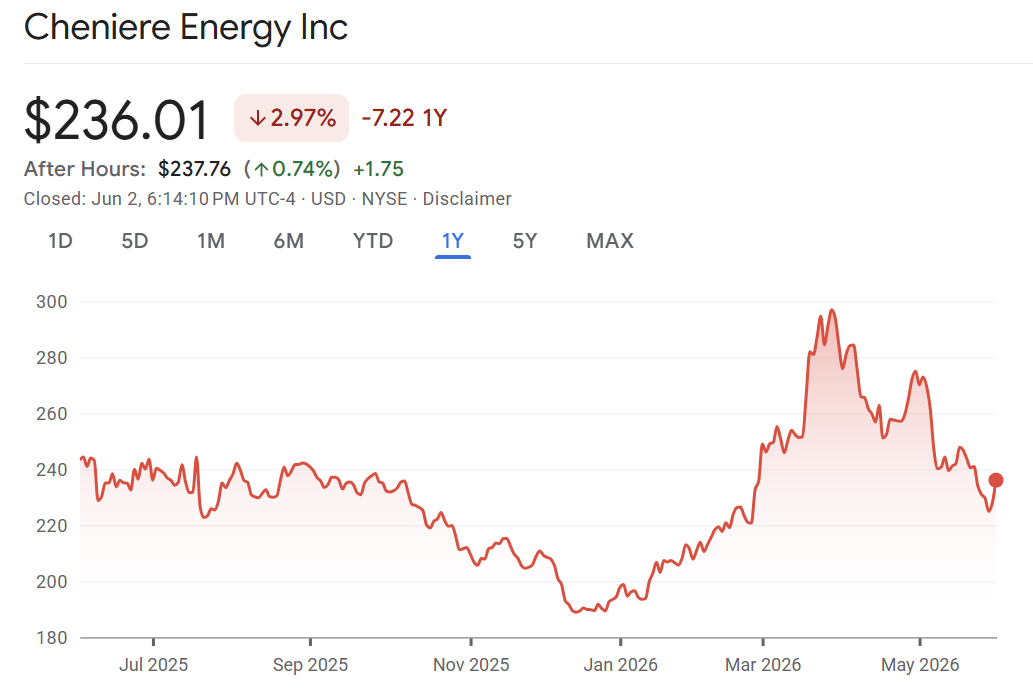
LNG — Cheniere Energy Energy — Largest US LNG exporter | Structural decoupling from Persian Gulf
Down roughly 24% since the Iran war began, the market is pricing Cheniere as if natural gas demand peaks when the Strait of Hormuz reopens. Lebenthal thinks that logic is backwards.
- US LNG exports have grown tenfold over the past decade — from 50 billion cubic feet annually to 500 billion — and are projected to grow another 30% over the next five years. Cheniere is the dominant player in that buildout, and the infrastructure takes years to construct. Nobody is catching up to their lead position quickly.
- Even when the Strait of Hormuz reopens, the world is not snapping back to its pre-war energy configuration. Strategic reserves globally have been drawn down to very low levels and will need to be replenished. Persian Gulf production that was shut in will take months to restart. Lebenthal compares it directly to the Cisco supply chain bullwhip — the normalization process is slow, and energy prices won’t fall as fast or as far as the market assumes.
- The longer-term thesis is a structural decoupling story: the world now knows it must diversify away from Persian Gulf energy dependency. That transition benefits the US and Canada as LNG exporters for a decade, not a quarter. The 24% pullback is the entry point into a multi-year growth story.
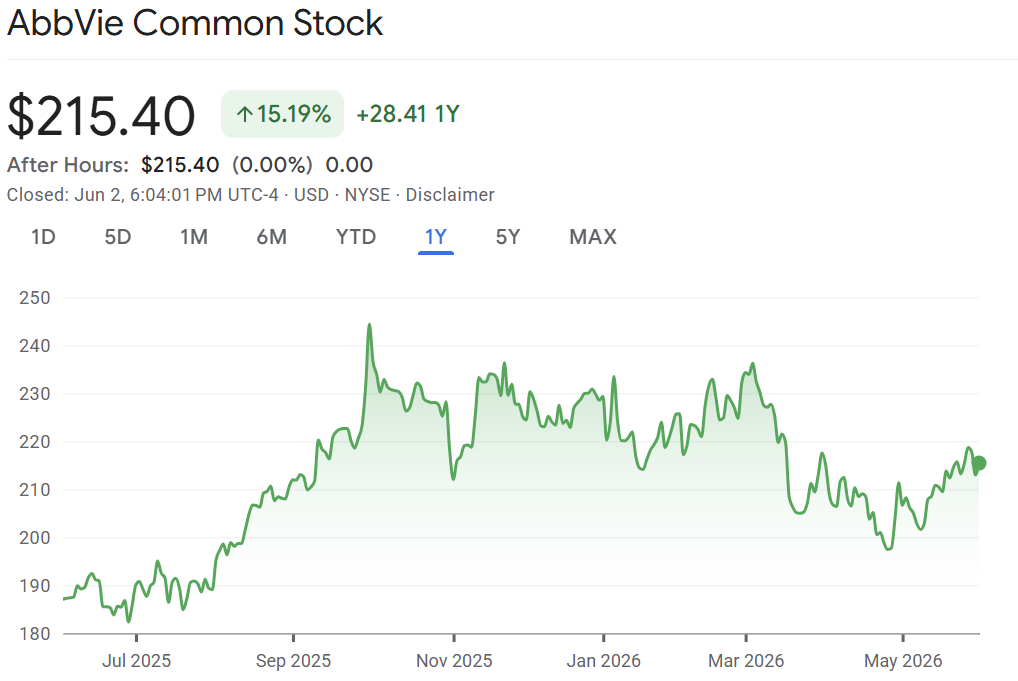
ABBV — AbbVie Healthcare — Large-cap pharma | 15x forward earnings, 3%+ dividend yield
Healthcare has been one of the most unloved sectors in the market for over a year. Lebenthal thinks the money will eventually rotate back — and AbbVie is his preferred way to be positioned when it does.
- AbbVie faced an existential challenge when Humira — its blockbuster immunology drug for conditions like psoriasis, eczema, and arthritis — came off patent and revenues from it began declining. The company has successfully replaced that revenue with newer drugs Skyrizi and Rinvoq, and has built out a neuroscience pipeline through strategic acquisitions to complement the immunology franchise.
- The stock trades at approximately 15 times forward earnings with a 3%+ dividend yield — the same valuation that attracted Lebenthal to Cisco over a decade ago. While you wait for the healthcare sector to come back into favour, you are being paid to be patient through the dividend.
- AbbVie’s self-help story is strong enough to outperform within healthcare even without a sector-wide re-rating — but the real bang for the buck comes if and when money rotates out of AI and technology into defensive sectors. With healthcare having been unloved long enough to reach genuinely cheap valuations, Lebenthal believes that rotation is coming.
Don’t miss our next episode!
DISCLAIMERS: This text AI generated and should be checked against actual delivery. The content provided in this podcast is for informational purposes only and does not constitute financial, investment, or professional advice. The views expressed by the host and guests are their own and do not necessarily reflect the opinions of any organization or company. The host and guests may maintain positions in any securities discussed on the podcast. Always consult with a qualified financial advisor or professional before making any investment decisions.