
Canada just slipped into a technical recession, stocks are sitting at record highs— and one renowned $22 billion firm is leaning in, not backing away. On this episode of In the Money with Amber Kanwar, Alex Letko, Portfolio Manager at LetkoBrosseau, explains why he remains bullish on Canada despite growing skepticism. While headlines point to slowing GDP, he argues the underlying economy is more resilient than it feels—supported by real wage growth and steady consumer spending. He also tackles a debate in the market right now: Canadian banks trading at record highs and premium valuations. Rather than calling it a bubble, he makes the case that strong earnings, oligopolistic structure, and potential pension fund inflows could continue to support the group.

Pro Picks is brought to you by ATB Financial. With over $100 billion in assets, ATB Financial is powering possibilities for more than 843,000 financial services clients. ATB Cormark Capital Markets is a leading North American investment firm providing holistic corporate and capital markets advice and full-service financial solutions. Visit www.ATB.com/inthemoney for more information.
3 Cheap Under the Radar Stock Picks:
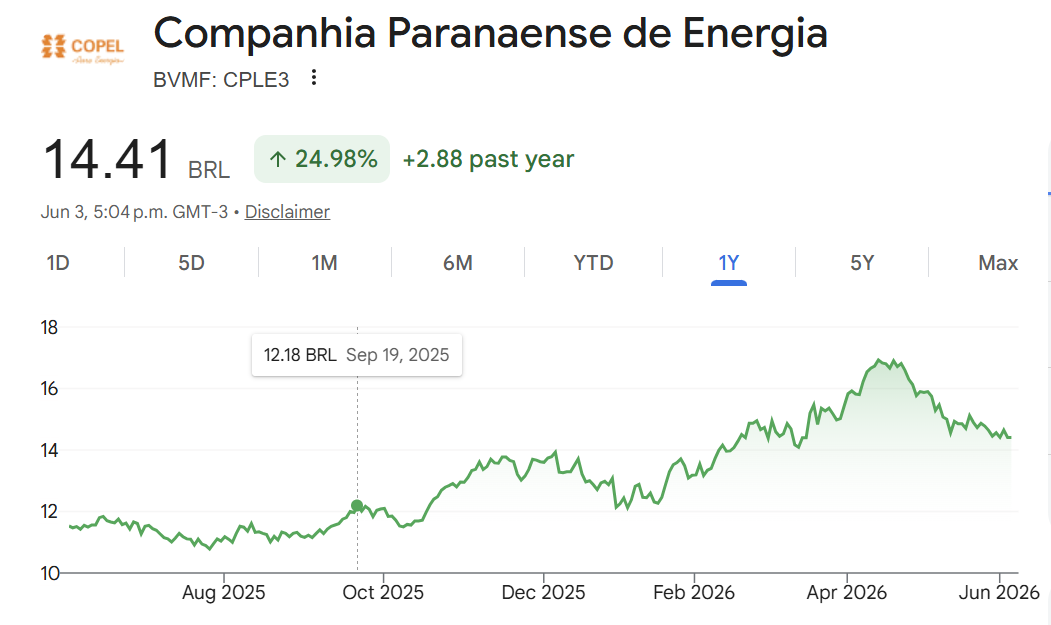
Copel — Brazilian Integrated Utility Emerging Markets — Brazil | Power generation, transmission & distribution
Letko Brosseau’s top holding in their emerging markets fund. A vertically integrated utility operating in Brazil’s state of Paraná — home to 12 million people — with hydro and wind power assets that produce electricity at the bottom of the industry cost curve.
- The input costs are free. Copel generates power from hydro and wind, owns the transmission lines, and owns the distribution network serving end customers. That fully integrated model smooths earnings across the cycle and reduces reliance on any single revenue stream. When your raw material costs nothing, your competitive positioning is structural, not cyclical.
- Earnings are expected to grow at approximately 15% per year, the stock trades at just 13 times next year’s earnings, and the dividend yield is approximately 5.5% on 2027 estimates — based on a 75% payout ratio. In the last two years, Copel paid out closer to 100% of earnings, meaning the dividend yield could be even higher.
- The stock is down 16% from its April highs on general Brazilian market volatility — not on anything company-specific. The IMF recently upgraded Brazil’s GDP forecast for 2026, the country is a net energy exporter insulated from the oil price shock, and an upcoming election could bring a more fiscally conservative government that allows the Brazilian central bank to cut rates and accelerate growth.
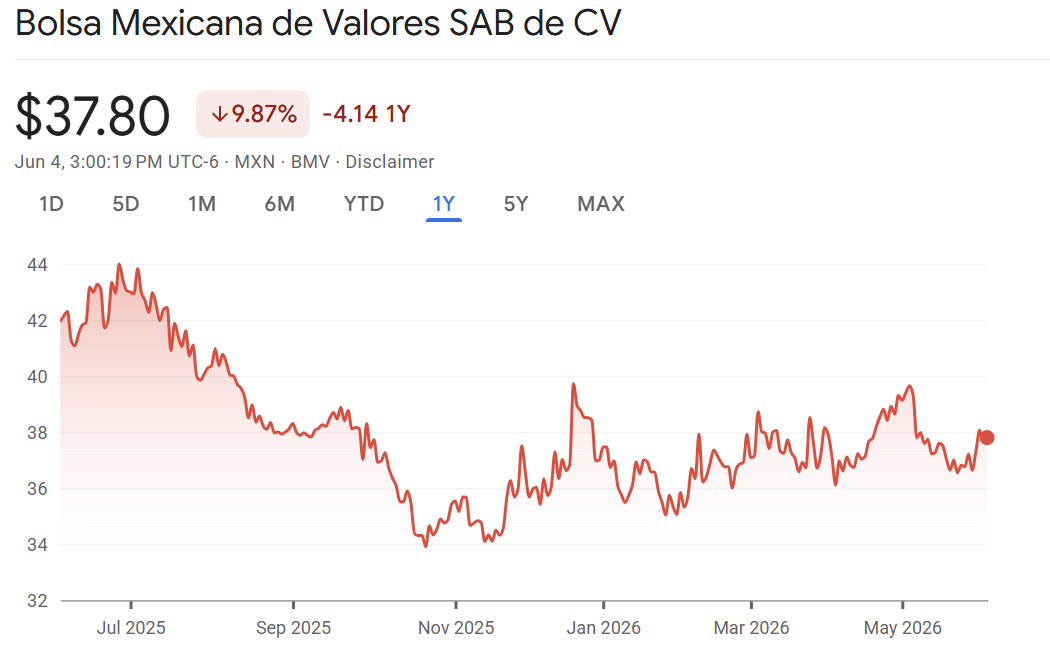
Bolsa Mexicana de Valores (BOLSAA) — Mexican Stock Exchange Emerging Markets — Mexico | Financial infrastructure monopolist
80% of all trading volume in Mexico flows through Bolsa Mexicana. If you need a custodian in Mexico, you have to go through their subsidiary. This is as close to a toll road as you can find in financial markets.
- The secular growth story is powerful and simple: only 50% of Mexican adults currently have a bank account. As financial penetration deepens over time — more people saving, investing, and trading — Bolsa Mexicana captures a disproportionate share of every new dollar that enters the Mexican financial system. You don’t need to pick individual winners; you own the infrastructure everyone must use.
- The stock trades at just 11 times next year’s earnings with a dividend yield of approximately 6% — a combination that is essentially impossible to find in developed market exchanges like Nasdaq, ICE, or TMX, all of which trade at 20-25 times earnings. Double-digit earnings growth is expected over the next several years.
- Yes, US-Mexico trade tensions are a real risk. Letko’s answer: when uncertainty is elevated, own the highest-quality companies in the sector — the ones with dominant market share, not the ones on the fringes. At 11 times earnings, there isn’t a lot of optimism priced in, which means the downside from disruption is cushioned by the valuation.
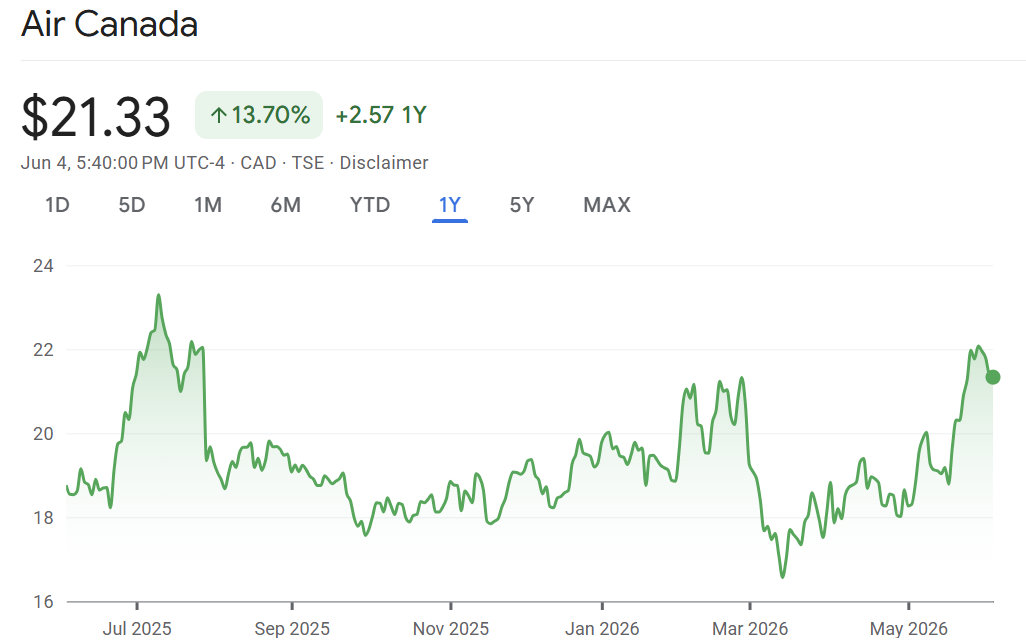
Air Canada (AC) — Canadian Flag Carrier Canada | Airline transformation, premium travel, free cash flow inflection
The contrarian pick on this list — and deliberately so. An airline in the middle of an oil price crisis. Letko’s argument: the current volatility completely masks the underlying transformation the company is executing.
- Air Canada is in the middle of a significant fleet renewal, bringing on new Airbus A321 XLR narrow-body jets that burn approximately 30% less jet fuel per mile than the aircraft they replace. The first one flies this month. These planes will connect Air Canada hubs to secondary European cities, unlocking premium cabin revenue on routes that weren’t previously viable — meaning revenue per seat goes up while fuel costs per mile go down. Margins improve structurally, not cyclically.
- The EPS math is compelling: Air Canada earned approximately $1.50 per share last year. Management guidance points toward margins in the high double digits as the new fleet ramps up and capacity grows 5% annually. Letko’s estimate: $6 in EPS by end of the decade. At 8 times earnings — a deliberately conservative multiple — that’s a $50 stock. More than double from here.
- The free cash flow inflection is expected closer to 2028, as the capex cycle peaks and the new aircraft start generating returns. This is not a trade — it’s a 3-5 year thesis for a patient investor. Letko’s framing: the balance sheet is strong enough to weather the oil price volatility, and they’d rather own it now than miss the move once the story becomes obvious.
Don’t miss our next episode! Email questions@inthemoneypod.com