
Dan Niles doesn’t think AI wiping out humanity is a likely outcome—but he does think the technology could wipe out plenty of stocks. The Founder & Portfolio Manager of Niles Investment Management joins Amber Kanwar at a moment of peak AI anxiety to separate the existential fears from the very real investment risks. Niles believes AI is the biggest technological revolution since the internet and that agentic AI is still in its early stages, but he also sees warning signs in slowing AI spending growth, data-centre push-outs and increasingly aggressive assumptions about how long the boom can last.
Looking to invest in high-quality companies without high fees? The HAMILTON CHAMPIONS™ suite of ETFs offers exposure to diversified portfolios of equity champions across tech, financials, utilities, and dividend strategies, all with a low 0.19% management fee, designed to help you stay invested with confidence for the long term. For more information on the HAMILTON CHAMPIONS™ suite, visit: www.hamiltonetfs.com/hamilton-
FROM AMBER’S DESK
I was one of two journalists granted all-access to the Canada Investment Summit, having moderated the critical minerals panel. This is what it was like from an insider’s perspective.
The group representing over $120 trillion in global capital started the day on the sixth floor of the Four Seasons in Yorkville. Without any handlers or staff permitted, these executives were left to fend for themselves. Bruce Flatt, CEO of Brookfield stood in a long line to get his own coffee while chatting with global investors. CEOs – they’re just like us!
Evan Solomon, Minister of Artificial Intelligence and Digital Innovation sat at a two-person table deep in conversation with Karen Karniol-Tambour, the co-CIO of Bridgewater while a violinist and a cellist played upbeat instrumental versions of popular songs like Maroon 5’s Girls Like You.
Guests could peruse a selection of books and Canadian swag – curated by Diana Fox Carney who would later sit front row for most of the day. Enthusiasm was apparent right away. Tracy Robinson of CN Rail told me the vibes were good while we ate a breakfast of hard-boiled eggs on avocado toast. She said she isn’t here for capital but the development and financing of supply chain infrastructure – a key topic of the day – which greatly matters to her as a railway. It was a sentiment echoed by many CEOs I spoke with – money isn’t the problem, it’s being an attractive place for the capital to flow.
We made our way to the third floor ahead of Prime Minister Mark Carney’s opening address. Camaraderie on the elevator ride was high. I overheard billionaire Robert F. Smith tell a representative from Azerbaijan about his favourite podcast (I resisted the urge to chime in with an In the Money recommendation).
The Prime Minister came on stage after 20 minutes of opening remarks and presentations from Canada’s Indigenous communities. In quick succession he announced:
- Canada’s four largest airports would be opened for private investment
- Mega deduction allowing companies to expense the cost of many kinds of new investments within the first year
- Announcing legislation that would mandate: One project, one review, one year.
The room was noticeably impressed. But the question is, will it work?
“We have $50 billion invested in Canada – I think it’s going to accelerate based on everything I’ve heard,” said Jonathan Gray of Blackstone on a panel discussion with BlackRock’s Larry Fink.
During the breaks I spoke with asset managers who echoed those thoughts. An Asian fund manager, who manages over $100 billion and does a lot of work with big endowment funds, said he was going back home with lots of ideas on how to invest in Canada. A Swedish pension fund CIO said the summit’s message will do a good job drawing capital into the country.
“I’ve never seen anything like this in my 40 years,” remarked Dawn Farrell, CEO of the Major Projects Office in charge of expediting reviews for nation building projects.
Not everyone was impressed. I spoke with a $450 billion asset manager from the US who said they are invested in airports all over the world – what makes Canada’s announcement so groundbreaking? He also said if Canada wants to attract investment start with the pension funds at home which have most of their money abroad.
There was also a difference between what was said on stage and off stage. Everyone knew the assignment when they were on stage and wrapped themselves in the flag. Meanwhile, in the green rooms, speakers still lamented about recent project frustrations, regulatory burden, lack of productivity. Yet there was an air of hope that would change.
Prime Minister Mark Carney has laid out an ambitious plan to raise $1 trillion in investment over the next five years. The government has already committed $280 billion and when you count recent announcements by Canadian financials you could argue they are already over $500 billion. I ran that math by Mark Wiseman, Canada’s ambassador to the US and former CPPIB CEO, and got the sense that he didn’t think Canada could get away with saying they were already halfway there.
Yet if capital is flowing like water, does it matter if it is foreign or domestic? I spoke to the premier of a small province who only had two deals in the 66-page prospectus given to attendees. He said he already got a call from one of the big Canadian banks who said they would step up and provide the financing.
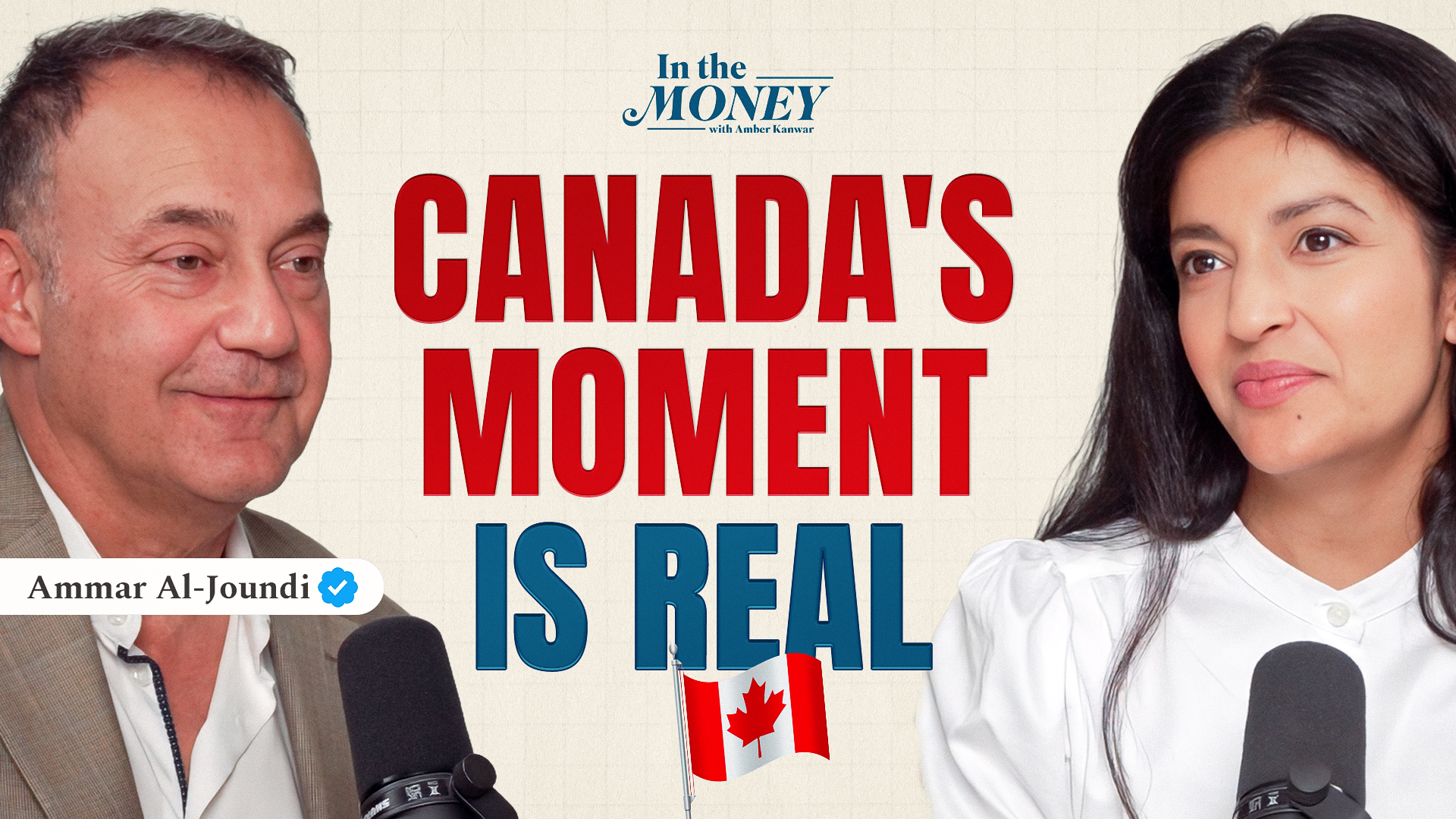
On the critical minerals panel I hosted, Agnico Eagle President and CEO Ammar Al-Joundi said the sea change is real. While no one mentioned former Prime Minister Justin Trudeau by name on stage, his nickname might as well have been “the last 10 years.”
Al-Joundi said everything changed after Mark Carney was elected. On the Sunday morning after the election he got a text from Tim Hodgson, Minister of Energy and Natural Resources, asking how he can help. Al-Joundi said he was impressed that immediately after winning Hodgson took time to find his number and was ready to get to work.
The obvious takeaway was that the event was successful. There was debate about whether to do this every year, or every other year. Could we continue to attract this calibre of investor? What would we have to offer them next year if we did? This was coupled with anxious hope that it leads to something. One couldn’t help notice another factor at play: everyone was getting along. All the premiers came and took meetings. Tim Gitzel, the CEO of Cameco, slapped Saskatchewan Premier Scott Moe on the back and jokingly told him to “keep it down.”
The biggest example was in the closer: former Prime Minister Stephen Harper. While Mark Carney left the event early to head to Europe, Harper took to the podium to close out the investment summit – which he called such a great innovation – so much so, he wished he thought of it!
Don’t miss the next episode! A CEO’s perspective on the Canada Investment Summit!