
Rick Rule is back on In the Money with Amber Kanwar, and this time he’s doubling down on precious metals. In this wide-ranging conversation, the legendary resource investor explains why he believes we’re still in the early innings of a commodities bull market and how investors should think about energy, rare earths, and precious metals right now. Listen on Apple, Spotify, or YouTube Music.
Feeling accomplished. Yesterday I finally completed a 5-month old requisition for routine bloodwork. Every mom I know has one of these that is at least several months outstanding. Hoping it holds the key to why I am so tired all the time beyond my doctor’s usual “you have three kids and just started your own business.”
Here are 5 things to know today:
This time is different: Futures are under pressure again this morning after two sessions in a row of declines for Canadian and US markets. Valuations are the current concerns. By nearly every metric the S&P 500 looks expensive: trailing PE is 71% higher than average, forward PE is 42% above average, Shiller PE is 116% above average and nearing dot com levels. “Buying stocks at these multiples feels bad…” wrote Savita Subramanian, Equity and Quant Strategist at Bank of America, “Or perhaps this situation is not untenable – the index has changed significantly from the 80s, 90s and 2000s. Perhaps we should anchor to today’s multiples as the new normal rather than expecting mean reversion to a bygone era.” In other words, this time is different – the four most dangerous words in finance. However, she makes some compelling arguments. First, S&P 500 companies are carrying way less debt than prior decades. Second, “quality” stocks now make up 60% of the S&P 500 vs less than 50% in the 2000s. Third, companies on average are more profitable and asset light compared to decades ago thanks to technology. “PE multiples can compress from prices falling but also from earnings rising. With major regions in easy fiscal mode, and with the Fed cutting against a backdrop of broadening and accelerating profits, it’s not hard to argue for a boom in EPS and GDP growth,” she concluded.
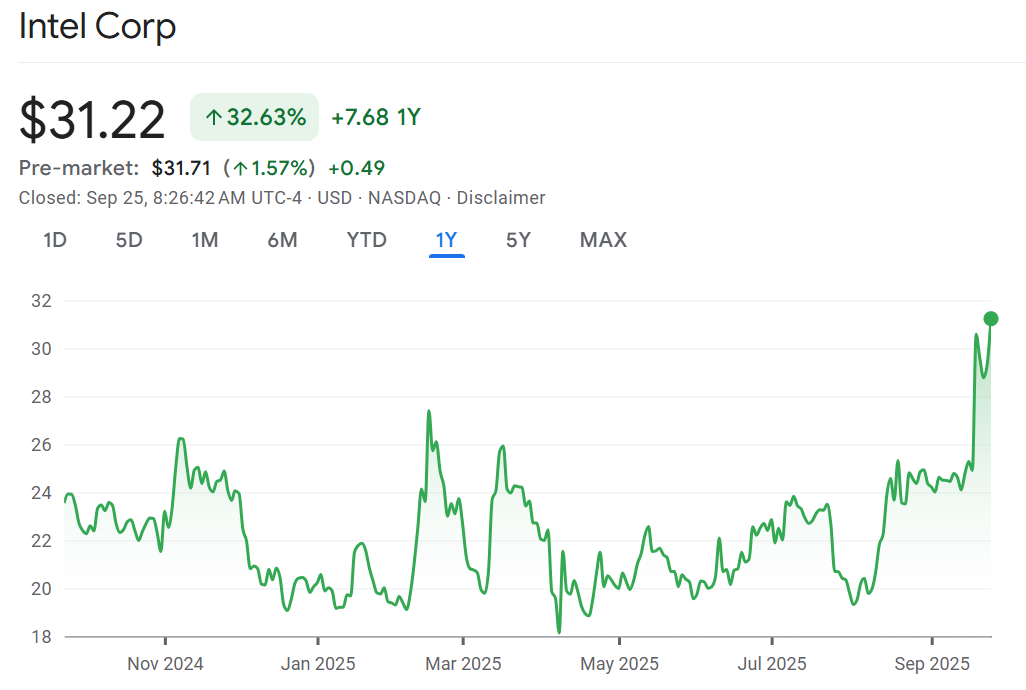
Please sir, Can I have some more: Intel is popping in the pre-market on reports it has approached Apple for an investment. This comes as the embattled chipmaker is fresh off cash injections from Uncle Sam, Softbank, and Nvidia. Apple has largely moved away from getting chips from Intel, especially in the last five years. However, Apple is also looking for ways to show it is investing in the US. What better way than to investing a company that the US government also owns? I shouldn’t be complaining, I’m a shareholder and its been a win with the stock up 60% since the beginning of August and trading at 14-month high.
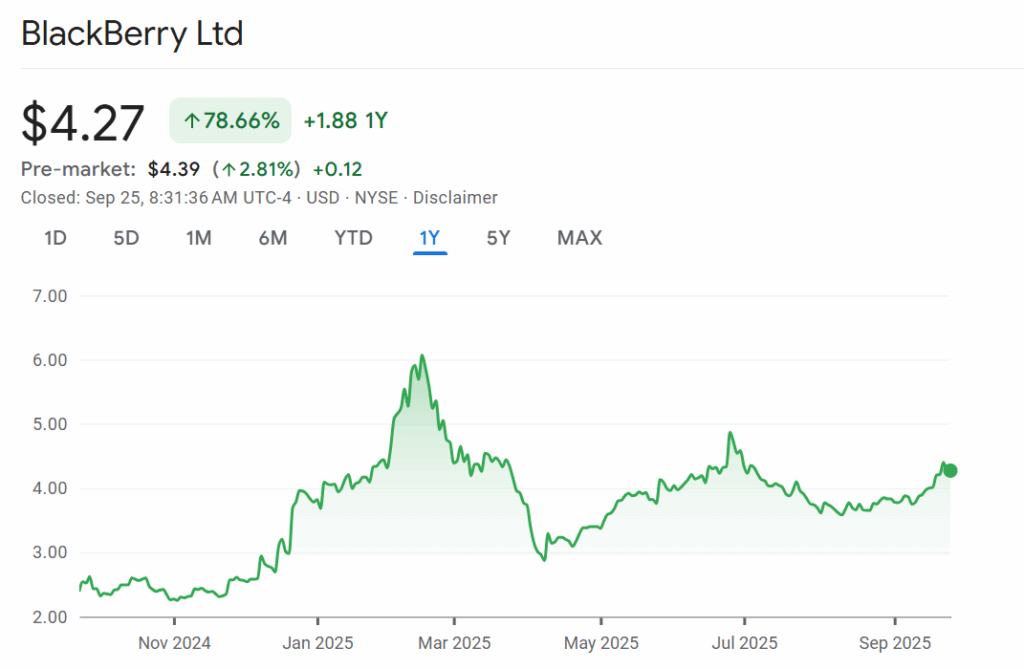
Crackberry: As I type shares of BlackBerry are higher in the pre-market after beating profit expectations and raising their full-year outlook. The stock has been flip-flopping in the pre-market, at one point falling 4.5% after results. So we will watch to see if the gains hold. As I mentioned in my Globe and Mail preview, BlackBerry is trying to stabilize its business. Chief executive John Giamatteo has been in the role for nearly two years trying to revitalize the tech company that has been plagued with falling sales and a weak cybersecurity unit. This quarter profit came in ahead of expectations and sales didn’t fall as much as feared (though still down 11% from last year). Part of the waffling on the stock has to do with the fact that while their profit forecast was boosted and is higher than the street, the sales forecast is a little light compared to expectations.

Buckle up: Watch shares of Air Canada at the open after the carrier warned that labour disruptions will take a $430 million bite out of its sales. Profit will also be lower by $240 million. This puts profit for the upcoming quarter below analyst expectations. Recall, in August Air Canada cabin crew went on strike and the airline had to cancel 3,200 flights. “We view Air Canada’s updated guidance as a negative,” wrote RBC’s James McGarragle. Shares of Air Canada are down 15% since the labour disruption issues.

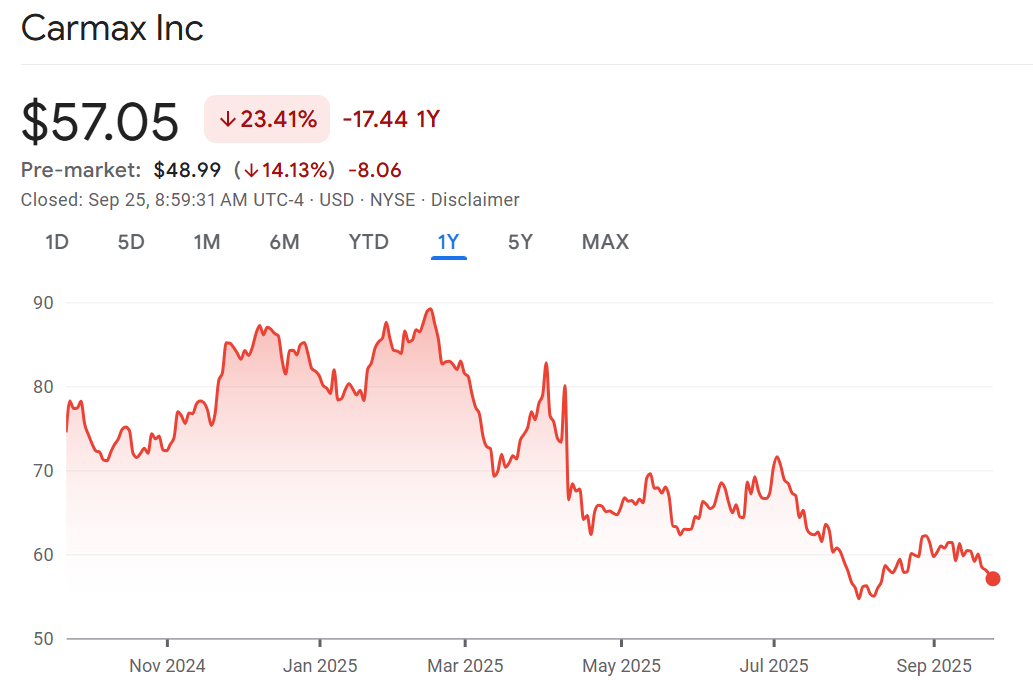
Everything must go: Shares of CarMax are plunging 14% after a huge profit miss ($0.64/share vs $1.03/share expected) and their financing unit had higher provisions for credit losses. Sales in the quarter were also worse falling 6%. Tariffs are the culprit here as customers raced to buy cars earlier this year before tariffs were raised on imported cars in April. This pull forward of demand meant they came up short this quarter. Shares of Carvana are down 5% in sympathy. CarMax is poised to open at the lowest level since 2020.
Don’t miss our next episode with Eric Jackson, the man leading the meme resurgence. Get your questions in NOW! Questions@inthemoneypod.com