What does the perfect resource portfolio look like right now? And where are the biggest opportunities in commodities as the economic cycle enters its later stages? On this episode of In the Money with Amber Kanwar, Benoit Gervais, Managing Director, Portfolio Manager, Co-head of Mackenzie Resources and Energy Evolution Team, shares how he’s positioning his resource portfolios after outperforming the broader market and commodity benchmarks.
Pro Picks is brought to you by ATB Financial. With over $100 billion in assets, ATB Financial is powering possibilities for more than 843,000 financial services clients. ATB Cormark Capital Markets is a leading North American investment firm providing holistic corporate and capital markets advice and full-service financial solutions. Visit www.ATB.com/inthemoney for more information.
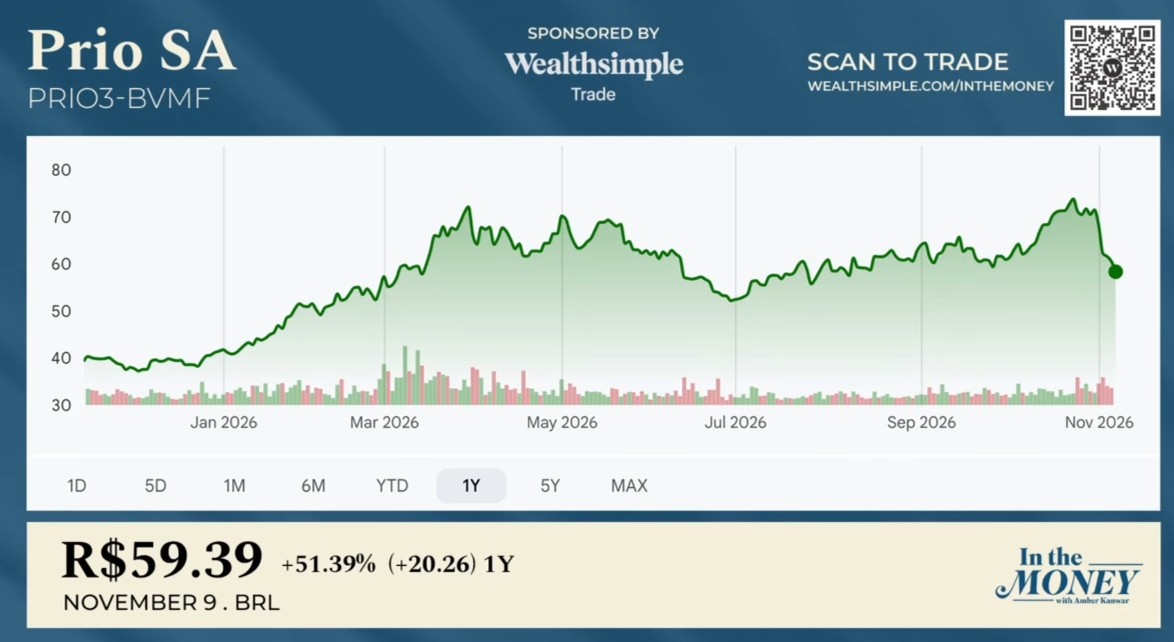
PRIO — PRIO S.A. (formerly PetroRio)
An offshore Brazil oil producer generating a 20% free cash flow yield
- It was built on the best offshore oil geology in the world. When Petrobras ran into financial trouble and Brazil moved to break up its offshore monopoly, a team of former Petrobras employees started PRIO and bid for fields they believed they could run better.
- It’s reaching the payoff phase. PRIO is finishing development of those fields, paying down debt, and expects to start paying dividends soon. Benoit says sustainable free cash flow is running at about a 20% yield, compared with eight or nine percent from a producer like Canadian Natural Resources.
- That return is pay for the risk. It’s a smaller company in a country where the government can intervene, as with an oil windfall tax Benoit calls unnecessary. Brazil’s election also didn’t produce the business-friendly government markets had hoped for. Benoit is still collecting his 20%, but he suggests keeping it to 1–2% of a portfolio.
- Brazil itself pays you to own it. Real interest rates there are running in the high single digits, and Benoit thinks the central bank is more responsible than people give it credit for.
VG — Venture Global
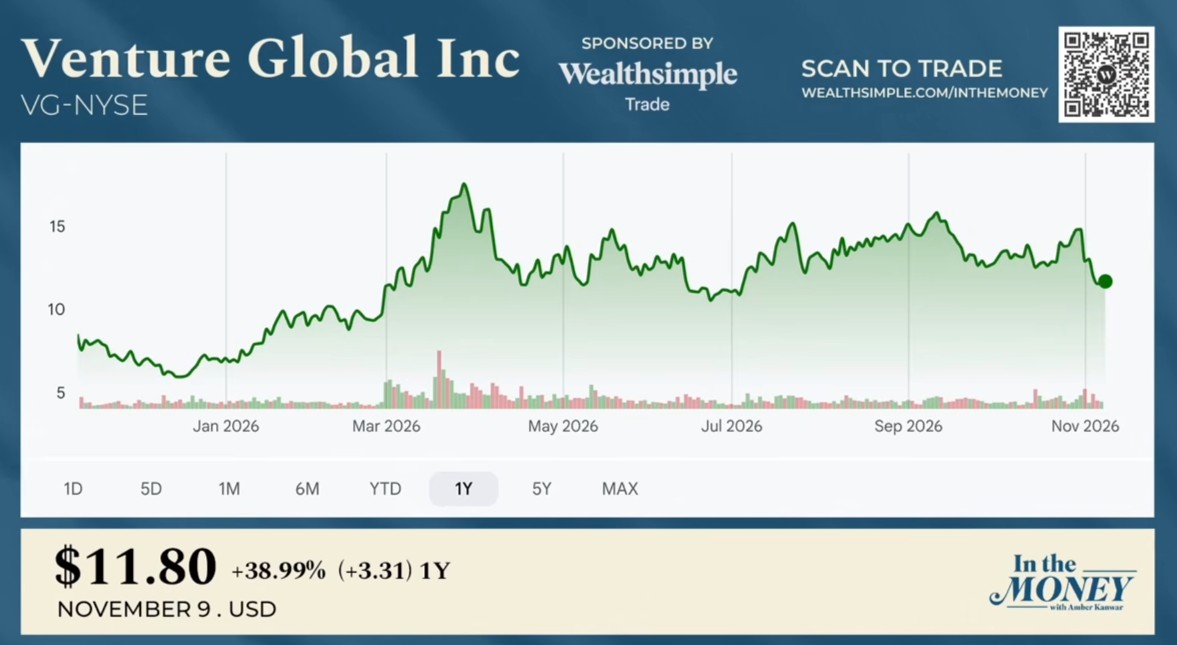
A U.S. LNG exporter Benoit thinks could double or triple
- It sits where local gas meets global demand. Venture Global liquefies cheap U.S. natural gas for export. Benoit expects it to be the world’s first- or second-largest LNG supplier by 2030, alongside QatarEnergy.
- Buyers want a second supplier. After the conflict in the Middle East, LNG buyers are diversifying away from relying on Qatar. U.S. gas isn’t the cheapest, but it’s cheap and secure. Even QatarEnergy is signing deals with other liquefiers to reassure its customers.
- The stock has drifted for reasons Benoit sees as temporary. It trades around $12, below its early-2025 IPO price. Construction has been on schedule or slightly ahead. The stock has been held back by lawsuits from major customers over its aggressive contracting, and by heavy debt that looks worse whenever global gas prices fall.
- The bet is on 2030. Debt is about $42 billion now and could peak at $50–60 billion around 2028–29. By 2030, Benoit expects $10–12 billion a year in earnings with little capital spending left, which works out to about $3 a share. Insiders own about 70% of the company. Be ready to hold for at least three years.
VOE — voestalpine AG
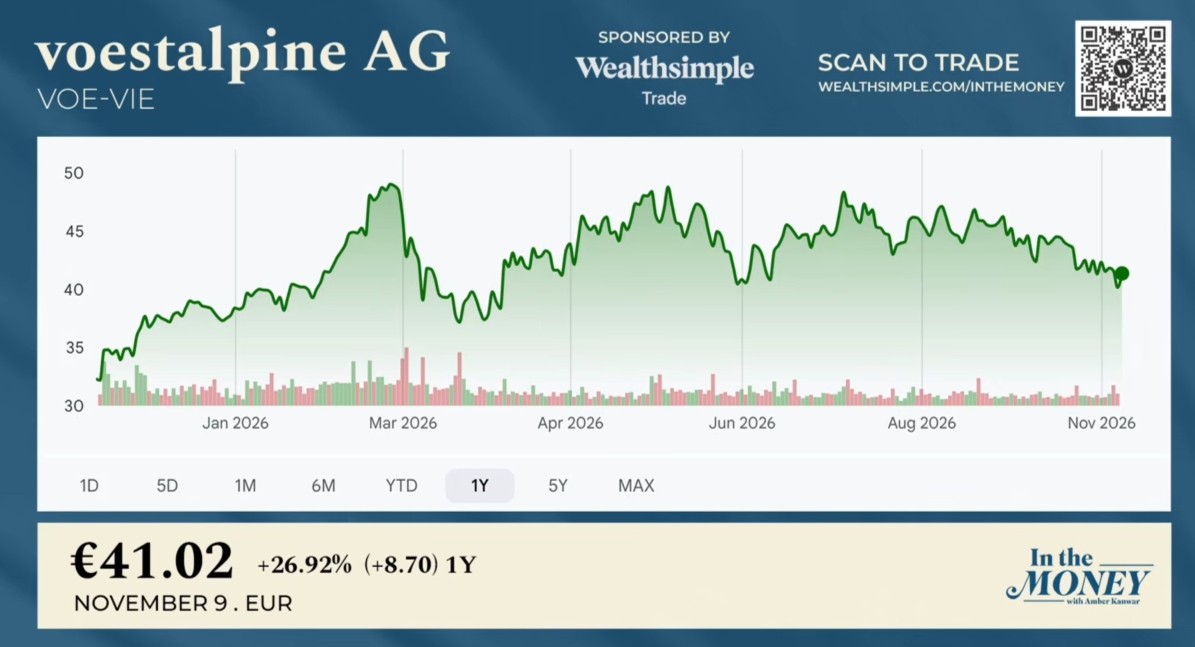
An Austrian specialty steelmaker benefiting from Europe’s new trade barriers
- Europe is starting to protect its own steel. Low barriers let cheap imports, mostly from China, undercut European steelmakers for years. Tariffs and emissions standards are now rising, and Benoit expects European steel prices to carry a premium over global prices.
- Steel has become a regional business. It’s a cheap commodity at about 30 cents a pound, compared with $5–6 for copper. That makes paying a few cents more for a local, secure supply an easy decision for governments thinking about defence, carmaking or emissions. The U.S. reached that conclusion years ago, and Europe is catching up.
- It makes the high-end products. voestalpine specializes in steel for rail, machine tools and high-alloy uses, the grades that defence, transport and infrastructure need.
- Benoit sees a wider trend. He applies the same logic to cement and other low-cost commodities, where governments are increasingly reluctant to import from overseas for local infrastructure.
Don’t miss our next episode!!
DISCLAIMERS: This text AI generated and should be checked against actual delivery. The content provided in this podcast is for informational purposes only and does not constitute financial, investment, or professional advice. The views expressed by the host and guests are their own and do not necessarily reflect the opinions of any organization or company. The host and guests may maintain positions in any securities discussed on the podcast. Always consult with a qualified financial advisor or professional before making any investment decisions.