
The AI trade is getting tired, inflation isn’t going away, and some of the market’s biggest winners may no longer be the best places to invest. Is it time to get defensive? On this episode of In the Money with Amber Kanwar, top-performing stock picker Lyle Stein, President of Forvest Canada returns with a warning for investors: “This is a time to be more cautious than optimistic.”

Looking to invest in high-quality companies without high fees? The HAMILTON CHAMPIONS™ suite of ETFs offers exposure to diversified portfolios of equity champions across tech, financials, utilities, and dividend strategies, all with a low 0.19% management fee, designed to help you stay invested with confidence for the long term. For more information on the HAMILTON CHAMPIONS™ suite, visit: www.hamiltonetfs.com/hamilton-
FROM AMBER’S DESK
This is the last note for the week – I’m off on a little mini getaway with my eldest for her birthday. It’s great timing because we just found out our only pet- a crowntail betta fish – has died. Thankfully she was at school when we discovered this – our current plan is to just remove the fish tank and see how long it takes to notice. Considering she hasn’t looked at this fish since the day she begged me for 6 straight hours to get it, I think we could get away with it.
Here are five things to know today
1.
Tech stocks rally even with Democratic sweep
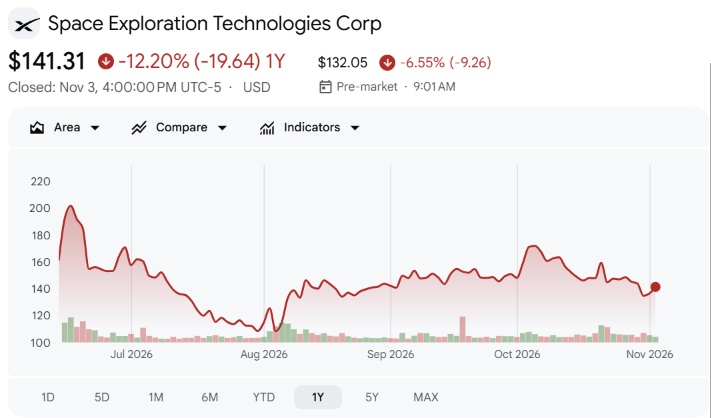
Nasdaq futures initially plunged nearly 2% in a knee-jerk reaction to the Democrats winning both the House and the Senate, but have since recovered and are actually trading up. A Democratic win was initially seen as negative because it will slow the AI data centre build out – especially when you consider Texas elected a Democratic governor for the first time in 36 years and happens to be staunchly anti-data centre. The flip side of that is that perhaps cash flows could see slight improvement. It’s that glass half full that is driving a rebound in the tech sector led by heavy AI spenders: Amazon (+2%), Meta (+1%), Microsoft (+2%), and Google (+1%). Companies that rely on higher spending like CoreWeave (-5%), Nebius (-3%), and Oracle (-5%) are under pressure. Interestingly, semiconductors are flat. SpaceX (-6%) and Tesla (-6%), on the other hand, are under pressure because of Elon Musk’s political affiliation. How ironic he left California because of the Democrats only for one to be elected in Texas where he relocated his companies.
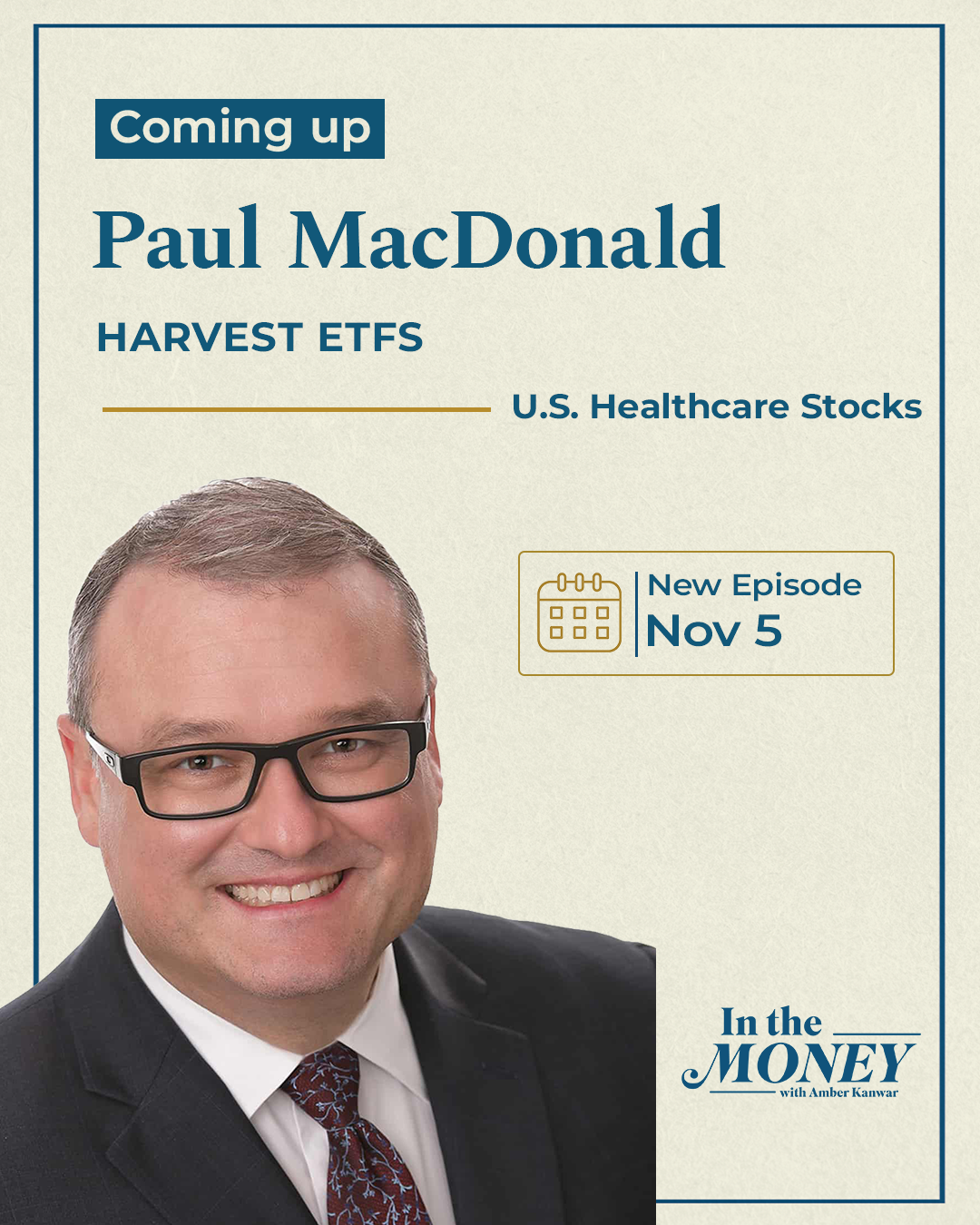
Outside the tech sector we are seeing a surge in clean energy (solar +5%), home builders (+2.5%) and health care. Health care had run up into the mid-terms and is up about 1% in the pre-market. It will be the focus of our next episode with Paul MacDonald who runs the health care ETF at Harvest.

2.
AMD and Super Micro pop after earnings
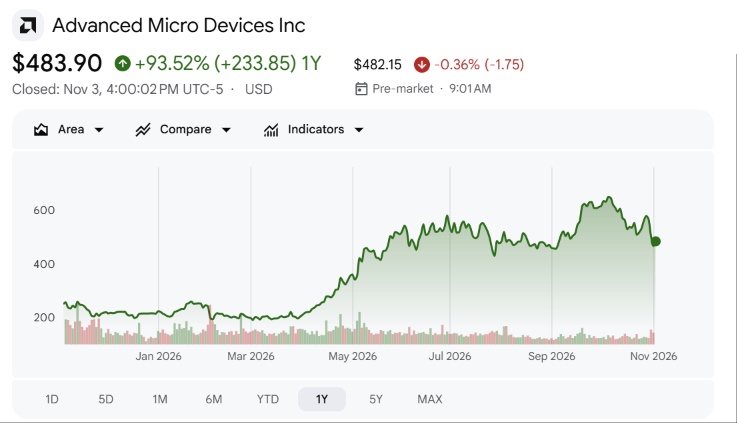
AMD’s data centre business doubled from last year helping to power a bottom line beat. It wasn’t a perfect quarter: gross margins were just in line and the outlook for gross margins was below expectations. But after Intel’s implosion, investors are relieved that AMD was able to deliver this quarter. AMD has more data centre exposure than Intel and that business increased 97% compared to last year. The shares are volatile in the pre-market so we will see if the gain holds.
Super Micro is also volatile pre-market, right now trading flat on my screen. Earnings beat expectations and its boosted forecast was higher than analyst estimates. Super Micro makes AI servers and saw sales surge nearly 80% compared to last year. The key risk to Super Micro is that a large chunk of that revenue comes from just two customers which make up 44% of total revenue. The lack of enthusiasm in the stock today is a reflection of broader market concerns, not related to an obvious blemish in the results.
3.
Suncor and Cenovus beat expectations
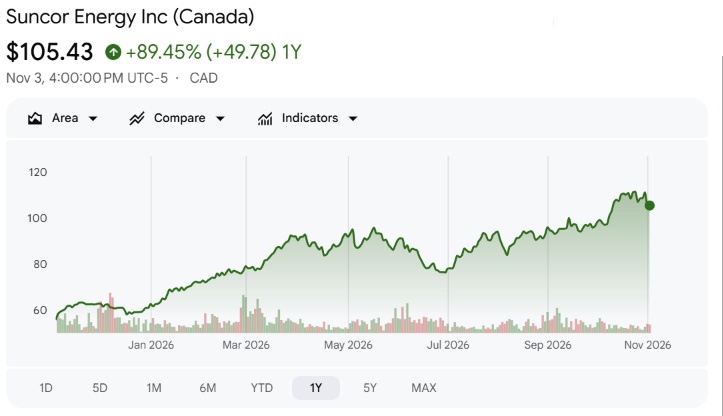
Suncor beat profit expectations, boosted its dividend 10% and generated record cash flow. Shares are up only slightly in the pre-market which is a win considering oil is sliding 2% this morning. The increase to the dividend was more than the 5% expected. “All said, while positioning into the print is crowded, we believe these results clear a high bar and expect the shares to outperform on a relative basis tomorrow, particularly as investors look for exposure to refining, SCO production and insulation from WCS-WTI differentials,” said Robert Mann of Desjardins.
Canadian crude is now about $30 a barrel cheaper than U.S. oil, the widest gap since 2018. The differential will be more in focus with Cenovus, which also reported, given its recent purchase of Athabasca which will give it more exposure to this gap. The discount has been getting bigger not because of pipelines as was the case in 2018, but because shipping rates have gone through the roof causing international buyers to pull back and Canadian producers haven’t pulled back on production. Also at the margin Canadian barrels now have to contend with barrels from Venezuela.
Cenovus underscored the “drill, baby, drill” mentality with record production in the quarter crossing 1 million barrels of oil per day for the first time. The stock is slightly lower in pre-market but most analysts agree the key catalyst will be the investor day on January 11th.
4.
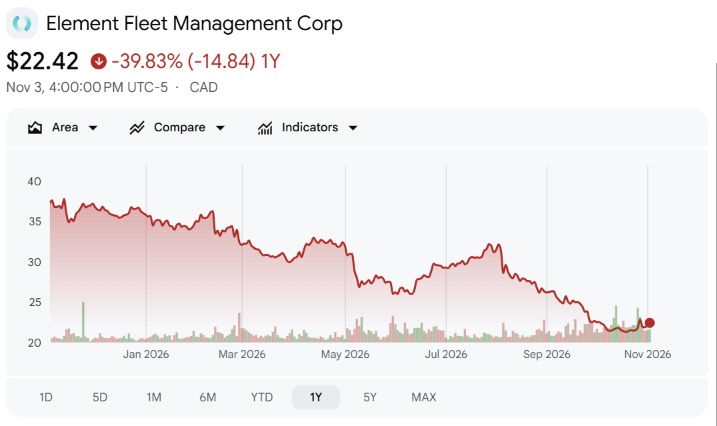
Element Fleet cuts forecast on “client hesitation”
The fleet management company is warning that clients are hesitating on commitments amid economic and trade uncertainty and that will hurt growth next year. Element Fleet now expects revenue to grow in the low single digit range compared to its expected 8-10% growth in 2026. TD is downgrading the stock this morning. “We think the share price reaction will be negative. Valuation may remain compressed until there is evidence of stronger execution and revenue growth,” wrote TD’s Graham Ryding in the downgrade. He’s cutting his price target from $31/share to $22/share. The stock has already underperformed trading at around the lowest levels since 2023.
5.
Fairfax beats on investments
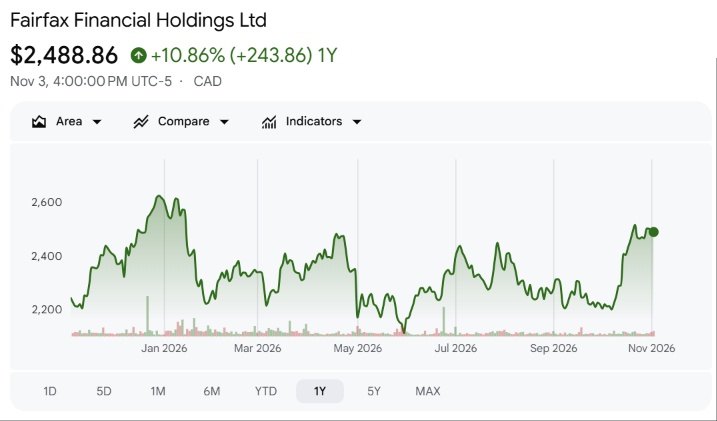
Fairfax delivered a big beat, and the surprise didn’t come from insurance. Underwriting was as strong as expected, and premium growth kept slowing as the insurance market softens. What blew past forecasts was Fairfax’s investments in other companies and its non-insurance businesses, helped by a steady stream of new deals. “(Fairfax is) tracking ahead of guidance on all 3 KPIs: i) $2.8B annualized interest and dividend income tracking ahead of $2.5B+ guidance; ii) $1.8B annualized underwriting income tracking ahead of $1.5B+ guidance; and iii) ~$1.5B annualized share of profit from associates and non-insurance earnings tracking ahead of $1.0B+ guidance,” wrote RBC’s Bart Dziarski.
Fairfax has been a choppy stock but is up sharply in October. It looks indicated higher. I own Fairfax.
Don’t miss the next episode!