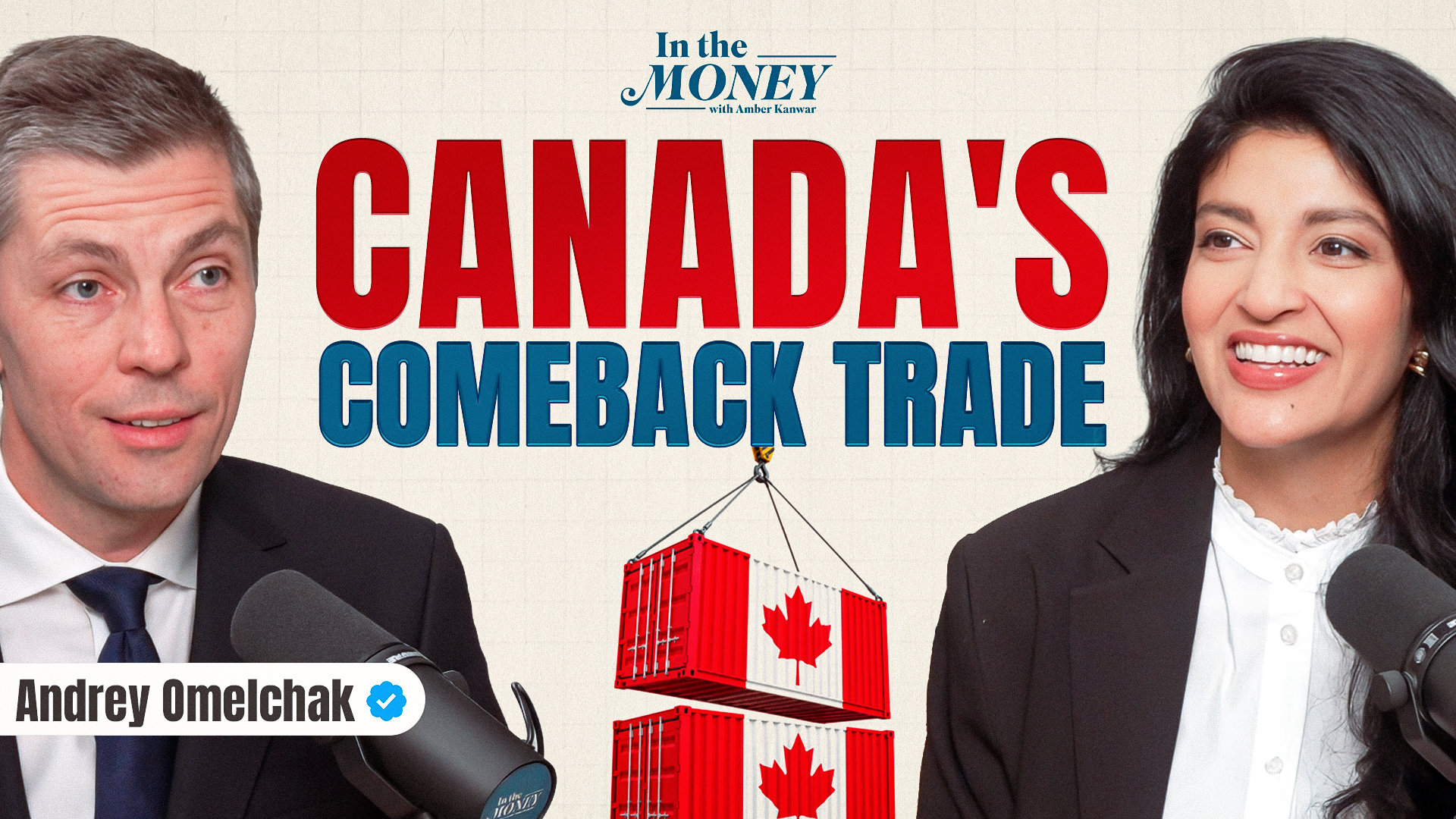
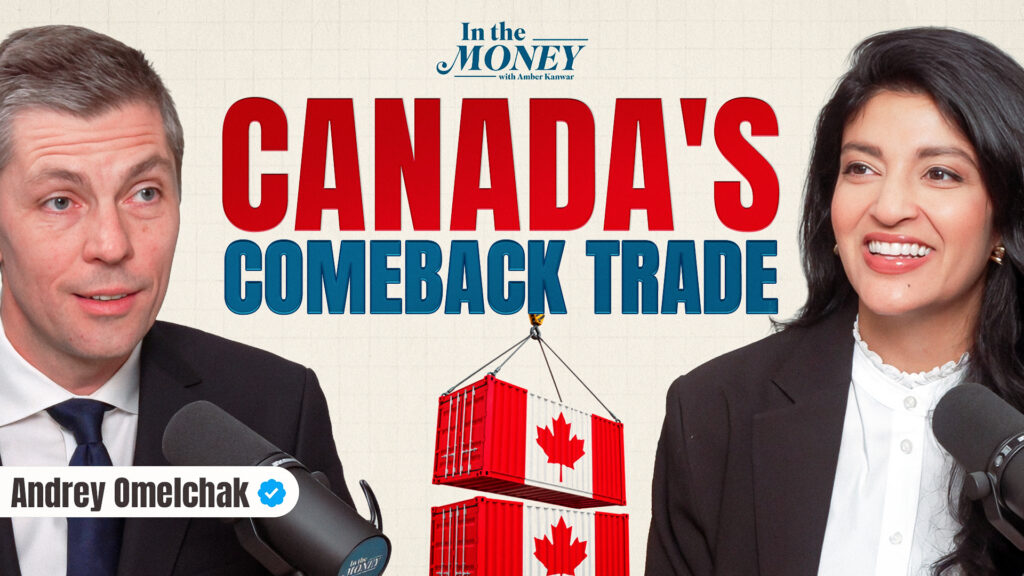
Canada is on the cusp of what could be a generational investment opportunity. After years of underinvestment, billions of dollars are flowing toward infrastructure, defence, energy and data centres—and some of the biggest beneficiaries may still be overlooked by investors. Andrey Omelchak, President, CEO & CIO at LionGuard Capital, believes Canada’s economic transformation is just getting started. After outperforming both the TSX and Nasdaq without relying on big tech or mining stocks, he explains why he’s so bullish on Canada’s future, where he’s finding opportunities and which companies could deliver outsized returns.

Looking to invest in high-quality companies without high fees? The HAMILTON CHAMPIONS™ suite of ETFs offers exposure to diversified portfolios of equity champions across tech, financials, utilities, and dividend strategies, all with a low 0.19% management fee, designed to help you stay invested with confidence for the long term. For more information on the HAMILTON CHAMPIONS™ suite, visit: www.hamiltonetfs.com/hamilton-
FROM AMBER’S DESK
I’ve been sitting on a secret. About a month ago, we quietly soft-launched the In the Money merch store! The famous EBITDA sweatshirts and caps are there, plus coffee mugs and the rest of our In the Money gear. Fair warning: the website could use a makeover. But we’re friends, so I’m comfortable showing you the store with no makeup on. Go take a look, and show everyone you love exactly how nerdy you are. Holiday shopping is coming, and nothing says “I care” like a sweatshirt about earnings before interest, taxes, depreciation and amortization.
Here are five things to know today
1.
Markets face a new week with tentative enthusiasm
Following a brutal sell off last week, futures are indicated higher this morning but moods are still cautious. The CNN Fear Greed Index is now in extreme fear territory. There is no shortage of concerns: rates are rising, inflation is not contained, oil is at $100/bl, problems are emerging in AI, IPOs are getting cancelled, Alberta votes on separating today and Paris is burning. Today also happens to be the 39th anniversary of Black Monday – the day the Dow Jones Industrial Average plunged 22.6%. Is it all that bad? A few notes of optimism:
1. Extreme fear can be viewed as a contrarian signal.
2. The freakout over CoreWeave isn’t even our first AI scare of the year. Recall, in the first quarter saas-pocalypse fears gripped the tech sector. Then, in the summer concerns about Oracle hit the market. The S&P 500 tech index is up 40% from the saas-pocalypse scare and 10% since Oracle. Even if CoreWeave goes to zero, it only accounts for about 4-5% of total AI spending, Barclays points out. Will Google stop spending just because CoreWeave isn’t around?
3. Earnings estimates for semiconductors are moving higher, not lower. The sector has sold off, while earnings are expected to grow faster next year than this year. “As long as estimates keep rising, we see this week’s semiconductor selloff as a buying opportunity,” writes Ed Yardeni of Yardeni Research.
4. While the markets were freaking out about financing costs, the yield on the US 10-year fell 16 basis points and is sitting near a one month low.
5. The TSX outperformed last week thanks to renewed interest in defensive sectors like consumer staples and a bid for energy stocks and financials.
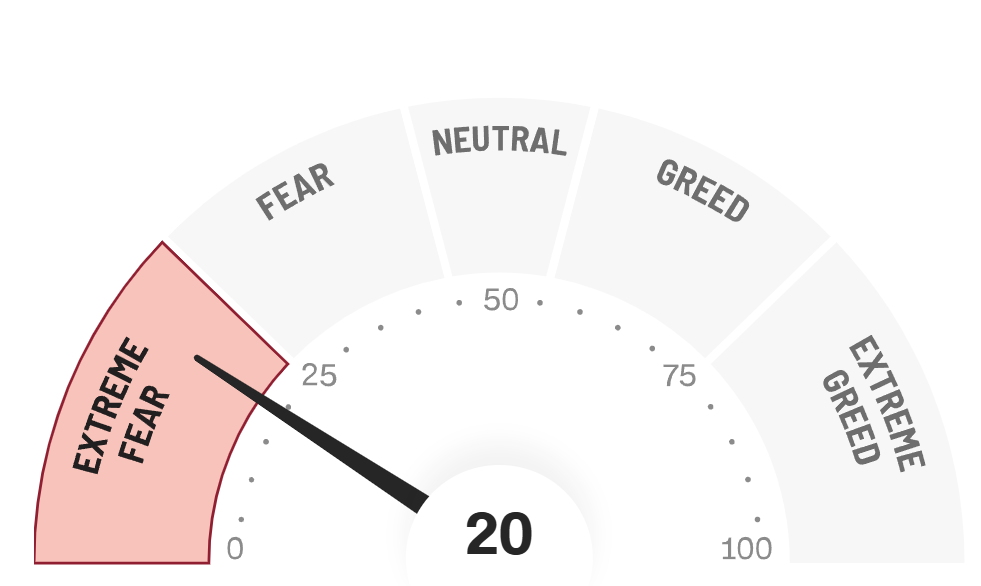
CNN Fear Greed Index

2.
Canadian inflation jumps to 4-month high
Headline inflation in September increased 3.1% from a year earlier, which is less than the 3.2% expected. Still it is the highest reading since May. The majority of the increase was due to higher fuel prices and higher airfare as well as higher property taxes. On the plus side, the price of fresh vegetables came down. Overall, core inflation was more moderate cooling to 1.9%. Taken together, the odds of a rate hike at the next Bank of Canada meeting on October 28th have jumped to 70% from a 35% chance on Friday.
Part of the reason for the increased probability of a rate hike is because of comments from Bank of Canada governor Tiff Macklem over the weekend. Speaking at an IMF media roundtable on Sunday, Macklem said “The question we’re going to be asking ourselves is inflation likely to come back down towards our target on its own, or are we going to have to raise interest rates to influence the path.” Scotia’s Derek Holt says “October is definitely a ‘live’ meeting,” after those comments. So the Federal Reserve, with a strong US economy, isn’t going to hike this month, but the Bank of Canada is? Alrighty then.
3.
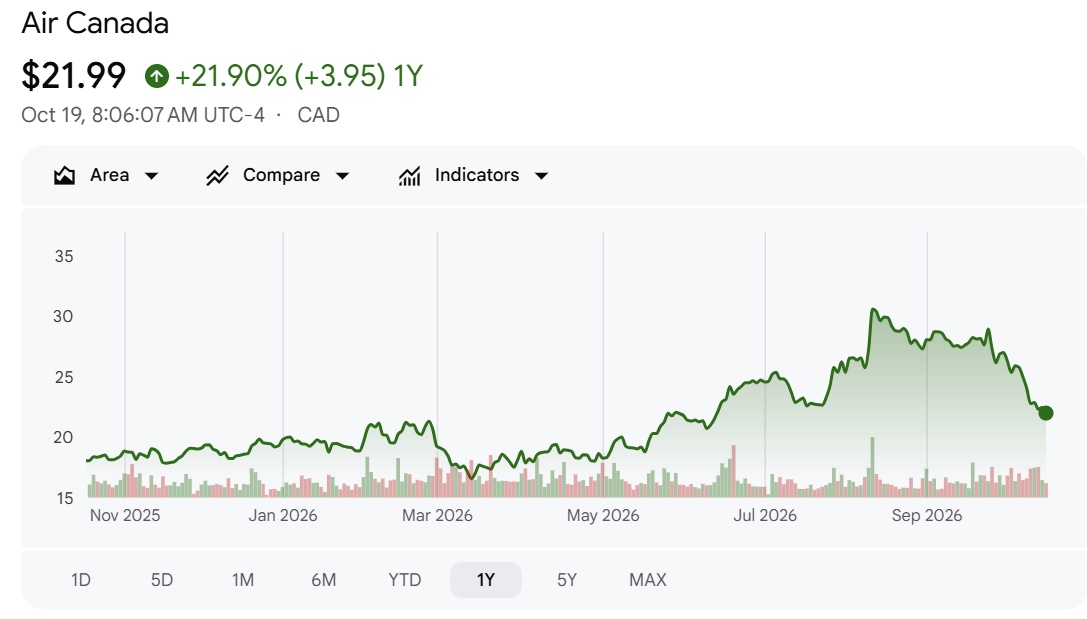
Air Canada cut to Sell at Jefferies
The downgrade is predicated on the belief that Air Canada will be hard pressed to keep airfares elevated amidst a slowing economic backdrop. There is also the concern about competition from low-cost carriers. Shares are down 30% from the peak in August as higher oil prices and interest rates weighed on the sector.
Today’s CPI sheds new light on airfare pricing. Airfare prices increased 19.4% in September from the prior year, however fell 10% from the previous month.
4.
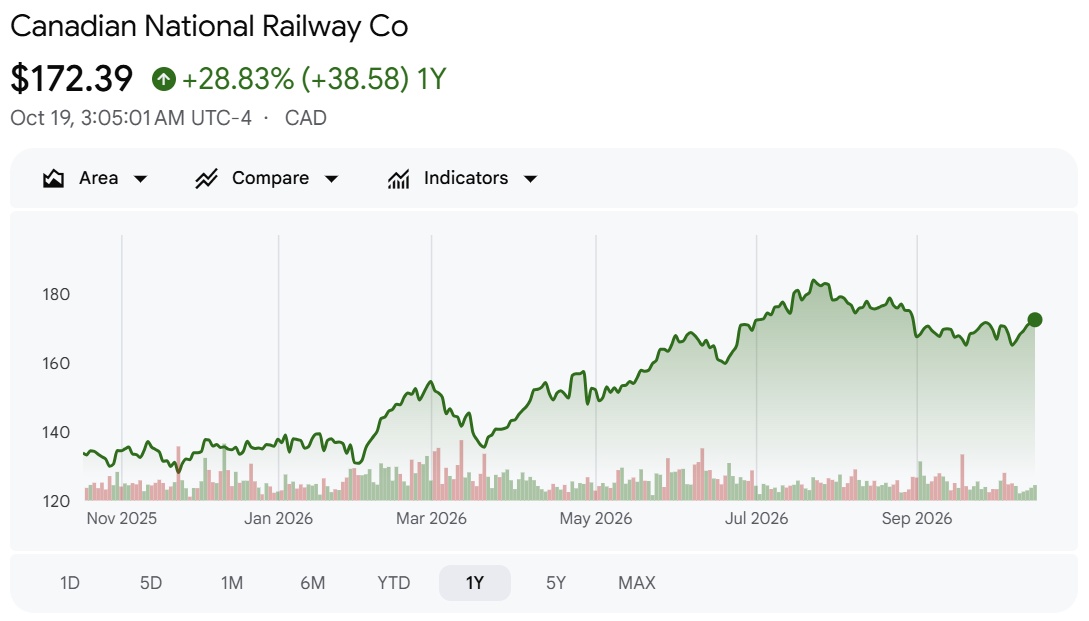
CN Rail downgraded at Raymond James
Steve Hansen is cutting the stock to hold on concerns that the train operator won’t be able to replace growth drivers as they begin to fade. The third quarter saw stronger than expected traffic trends once again, notes Hansen. Most of this was driven by grain shipments, which he believes will dissipate. CPKC has a stronger avenue than CN Rail to replace grain shipments, Hansen says in the downgrade. He also points out that CPKC’s shipments grew faster than CN Rail’s for the first time in a year, suggesting momentum.
“Grain remained the largest common tailwind in 3Q26, but recent data suggest peak y/y growth is behind us. Context: CN Grain traffic has printed negative growth in 5 of the last 6 weeks, versus strong double-digit growth for the quarter, while CPKC has remained comparatively resilient,” said Hansen. I own CN Rail.
|
“CN enters 4Q against tougher consolidated comps, with two of its strongest 3Q growth engines, Grain and Automotive, showing signs of moderation, while Intermodal and Forestry remain weak.” — steve hansen, raymond james (hold) |
5.
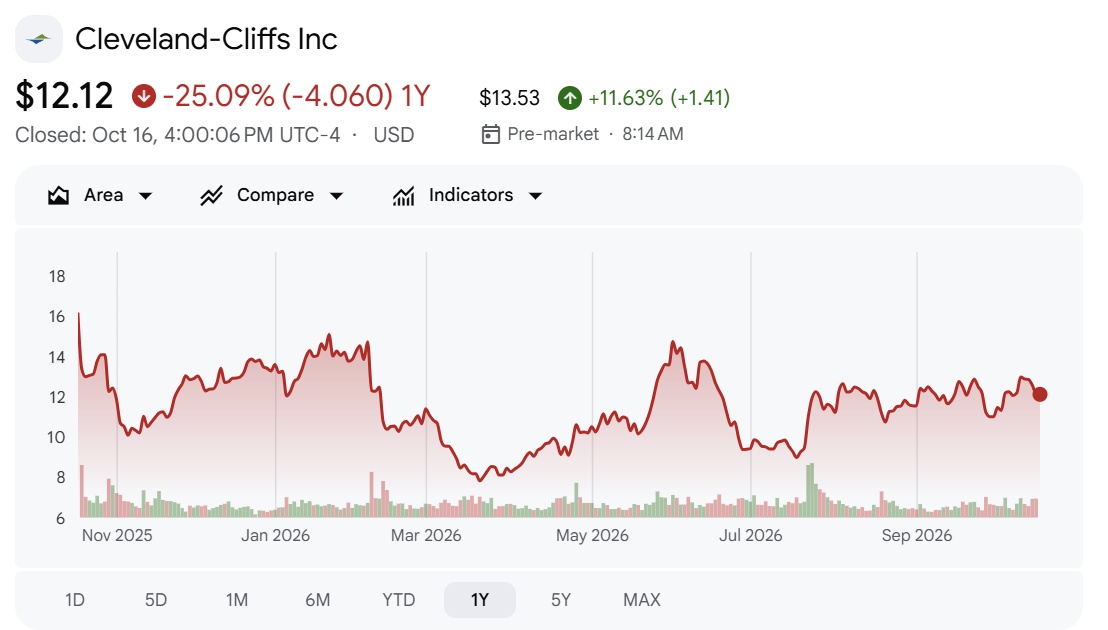
Cleveland-Cliffs +11% in pre-market on strong results
Higher steel prices bolstered profit at Cleveland-Cliffs which put in its best quarter in three years. The company benefitted from US President Donald Trump’s tariffs which kept foreign steel out of America. The supply crunch has driven up steel prices to a four-year high and benefitted domestic producers like Cleveland-Cliffs. The company expects the good times to roll with their profit forecast for the year nearly double consensus expectations. Cleveland-Cliffs says profit will be $4 billion for 2027 compared to the $2.4 billion expected by analysts.
The solid results come amidst a row with the Canadian government after Cleveland-Cliffs announced its subsidiary, Stelco, would be indefinitely idled one of its products lines leading to potentially 500 job cuts in Hamilton, Ontario. Indeed, in the quarterly results the Canadian division was actually a boon to the overall profit picture? So why the job cuts? The particular steel that is made in the Hamilton plant is meant for US consumption and the tariffs make them uneconomical according to the company. The Canadian government may have something to say about that considering the company just touted profit is expected to almost triple next year.
Don’t miss the next episode! Time to get your questions in! Click here to submit a question!