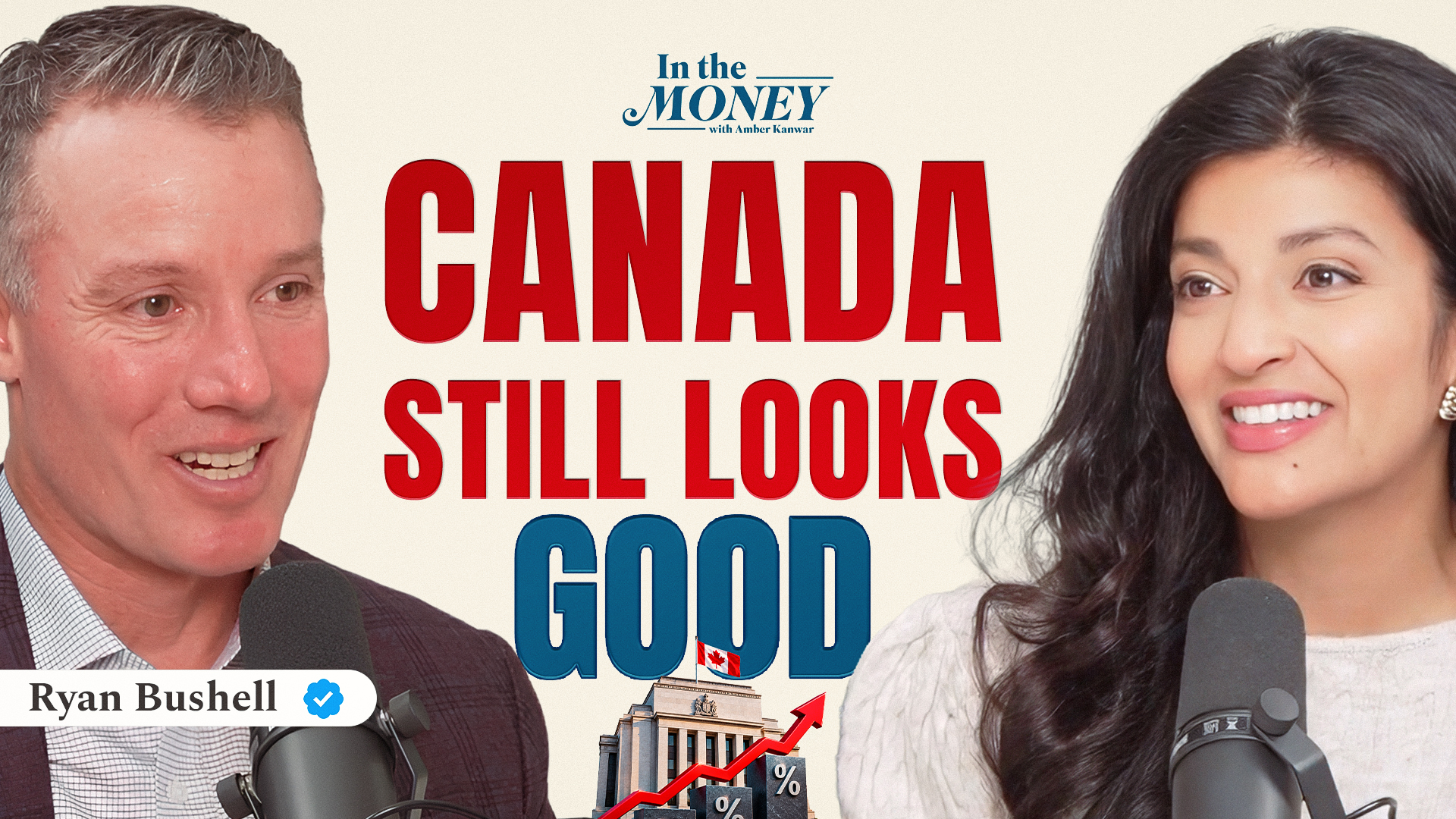

The energy trade has already delivered big gains—but David Szybunka says the cycle is far from over. The opportunity is simply changing. David Szybunka, Senior Portfolio Manager & Managing Director of the Energy Team at Canoe Financial, joins Amber Kanwar to explain why he believes energy has entered the “optimism” stage of a much longer cycle. After large-cap oil producers led the rally, Szybunka is becoming more selective, finding better value in natural gas, mid-cap producers and oilfield services.

Looking to invest in high-quality companies without high fees? The HAMILTON CHAMPIONS™ suite of ETFs offers exposure to diversified portfolios of equity champions across tech, financials, utilities, and dividend strategies, all with a low 0.19% management fee, designed to help you stay invested with confidence for the long term. For more information on the HAMILTON CHAMPIONS™ suite, visit: www.hamiltonetfs.com/hamilton-
Here are five things to know today
1.
Stocks spike on weaker inflation, stronger growth
The futures got a jolt after the Fed’s preferred gauge of inflation came in cooler than expected. The core Personal Consumption Expenditure expanded by 3% in August which was less than the 3.3% expected and matches the pace of the previous month. At the same time consumer spending rose by the fastest pace in a year while Q2 GDP was revised higher. Taken together it shows the US economy is continuing to grow despite inflation. The reaction function in the market was to buy stocks and bonds and sell the US dollar. The data landed shortly after ADP private payrolls showed an uptick in hiring. The wheels are not falling off the US economy.
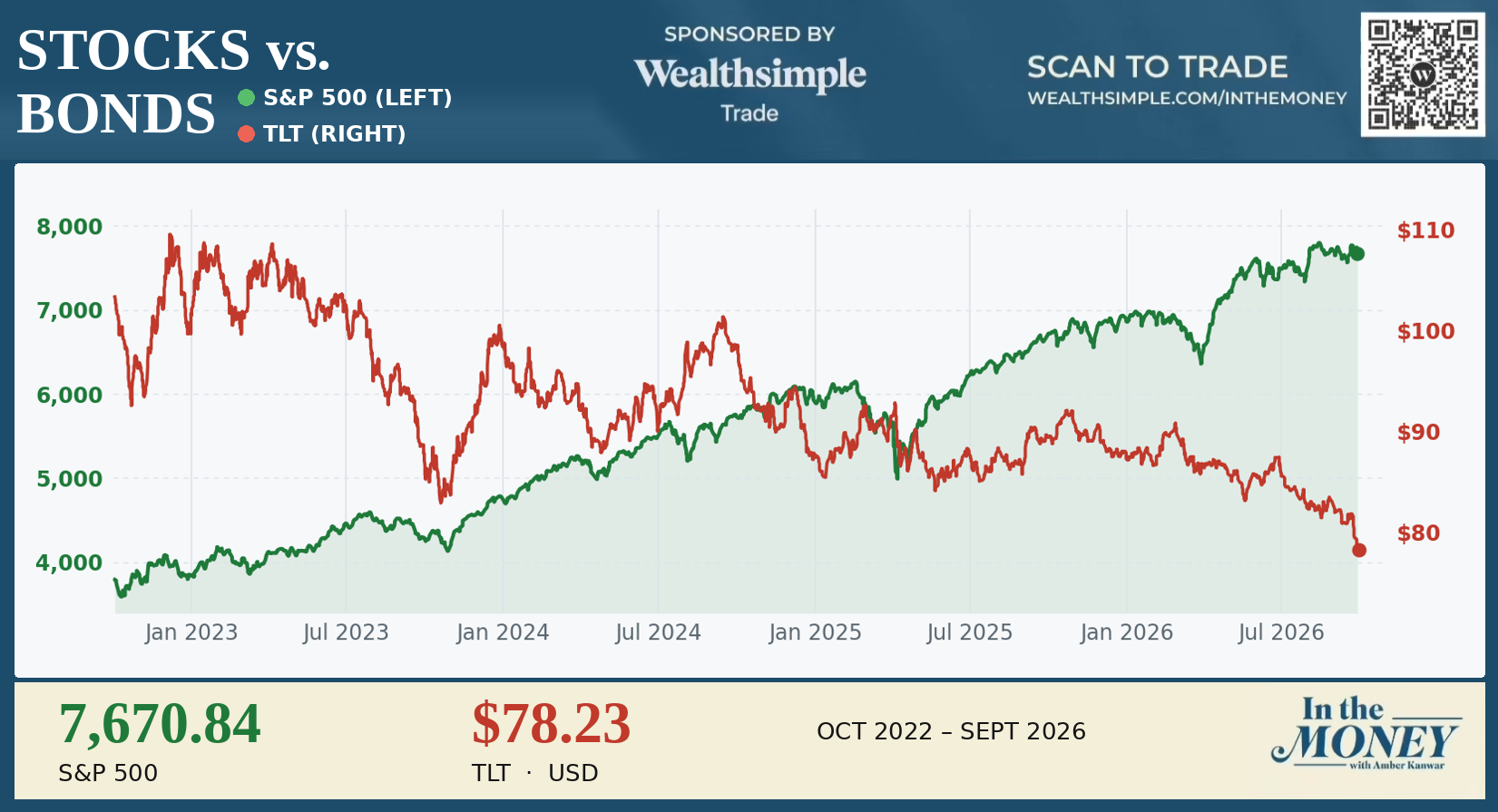
It is the last trading day of the month and unless there is a significant rally, the TSX will put in its first monthly decline since March while the S&P 500 will likely be flat. The real story was in the bond market where the US 10-year yield rose nearly 50 basis points – the biggest monthly rout in two years. The game right now is to figure out whether we are close to capitulation in the bond market and yields are high enough for buyers to step in. I don’t know the answer. But I spend a weird amount of time looking at the chart below: 20+ year US treasuries vs the S&P 500. It shows that the S&P is trading near record highs despite US bonds selling off (and thus raising interest rates). The chart is sporting what my favourite market watcher, Frances Horodelski, likes to call alligator jaws. She says those jaws have to come down. The question is how the jaws will close: Will treasuries rally or stocks collapse?

2.
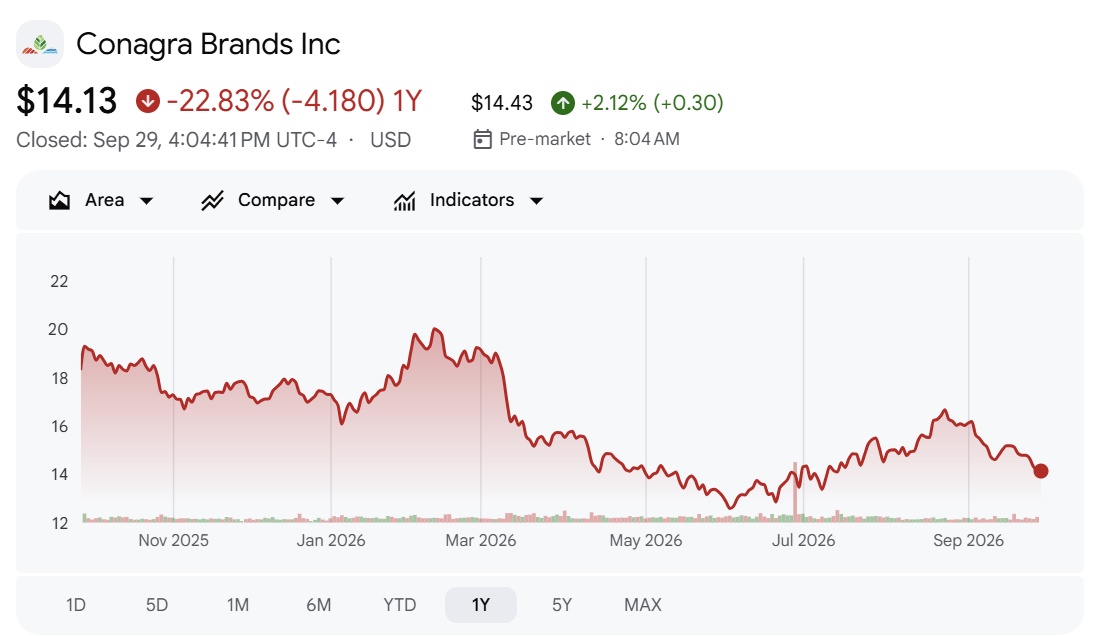
Conagra +2% on better than feared quarter
The maker of packaged foods like Slim Jim, Vlasic and PAM reported profit that was 45% higher than expected while organic sales didn’t fall as much as feared. Keep in mind the stock is down 20% so far this year along with other food providers, so the bar is low. Conagra said it expects organic sales to continue to fall 1-3% this year, but that is what analysts expected. The CEO called out a “challenging operating environment” alongside quarterly results. Brands like Conagra have run out room to increase prices on customers just as the consumer is pulling back on how much they purchase. Volumes in the quarter were down 5.4%.
3.
Ag Growth gets breathing room
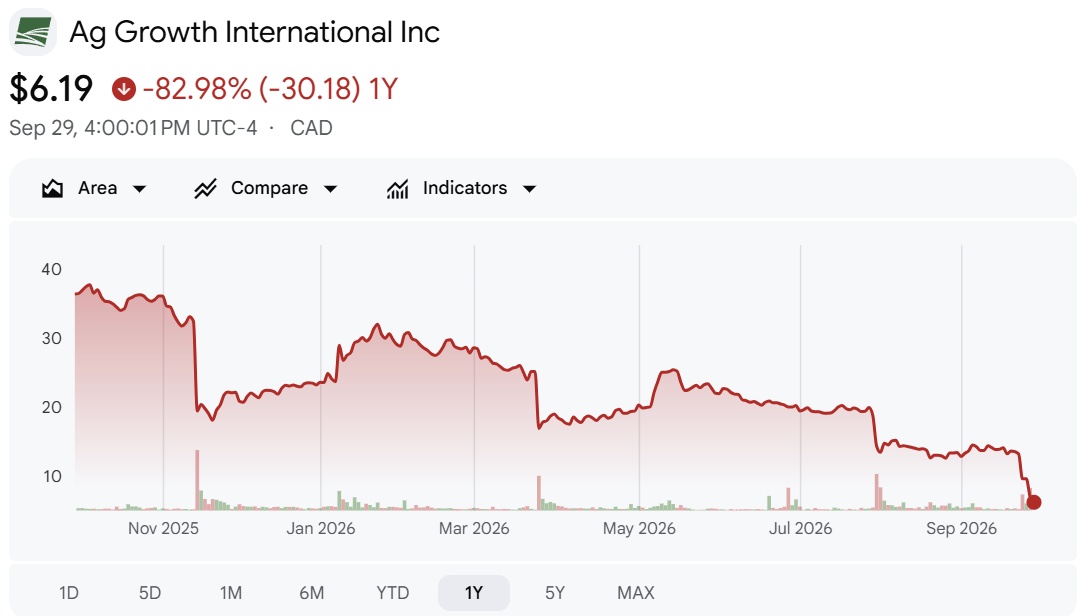
The embattled grain handling company announced it received covenant relief that will give it some breathing room as it searches for strategic alternatives. In addition, it says it has identified $50 million worth of non-core real estate assets that it can sell. It will also implement measures to reduce costs by more than $30 million per year which is higher than their previous target of $20 million in March. The stock has tanked 73% so far this year to trade at a record low.
Fundamental issues like weak demand and compressed margins started to weigh on the business a few years ago which and were compounded by late filings and a cease trade order. The CEO left in January and the dividend was suspended in March. The company’s immediate concern is the level of debt on its books, currently 5x EBITDA, which is exacerbated by a higher interest rate environment. “The level of risk and expected cost associated with AFN‘s ability to manage upcoming debt maturities (one this year and two converts next) has risen considerably since early-August,” wrote Michael Tupholme of TD in a downgrade note earlier this week.
4.
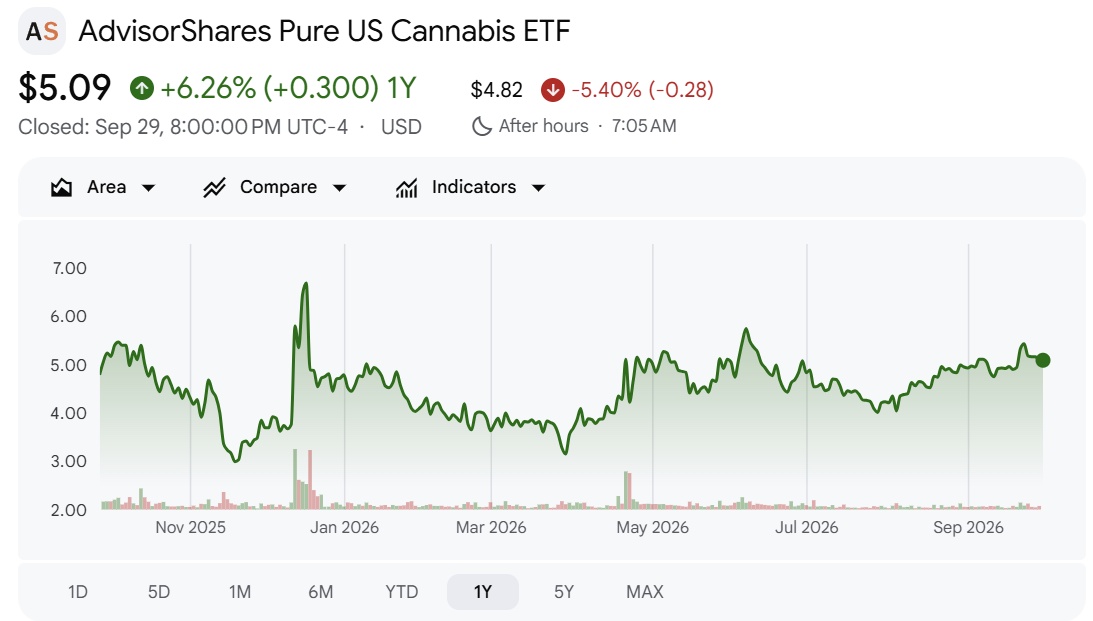
Marijuana stocks lower on rescheduling delay
The ETF that tracks US marijuana stocks is down 5% in pre-market after a US judge at the Drug Enforcement Agency delayed a rescheduling hearing. DEA Chief Administrative Law Judge Derek Julius was responding to a request to include a government report on the procedural gaps within both the DEA and the FDA when it comes to evaluating scheduled substances. The DEA will now have to respond to whether the report should be allowed. It’s a win for groups who have been advocating against marijuana rescheduling – which is currently viewed as severe as heroin or cocaine at the federal level. The stocks have been on ice for the last year, just up 6% over the past year as they await re classification.
5.
Prime Minister Mark Carney lashes out at Cleveland-Cliffs
In response to Cleveland-Cliffs indefinitely shuttering operations in Hamilton affecting 500 employees, Carney said the company “betrayed” workers. Stelco, which was sold to Cleveland-Cliffs in 2024, said the decision was unfortunate but necessary because of tariffs. Carney made clear there was funding available to pursue alternative options and the company has “legal obligations” for employment that would be pursued in court. The CEO of Cleveland-Cliffs, Lourenco Goncalves, responded in an interview with Bloomberg blaming intense competition from Asia and Carney’s lack of support on the issue. “We’ll resolve this in court,” said Goncalves.
Don’t miss the next episode! Time to get your questions in! Click here to submit a question!