
While much of the market is chasing the same handful of stocks, Scott Morrison is looking somewhere else. The Founder & CIO of Wealhouse Capital Management oversees $2.2 billion with a contrarian strategy focused on buying great businesses at discounted prices. He joins Amber Kanwar to discuss why international markets are becoming more attractive, where he’s finding value today, and how investors can profit from unpopular ideas before they become consensus.
Pro Picks is brought to you by ATB Financial. With over $100 billion in assets, ATB Financial is powering possibilities for more than 843,000 financial services clients. ATB Cormark Capital Markets is a leading North American investment firm providing holistic corporate and capital markets advice and full-service financial solutions. Visit www.ATB.com/inthemoney for more information.
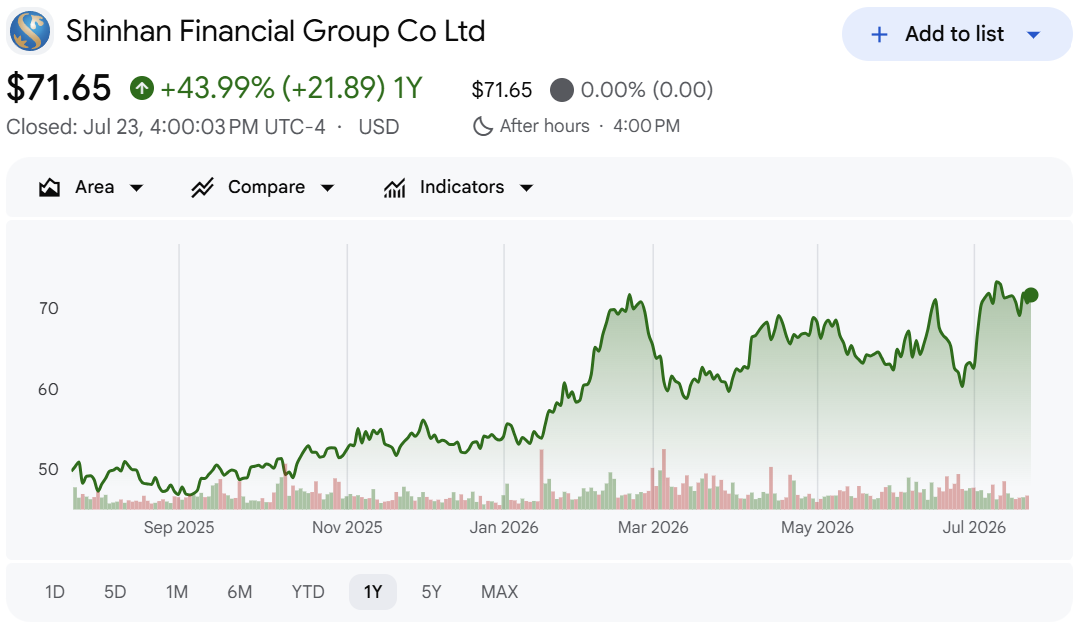
Shinhan Financial Group (SHG)
Shinhan is one of South Korea’s largest financial groups — and, in Scott’s view, one of the widest valuation gaps he’s seen in his career.
- Deep discount to Canadian peers: Shinhan trades below book value and at a single-digit multiple of earnings, versus Canadian banks at two-to-three times book and mid-teens multiples. Korean banks should always trade cheaper than Canadian ones, but Scott argues the current gap is roughly double the normal spread and far too wide.
- A regime change and rising rates: Following Korea’s political upheaval (martial law just two years ago), Shinhan is growing its dividend more aggressively. And unlike the Bank of Canada — on pause after cutting — Korea is raising rates on the back of an economic boom. Banks are the classic beneficiary when rates move higher.
- A cheaper way to play the memory boom: Scott sees Shinhan as a derivative play on Korea’s chip powerhouses (Samsung, SK Hynix), whose free-cash-flow yields he pegs in the high-teens to low-20s. As memory bonuses and profits flow through the Korean economy, the banks capture the upside. Add a fully automated, tech-forward operation and improving ROE — and, as Scott puts it, “if you can find stocks that have improving ROE, you rarely lose money.”
Ticker: SHG (NYSE)
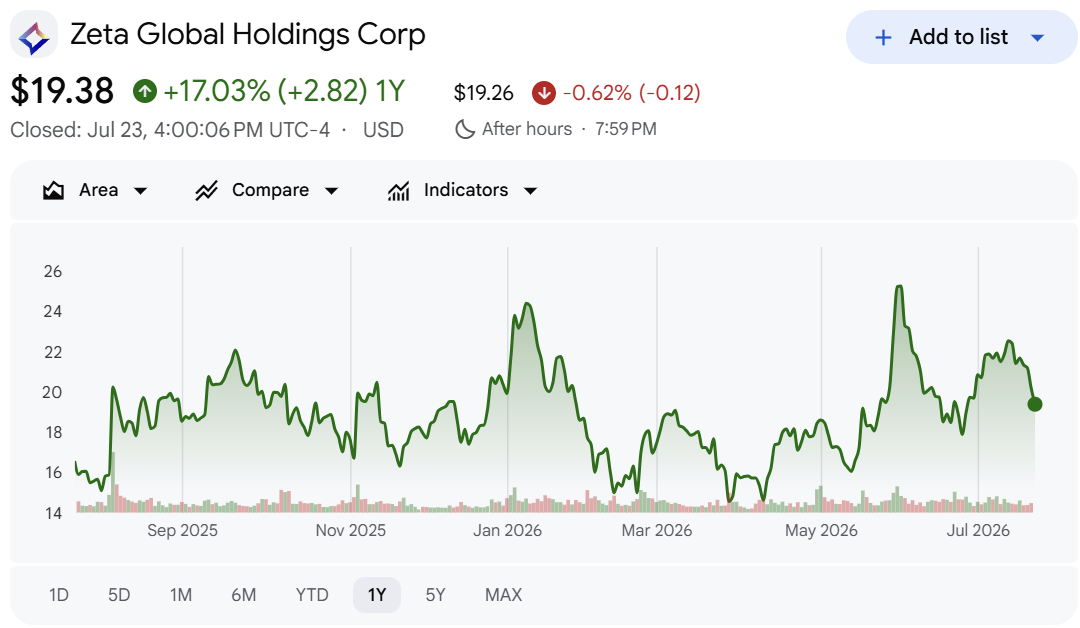
Zeta Global Holdings (ZETA)
Zeta is a New York–headquartered marketing and ad-tech software company that built proprietary databases “back when AI was called machine learning.”
- A proprietary data moat: Zeta sells to enterprises and the big agency holding companies (Publicis, WPP, Omnicom) that are desperate to prove ROI on ad spend. Many clients don’t want to hand their proprietary data to the hyperscalers like Meta and Google — so Zeta helps them optimize their own data, marry it with Zeta’s, and layer AI agents and tools on top.
- Clean balance sheet, founder-led: Net cash on the balance sheet, still founder-run — exactly the profile Scott looks for. He thinks the business can double or triple in size, and notes the stock hasn’t done much in 2026, keeping the entry attractive.
- A Palantir endorsement: Zeta just signed a joint venture with Palantir — “a very nice endorsement.” Scott’s team tracks companies adopting Palantir on the thesis that the next winners are the businesses that get enabled by AI, not just the ones enabling it. He’s seen this movie before, having run money through the NASDAQ bubble burst.
Ticker: ZETA (NYSE)
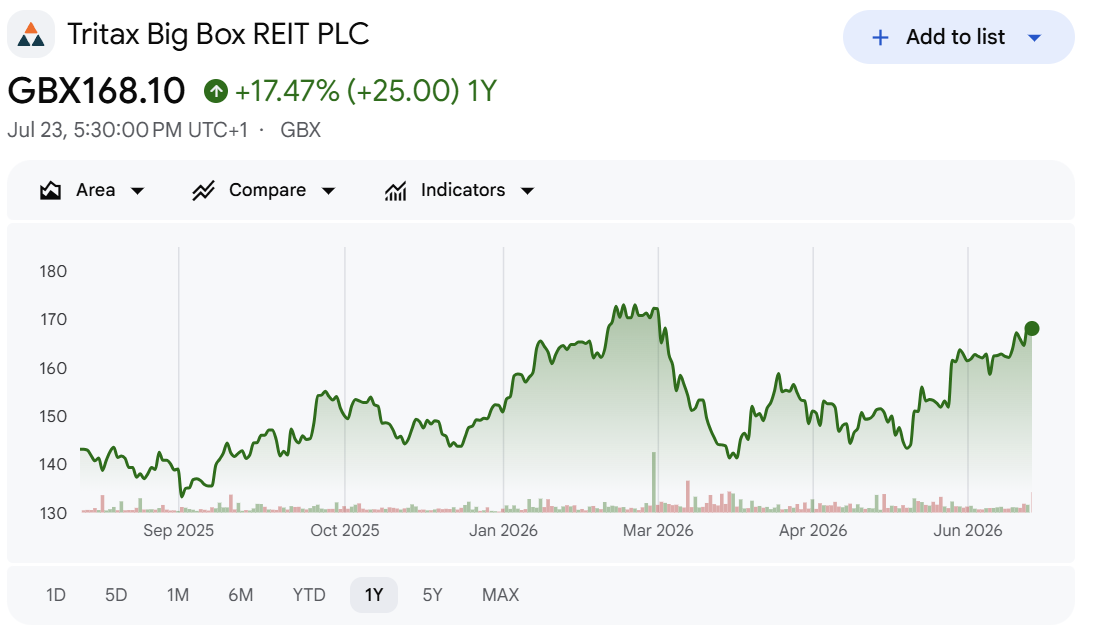
Tritax Big Box REIT (BBOX)
For his third idea, Scott heads across the pond to a UK “big box” industrial and logistics REIT — a deeply out-of-favor corner of real estate with improving fundamentals.
- Supply down, demand up: New supply has dried up across markets where rates spiked (the UK 10-year sits near 5%), while the UK’s post-Brexit political churn has scared off capital. Tritax trades at a discounted ~7% cap rate, carries very low loan-to-value, is still founder-run, and sells at a steep discount to replacement value.
- A brand-new tenant — the military: On top of the existing e-commerce tailwind, Scott sees incremental demand from defense spending: build a fleet of drones and you need somewhere to store them, which means more logistics warehouses and a tenant base that wasn’t there before.
- Power as hidden optionality: Some of Tritax’s facilities already have power — increasingly precious — so parts of the portfolio could be converted into data centers for sovereign AI projects. Meanwhile, warehouse automation is pushing tenants to reinvest capex into their boxes, making them stickier, better tenants for the landlord. For those wanting similar exposure closer to home, Scott flags Dream Industrial (DIR.UN) in Canada and EastGroup (EGP) in the U.S.
Ticker: BBOX (London Stock Exchange)
Don’t miss our next episode!
DISCLAIMERS: This text AI generated and should be checked against actual delivery. The content provided in this podcast is for informational purposes only and does not constitute financial, investment, or professional advice. The views expressed by the host and guests are their own and do not necessarily reflect the opinions of any organization or company. The host and guests may maintain positions in any securities discussed on the podcast. Always consult with a qualified financial advisor or professional before making any investment decisions.